What Are the Best Electronic Board Components from China?

Time:2026-10-15 Author:Mason
0%

Choosing the best Electronic Board Components from China requires more than comparing prices. It demands technical judgment, supplier verification, and practical testing. China offers a broad manufacturing network, from PCB assemblies and connectors to capacitors, sensors, microcontrollers, and power modules. However, product quality can vary between suppliers, even when specifications appear identical.

A reliable evaluation begins with datasheets, material declarations, and documented quality systems. Look for suppliers that provide traceable batch numbers, inspection reports, and clear warranty terms. Certifications such as ISO 9001, RoHS, and applicable safety approvals can support credibility, but certificates should be verified rather than accepted blindly. They are evidence, not a guarantee.

Real experience also matters. Requesting samples, checking solderability, and testing components under actual operating conditions can reveal hidden weaknesses. A connector may fit perfectly yet fail after repeated mating. A capacitor may meet its rating but perform poorly in high-temperature equipment. Small details matter.

Not every polished listing deserves trust.

This guide examines how to compare Chinese manufacturers, distributors, and contract suppliers with greater confidence. It considers consistency, lead times, customization, technical support, and total ownership cost. Price remains important, but the cheapest component may create expensive redesigns or production delays. Some recommendations may still require careful reflection, because supplier performance can change over time. Buyers should confirm current specifications and regulations before placing large orders.
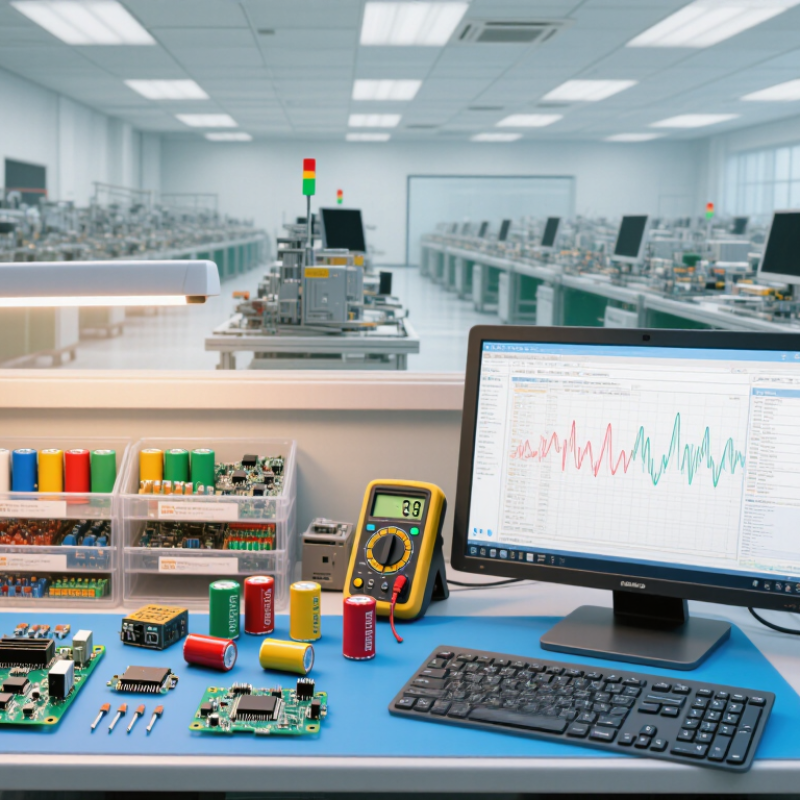
What Are the Best Electronic Board Components from China?

What Are Electronic Board Components?

What Are the Best Electronic Board Components from China?

What Are Electronic Board Components?

Electronic board components are the working parts mounted on a circuit board. They control current, store energy, process signals, or connect separate circuits. Resistors limit voltage. Capacitors stabilize power. Diodes control direction. Integrated circuits perform logic, sensing, or communication tasks. Connectors provide physical and electrical links. A bare PCB only provides pathways; components make the board functional.

The global semiconductor market reached 526.9 billion dollars in 2023, according to the Semiconductor Industry Association. WSTS forecast 2024 sales of about 611.2 billion dollars. These figures show strong demand for chips, sensors, and power-control devices. China’s component supply chain also covers passive parts, connectors, relays, and board-level assemblies. Quality can vary widely. The cheapest part is rarely the safest choice.

In practical sourcing, check datasheets, tolerance values, operating temperature, and traceability records. A capacitor rated for 105°C may suit industrial equipment better than a cheaper 85°C version. For chips, compare package dimensions and moisture sensitivity. IPC-A-610 inspection criteria can help evaluate solder joints and assembly quality. I would also request samples before volume orders. One small mismatch can stop an entire production line. Supplier documentation is useful, but it is not proof by itself. Independent testing remains worthwhile, especially for safety-critical boards.

What Are the Best Electronic Board Components from China?

Common electronic board components include resistors, capacitors, inductors, diodes, transistors, integrated circuits, and connectors. Their quality should be evaluated by electrical specifications, reliability, compliance, and application requirements rather than by component type alone.

The chart shows IEC 60063 preferred-value series commonly used for passive electronic components. A higher E-series provides more standardized nominal values within each decade, allowing engineers to select component values with greater precision.

Which Electronic Board Components Are Commonly Made in China?

China commonly manufactures the board-level parts used in consumer, industrial, and automotive electronics. These include rigid PCBs, flexible circuits, chip resistors, ceramic capacitors, inductors, connectors, relays, LED packages, transformers, and wire harnesses. Prismark’s 2024 PCB Industry Review placed China at roughly half of global PCB production by value. That scale supports dense supplier networks and competitive pricing.

The supply chain is broader than bare boards. Many Chinese factories also produce aluminum electrolytic capacitors, power modules, display assemblies, and semiconductor packaging components. WSTS forecast global semiconductor sales at 611.2 billion US dollars in 2024, showing the demand behind these supporting parts. However, the report does not prove that every component comes from China. That distinction matters.

Check the factory process, not only the quotation. Request impedance test coupons, automated optical inspection records, solderability results, and lot traceability. For standard boards, IPC-6012 and IPC-A-600 provide useful acceptance references. For automotive parts, additional qualification evidence is necessary. A low price may hide thinner copper or weaker incoming inspection. Sometimes, specifications are copied poorly. No report captures every small workshop. Buyers should verify materials, tolerances, RoHS documentation, and sample consistency before approving production. The label “made in China” is not a quality grade. It describes location, not performance.

What Are the Best Electronic Board Components from China? - Which Electronic Board Components Are Commonly Made in China?

Component Category Common Examples Typical Board Applications Common Technical Characteristics Why Commonly Made in China Important Selection Checks
Printed Circuit Boards Single-sided, double-sided, multilayer, rigid-flex, and flexible PCBs Consumer electronics, industrial controls, power equipment, automotive electronics, and communication devices FR-4 glass-epoxy substrates are widely used; layer counts commonly range from 1 to more than 10 depending on circuit complexity Large manufacturing capacity, extensive material supply chains, and strong high-volume fabrication capabilities Layer stack-up, copper thickness, dielectric spacing, impedance control, surface finish, hole tolerances, and applicable quality standard
Resistors Thick-film chip resistors, metal-film resistors, wirewound resistors, and power resistors Current limiting, voltage division, signal biasing, filtering, and load control Resistance values commonly range from milliohms to several megohms; standard tolerances include 1% and 5% Mature automated production, broad size and value coverage, and competitive pricing for standard parts Resistance, tolerance, power rating, temperature coefficient, package size, pulse capability, and long-term stability
Capacitors Multilayer ceramic, aluminum electrolytic, tantalum, film, and polymer capacitors Decoupling, energy storage, power filtering, timing circuits, and noise suppression Ceramic capacitors are common in small surface-mount packages; capacitance, voltage rating, ESR, and temperature range vary by type Well-developed ceramic, dielectric, aluminum, and automated assembly supply chains Capacitance, rated voltage, DC-bias derating, ESR, ripple current, polarity, leakage current, and safety classification
Inductors and Transformers Power inductors, common-mode chokes, ferrite beads, signal transformers, and power transformers Switching power supplies, electromagnetic interference suppression, filtering, and signal isolation Performance depends on inductance, saturation current, core material, winding structure, insulation, and operating frequency Strong access to magnetic materials, winding equipment, ferrite cores, and customized production processes Inductance tolerance, rated current, saturation current, DCR, insulation voltage, thermal rise, and EMI performance
Diodes and Rectifiers Rectifier diodes, Schottky diodes, Zener diodes, transient-voltage suppressors, and bridge rectifiers AC-to-DC conversion, reverse-polarity protection, voltage regulation, and surge protection Key parameters include reverse voltage, forward current, forward drop, switching speed, leakage, and surge capability High-volume semiconductor packaging and a broad range of standard discrete devices Electrical ratings, thermal resistance, package type, marking traceability, avalanche or surge performance, and qualification requirements
Transistors and Power Semiconductors Small-signal transistors, MOSFETs, insulated-gate bipolar transistors, and bipolar junction transistors Switching, amplification, motor control, load driving, and power conversion Important ratings include drain or collector voltage, current, on-state resistance, switching speed, and maximum junction temperature Extensive semiconductor assembly, testing, packaging, and power-electronics manufacturing capabilities Safe operating area, thermal management, gate requirements, switching losses, package reliability, and application-specific qualification
Integrated Circuits Voltage regulators, interface circuits, timers, operational amplifiers, memory devices, and microcontrollers Power management, processing, sensing, communication, automation, and embedded control Available in through-hole and surface-mount packages; specifications vary by architecture, process, speed, voltage, and temperature grade Strong electronics assembly ecosystem and large-scale packaging, testing, and module integration capacity Authenticity, electrical compatibility, firmware support, lifecycle status, date code, package marking, and supply continuity
Connectors and Terminals Board-to-board, wire-to-board, pin headers, terminal blocks, sockets, and coaxial connectors Power input, signal transfer, modular assembly, testing, and cable connections Common considerations include pitch, contact resistance, current rating, voltage rating, mating cycles, and mounting method Well-established stamping, molding, plating, cable assembly, and custom tooling capabilities Contact material and plating, mechanical fit, retention force, vibration resistance, insulation performance, and flammability rating
Switches, Relays, and Electromechanical Parts Tactile switches, slide switches, push buttons, electromagnetic relays, and solid-state relays User controls, signal routing, power switching, safety interlocks, and industrial automation Specifications may include switching current, contact configuration, actuation force, dielectric strength, and mechanical or electrical life High-volume mechanical production, precision stamping, plastic molding, and customized assembly options Load type, contact rating, bounce behavior, environmental sealing, cycle life, coil voltage, and safety certification
Sensors and Modules Temperature, humidity, pressure, motion, light, magnetic, wireless, and display modules Smart devices, environmental monitoring, robotics, industrial equipment, and consumer products Performance is defined by sensing range, accuracy, resolution, response time, interface type, and operating temperature Broad module integration expertise, flexible customization, and efficient PCB assembly services Calibration data, software compatibility, measurement accuracy, enclosure protection, electromagnetic compatibility, and consistency between batches

Note: The most suitable component depends on the circuit design, operating environment, required certifications, quality level, expected volume, and supply-chain requirements.

How Do Chinese Components Differ by Performance and Application?

Electronic board components from China can vary widely by performance and intended application. A low-cost resistor may suit a household controller, but industrial equipment needs tighter tolerance and stronger temperature stability. The difference often appears in specifications, not appearance. Check resistance accuracy, voltage rating, thermal drift, and documented test results before purchasing.

In factory evaluations, I examine samples under realistic conditions. For power boards, I check copper thickness, heat spreading, insulation distance, and connector strength. For communication boards, signal integrity and impedance control matter more. A component that works on a prototype may fail after repeated heat cycles. Small details matter. Capacitors with suitable ripple ratings can prevent overheating near switching circuits. Protective coatings may also improve reliability in humid environments.

Chinese suppliers can support different performance levels, from basic consumer parts to customized industrial assemblies. However, price alone is a weak selection method. One inspection I once considered sufficient missed inconsistent solder quality between production batches. That experience changed my process. I now request batch samples, traceable test records, and clear acceptance limits. Some suppliers provide excellent engineering support, while others need closer technical supervision. Application demands should guide every decision, especially when vibration, heat, moisture, or continuous operation is involved.

What Quality Standards Should Chinese Board Components Meet?

Chinese electronic board components should meet clearly documented quality standards before they enter production. For many PCB assemblies, IPC-A-600 covers board acceptability, while IPC-A-610 guides assembly workmanship. ISO 9001 certification also indicates a controlled quality management system, but certification alone proves little. Ask for current certificates, inspection records, and corrective-action reports.

Reliable suppliers should control solderability, dimensions, electrical performance, and material consistency. RoHS and REACH compliance may be required for products entering regulated markets.

For sensitive boards, request AOI, X-ray inspection, ICT, and functional testing results. Lot numbers, production dates, and component traceability should appear on shipping documents. In practical sourcing work, small details matter. A missing date code can delay a complete investigation.

Tips: Define acceptance criteria before ordering. Request samples from the actual production line, not only showroom pieces. Check connector alignment under magnification and measure coating thickness when relevant. Keep sealed packaging until assembly. Do not trust polished reports without matching physical evidence. Independent laboratory testing can confirm disputed results, although it adds time and cost. Some quality decisions remain imperfect; even experienced teams may overlook storage humidity or handling damage. Review the process again when field failures reveal a weak assumption.

How Can Buyers Select Reliable Chinese Component Suppliers?

Reliable sourcing starts with evidence, not a polished catalog. Ask for the legal entity, factory address, production-line ownership, and current quality certificates. Match each certificate’s scope to your board requirements. An ISO 9001 certificate alone does not prove component authenticity. IPC workmanship and acceptance standards can clarify inspection language, especially for solderability, marking, and packaging. Request lot codes, date codes, certificates of conformity, and photos of sealed moisture-barrier bags.

Demand a small paid sample. Test it. Compare electrical curves, dimensions, markings, and packaging against the approved specification. Use X-ray inspection or decapsulation when the component’s value or safety impact justifies the cost. Supplier answers should be specific. Vague promises are data too. The 2025 WSTS Spring Forecast expects global semiconductor sales to reach 697.2 billion dollars, an 11.2% annual increase. Rapid market growth can intensify allocation pressure and encourage substitutions, so written change-control terms matter.

China’s 2023 World Bank Logistics Performance Index score was 3.7 out of 5, showing strong logistics capability but not perfect execution. Treat delivery performance separately from quality performance. Check three months of on-time records, rejection rates, and corrective-action reports. Contract terms should require prior notice of material, process, or subcontractor changes. Include batch-level traceability and independent pre-shipment inspection. Factory visits help, but they can create false confidence. Production conditions may change after the visit. I would also verify one recent shipment with an external laboratory, even when the paperwork looks complete.

FAQS

What are electronic board components?

They are parts mounted on circuit boards. Resistors limit voltage, capacitors stabilize power, and diodes control current direction. Chips process signals. Connectors link circuits physically and electrically.

Why are components necessary on a bare PCB?

A bare PCB only provides conductive pathways. Components give the board useful functions, such as sensing, switching, storage, and communication. Without them, the board cannot perform its intended task.

Which components are commonly manufactured in China?

Common products include rigid boards, flexible circuits, resistors, capacitors, inductors, connectors, relays, LEDs, transformers, and wire harnesses. Some factories also produce power modules and display assemblies. Supplier quality varies widely.

How should buyers compare component quality?

Check datasheets, tolerances, temperature ratings, package sizes, and traceability records. A 105°C capacitor may suit industrial equipment better than an 85°C alternative. The lowest price can hide thinner materials or weaker inspections.

What documents should a supplier provide?

Request certificates of conformity, lot codes, date codes, inspection records, and sealed packaging photos. Ask for material details and compliance documents. Paperwork can mislead. Independent testing remains valuable.

Should buyers order samples before production?

Yes. Order a small paid sample and test its electrical curves, dimensions, markings, and packaging. Compare every result with the approved specification. Test before scaling.

Can a factory visit prove that a supplier is reliable?

No. A visit shows conditions on one day, not every future production batch. Review rejection rates, delivery records, corrective actions, and change-control procedures. I may trust visits too much sometimes.

How can buyers reduce substitution and delivery risks?

Put written rules in the contract. Require advance notice of material, process, and subcontractor changes. Include batch traceability and independent pre-shipment inspection. Keep backup sources when practical.

What inspection details matter for circuit boards?

Review solderability results, optical inspection records, impedance test coupons, and sample consistency. Check copper thickness and board materials against the specification. Small mismatches can stop a production line.

Is “made in China” a quality grade?

No. It only describes manufacturing location. Performance depends on materials, process control, testing, and supplier discipline. Location alone proves very little.

Conclusion

Electronic Board Components are the essential parts used to build and operate electronic devices, including circuit boards, resistors, capacitors, connectors, sensors, integrated circuits, and power-management elements. China produces a wide range of these components for consumer electronics, industrial equipment, communications systems, automotive applications, and smart devices. Their performance can vary according to materials, manufacturing processes, precision, operating temperature, durability, and intended application. Buyers should therefore select components based on electrical specifications, reliability requirements, compatibility, and expected service conditions rather than price alone.

Quality Chinese board components should meet relevant international or industry standards, pass appropriate testing, and include consistent documentation such as specifications, inspection records, and traceability information. To find reliable suppliers, buyers should evaluate production capabilities, quality-control procedures, certifications, sample performance, delivery capacity, and communication practices. Requesting samples, confirming technical details, conducting inspections, and establishing clear agreements can help reduce risks and support stable long-term purchasing.


Mason

Mason

Mason is a seasoned marketing professional with a deep expertise in the company's offerings and a passion for driving brand awareness. With a strong background in digital marketing strategies, he has an innate ability to connect with diverse audiences and effectively communicate product benefits.......