Aluminium PCB technology sits where electrical performance meets heat control. Unlike standard FR-4 boards, an Aluminium Pcb uses a metal base to move heat away from LEDs, power modules, and compact circuits. That difference changes material selection, layer design, assembly methods, and expected service life.
Thermal-management engineer Dr. Patrick R. H. Müller explains, “A reliable aluminium PCB begins with the thermal path, not the component list.” This principle guides our review of the top ten types. Each type serves a different engineering purpose. Some use single-layer construction for simple LED panels. Others combine insulated metal substrates with multilayer circuits, copper-backed structures, or flexible sections.
The comparison will examine thermal conductivity, dielectric thickness, electrical isolation, mechanical strength, and production cost. It will also consider real installation details. A streetlight board may face rain, vibration, and repeated heating cycles. A motor controller may experience sudden current spikes. A medical device may demand tighter temperature stability and cleaner manufacturing control.
Not every high-conductivity board is automatically better. Thinner insulation can improve heat transfer, but it may reduce voltage tolerance. A thicker copper layer can carry more current, yet increase weight and manufacturing difficulty. These trade-offs are easy to overlook.
The guide will distinguish popular Aluminium Pcb categories from specialized designs. It will explain where each type performs well, where it may fail, and which specifications deserve closer review. Some classifications also overlap, which makes the topic less tidy than many product pages suggest. That uncertainty deserves honest attention.
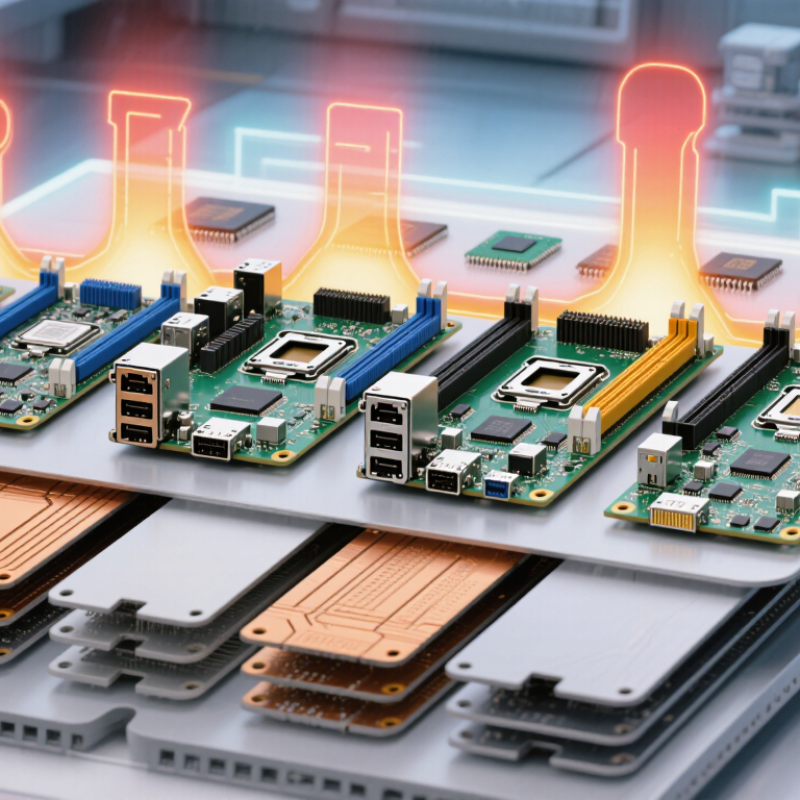
Aluminium PCBs are classified by layer structure, thermal performance, conductor material, and intended application. The ten common types include single-layer, double-layer, multilayer, standard-thermal, high-thermal, insulated-metal-substrate, copper-clad aluminium, flexible aluminium, LED-focused, and power-conversion boards. A ten-type list helps, but the categories often overlap.
A single-layer board suits simple LED strips and compact lighting. Double-layer designs support denser routing and better grounding. Multilayer aluminium PCBs handle complex control circuits, although manufacturing costs increase. Standard-thermal boards usually use ordinary dielectric insulation, while high-thermal versions transfer heat more efficiently. Insulated-metal-substrate boards place a dielectric layer between copper circuits and the aluminium base. That layer controls electrical isolation and thermal resistance.
Copper-clad aluminium boards improve current handling in selected power circuits. Flexible aluminium designs serve applications needing limited bending, but repeated flexing can still cause failure. LED-focused types use thick copper and direct heat paths near the light source. Power-conversion boards support converters, motor controls, and other high-current equipment. The classification is useful, yet not perfectly fixed.
Tips: Check dielectric thickness, thermal conductivity, copper weight, and maximum operating temperature. Measure heat near the component, not only at the aluminium back. A thicker board is not automatically better. Ask for thermal data and cross-section samples before production. Small layout mistakes can create hot spots.
| No. | Aluminium PCB Type | Typical Construction | Typical Dielectric Thermal Conductivity | Common Applications | Main Advantages | Important Considerations |
|---|---|---|---|---|---|---|
| 1 | Single-Sided Aluminium PCB | One copper circuit layer, an electrically insulating dielectric layer, and an aluminium base. | Approximately 0.8–3 W/m·K | LED boards, indicator lighting, small power supplies, and basic motor-control circuits. | Simple construction, low cost, good heat spreading, and straightforward manufacturing. | Limited routing density; components are normally mounted on one side only. |
| 2 | Double-Sided Aluminium PCB | Copper circuit layers on both sides of the dielectric, usually connected with plated or mechanical vias. | Approximately 0.8–3 W/m·K | Higher-density LED assemblies, compact power converters, and control modules. | More routing space and improved circuit integration than single-sided designs. | More difficult to fabricate because of via formation, insulation, and thermal-path requirements. |
| 3 | Multilayer Aluminium PCB | Three or more copper layers separated by dielectric materials above an aluminium heat-spreading base. | Approximately 1–4 W/m·K, depending on the dielectric system. | High-density power electronics, advanced lighting systems, and compact control equipment. | Supports complex routing, power distribution, and signal-ground separation. | Higher cost and more complex thermal management than single- or double-sided designs. |
| 4 | High-Thermal-Conductivity Aluminium PCB | Aluminium IMS construction using a thermally enhanced dielectric layer. | Typically 3–12 W/m·K; specialized materials can be higher. | High-power LEDs, power semiconductor modules, automotive lighting, and energy-conversion equipment. | Lower thermal resistance and improved heat transfer from components to the aluminium base. | Thermal performance depends on dielectric thickness, copper thickness, mounting, and interface materials. |
| 5 | High-Voltage Aluminium PCB | Aluminium substrate with a thicker or specially formulated dielectric and increased electrical clearances. | Commonly 1–3 W/m·K, depending on insulation design. | LED drivers, AC–DC power supplies, industrial power controls, and high-voltage converters. | Combines heat spreading with enhanced electrical isolation between copper and metal base. | Requires careful control of dielectric breakdown strength, creepage, clearance, and test voltage. |
| 6 | LED Aluminium PCB | Usually a single-sided metal-core board optimized for direct thermal transfer beneath LED packages. | Approximately 1–8 W/m·K in common designs. | LED bulbs, downlights, streetlights, floodlights, signage, and architectural lighting. | Improves LED junction-temperature control and can extend operating life when properly heatsunk. | Thermal interface quality, solder-joint reliability, and LED placement strongly affect performance. |
| 7 | Power Electronics Aluminium PCB | Metal-core PCB designed with heavy copper, wide conductors, thermal vias, or localized heat-spreading areas. | Approximately 1–8 W/m·K, selected according to power density. | DC–DC converters, motor drives, battery-management systems, chargers, and switching power supplies. | Provides a low-profile thermal path while supporting high-current copper patterns. | Electrical isolation, copper expansion, current capacity, and component hot spots must be analyzed together. |
| 8 | Thick-Aluminium-Base PCB | Standard insulated metal substrate with a comparatively thick aluminium heat-spreading plate, often several millimetres thick. | Dielectric commonly 1–3 W/m·K; total heat capacity increases with base thickness. | High-power lighting, industrial equipment, transportation electronics, and mechanically demanding assemblies. | Offers greater rigidity, heat capacity, and mechanical support than thin-base constructions. | Heavier, less flexible, and more expensive to machine and assemble. |
| 9 | Hybrid Aluminium PCB | Combination of aluminium heat-spreading sections with conventional FR-4 or other PCB laminate sections. | Aluminium area typically uses a dielectric of about 1–4 W/m·K. | Mixed signal-and-power assemblies, lighting controls, industrial controllers, and compact power modules. | Balances thermal performance, signal routing, cost, and mechanical requirements in one assembly. | Transition areas require careful design to manage insulation, warpage, assembly, and thermal expansion. |
| 10 | Flexible or Formable Aluminium-Backed PCB | A thin flexible circuit or flex-rigid section combined with a thin aluminium stiffener or heat-spreading layer. | Varies widely; the aluminium-backed region commonly uses a dielectric near 1–3 W/m·K. | Space-constrained lighting, displays, sensors, wearable equipment, and electronics requiring controlled bending. | Combines limited flexing capability with localized thermal spreading and mechanical reinforcement. | Not suitable for unlimited bending; bend radius, adhesive fatigue, layer construction, and heat cycling must be evaluated. |
Note: Thermal-conductivity values are typical engineering ranges rather than universal specifications. Actual performance depends on dielectric formulation and thickness, copper weight, aluminium thickness, component layout, thermal interface materials, and heatsink installation.
Common types include single-layer, double-layer, multilayer, flexible, high-Tg, high-thermal, thick-copper, copper-clad, insulated-metal-substrate, and hybrid boards. Categories can overlap.
It suits simple LED modules, compact lighting, and low-cost control circuits. Routing remains basic. Heat still needs attention.
Double-layer boards support denser routing and better grounding. Multilayer boards separate power and signal paths. Manufacturing costs usually rise.
It transfers heat away from concentrated sources, such as bright LEDs or power modules. Measure heat near the component, not only underneath.
They can carry higher current and reduce resistance. However, thicker copper may increase cost and complicate etching. Better is not automatic.
They fit curved housings, narrow lighting strips, and moving assemblies. Limited bending is possible. Repeated flexing may cause cracks or failure.
A thinner dielectric layer often improves heat transfer. It may also reduce electrical isolation margins. Thickness must match voltage and safety needs.
Check heat flow, current, voltage, frequency, board thickness, mounting space, airflow, and service temperature. Real testing matters more than catalog values.
No. Mounting pressure, thermal paste, copper weight, and airflow also affect temperature. A thick board can still develop hot spots.
Test temperature rise under real load and inside the final enclosure. Inspect cross-sections and thermal data before production. Laboratory results can mislead.
Aluminium Pcb technology can be classified by layer count, circuit structure, thermal design, and insulation method. Common categories include single-layer, double-layer, multilayer, flexible, high-power, high-frequency, insulated-metal-substrate, copper-clad aluminium, LED lighting, and mixed-material aluminium PCBs. Each type combines an aluminium base with a suitable dielectric layer and copper circuit to balance electrical performance, heat dissipation, mechanical strength, and manufacturing cost.
The top 10 types serve different technical needs. Single-layer boards are economical and widely used for simple power circuits, while double-layer and multilayer designs support greater circuit density and more complex control systems. High-power and LED boards focus on rapid heat transfer, whereas high-frequency and flexible versions address signal integrity and space limitations. Insulated-metal-substrate, copper-clad, and mixed-material structures provide specialized thermal or electrical performance. Selection should consider power level, operating temperature, component density, frequency, flexibility, insulation requirements, reliability, and budget.

 STHL PCBA