Top Multilayer PCB Manufacturers in China

Time:2026-10-29 Author:Amelia
0%

China remains a central sourcing base for multilayer printed circuit boards, supported by broad material access, dense supplier networks, and large-scale fabrication capacity. Prismark’s 2023 PCB industry analysis estimated global PCB production value at about US$68 billion, following a notable market contraction. That figure matters. It shows why buyers should assess a manufacturer’s resilience, not just its quoted price. Multi Layer Pcb projects also vary widely: a compact controller board may need six layers, while high-speed networking equipment can demand more complex stack-ups, tighter impedance control, and carefully managed copper thickness.

This guide examines leading Chinese manufacturers through practical criteria: engineering support, layer-count capability, quality systems, testing, delivery performance, and communication. Prismark’s industry forecasts track market conditions and regional production, while IPC standards provide widely used technical references for PCB design and acceptance. These sources offer useful context, but they cannot verify any supplier’s current factory performance. Direct audits, sample builds, and documented test results still matter. A polished website is not proof.

Some comparisons are imperfect. Public supplier data can be incomplete, and capabilities change as equipment and production lines are upgraded. Treat rankings as a starting point, then confirm specifications such as minimum trace width, via structures, laminate options, and inspection methods with each factory. For a real project, even a small stack-up detail can affect yield, signal integrity, and cost. That is easy to overlook.
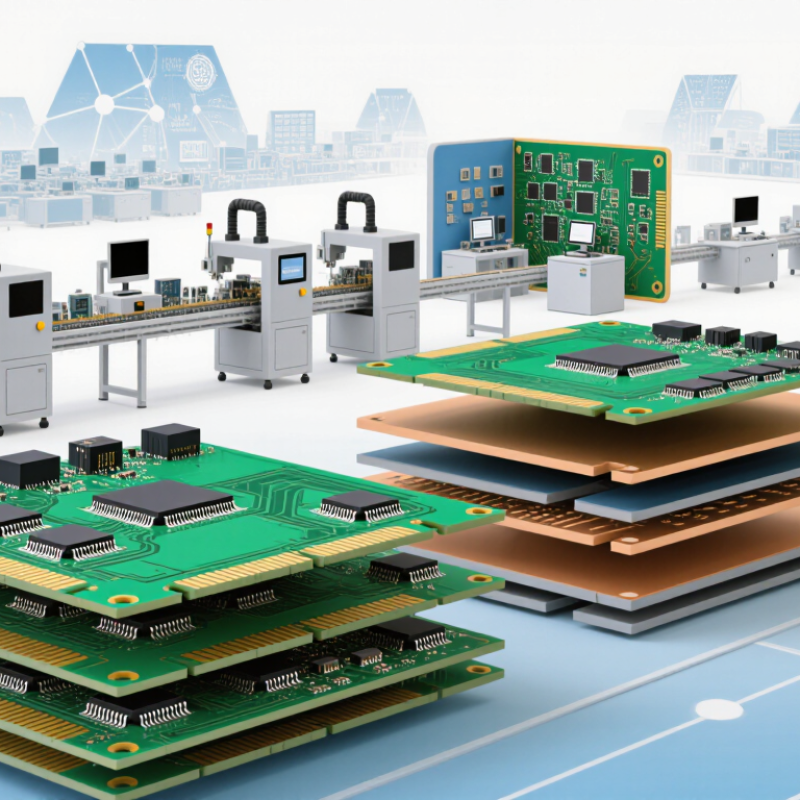
Top Multilayer PCB Manufacturers in China

Understanding Multilayer Printed Circuit Boards

Understanding Multilayer Printed Circuit Boards

A multilayer PCB combines several copper circuits inside one board. Thin insulating sheets separate the copper layers, which are bonded under heat and pressure. Unlike a single-sided board, this structure can route signals through the board’s interior. That matters. It can save space in devices with dense components, such as a compact sensor or communication module.

A four-layer board might place signal layers on the outside and power or ground planes inside. The exact stack-up depends on signal speed, current needs, board thickness, and manufacturing limits. Designers use vias to connect circuits across layers; a small plated hole can link an outer signal trace to an inner plane. More layers do not automatically mean better performance. Not always.

The details deserve careful review. A neat layer count does not reveal whether the stack-up suits the circuit. Copper thickness, dielectric spacing, and via placement all affect electrical behavior and heat flow. During fabrication, layer registration must be accurate, or drilled holes may miss their intended connections. Engineers typically check the design rules and discuss unusual features with the fabricator before production. One limitation is easy to overlook: extra layers can increase cost and make repairs harder. A clear stack-up drawing helps everyone verify the board before it is built.

Overview of China’s Multilayer PCB Manufacturing Industry

China’s multilayer PCB industry combines high-volume production with a broad supplier base. Prismark’s 2024 industry review identifies China as the world’s largest PCB production base, accounting for more than half of global production value. Multilayer boards support dense routing in servers, communications equipment, and vehicle electronics. Their production depends on accurate layer alignment, controlled lamination, and consistent copper thickness. A small registration error can shift a drill hole away from its target pad.

IPC’s industry research highlights ongoing investment in advanced electronics manufacturing and the need for skilled workers. In practice, buyers should examine more than a factory’s advertised layer count. Ask about stack-up control, impedance testing, drilling capability, and documented yield. A sample cross-section can reveal uneven resin fill or misaligned layers. Still, one successful sample does not prove stable production. That deserves scrutiny.

Tips: Request a capability matrix and a recent test report. Confirm whether the quoted stack-up matches your design files. Leave time for engineering review; rushed approvals can miss details.

Top Multilayer PCB Manufacturers in China - Overview of China’s Multilayer PCB Manufacturing Industry
Industry Dimension Market Overview What Buyers Should Verify
Layer count Commercial multilayer boards commonly use 4, 6, 8, or more conductive layers. Higher layer counts are available for complex designs, with practical limits depending on the manufacturer and board construction. Confirm the maximum layer count for the required board size, material, copper weight, and production volume.
Board thickness Common rigid-board designs include nominal thicknesses such as 0.8 mm, 1.0 mm, and 1.6 mm. Other thicknesses can be produced subject to the stack-up and fabrication process. Check finished-thickness tolerance, impedance requirements, and whether the specified thickness includes surface finishes.
Base materials FR-4 is widely used. Options also include high-glass-transition-temperature laminates, halogen-free materials, high-frequency laminates, and metal-core constructions. Specify the exact material grade and required electrical, thermal, flammability, and regulatory properties.
Copper weight Many designs use 0.5 oz or 1 oz copper on outer layers, while 2 oz and heavier copper may be selected for higher current or thermal needs. Availability depends on the layer and design. Verify finished copper thickness, trace-width compensation, and the supplier’s limits for heavy-copper features.
Fine-line capability Minimum trace width and spacing depend on copper thickness, layer position, materials, and process controls. Finer geometries generally require tighter process capability. Request the current capability specification and obtain design-for-manufacturing feedback for the actual data files.
Drilling and vias Multilayer boards use plated through-holes; selected designs may also use blind or buried vias. Small mechanical drills and laser-drilled microvias require suitable processes. Confirm drill diameter, aspect ratio, via structure, plating requirements, and whether via filling or plugging is needed.
Surface finishes Common finishes include hot-air solder leveling, lead-free hot-air solder leveling, organic solderability preservative, immersion silver, immersion tin, and electroless nickel immersion gold. Select a finish based on assembly method, storage conditions, contact requirements, and applicable substance restrictions.
Quality references IPC-6012 provides qualification and performance requirements for rigid printed boards, while IPC-A-600 describes acceptability criteria. ISO 9001 and IATF 16949 are management-system certifications used in relevant supply chains. Check the applicable revision, product class, certificate scope, issuing body, and whether the certification covers the manufacturing site.
Testing and inspection Electrical continuity and isolation testing are common. Depending on product risk and requirements, inspection may also include automated optical inspection, X-ray inspection, and cross-section analysis. Agree on test coverage, acceptance criteria, inspection records, and any first-article or reliability testing before production.
Lead time and production scale Lead time varies with layer count, material availability, process complexity, order quantity, and inspection requirements. Prototype and volume schedules should be assessed separately. Request a quoted schedule for the exact stack-up and quantity, including tooling, engineering review, testing, and shipping time.
Important qualification note The capabilities shown are general industry context, not a guarantee for every factory or product. Confirm current process limits, certifications, and commercial terms directly with the selected manufacturing site.

Criteria for Evaluating Multilayer PCB Manufacturers

Selecting a multilayer PCB manufacturer in China takes more than comparing quoted prices. Start with the board’s stackup, layer count, finished thickness, copper weight, and minimum trace spacing. Ask how the factory controls registration between inner layers. A small shift can weaken fine-pitch connections. Request sample cross-sections, not just a capability sheet. Details matter.

Check whether the manufacturer can build the required via structures, such as blind, buried, or filled vias, and maintain consistency across production batches. Confirm material options, impedance-control methods, and tolerance limits in writing. For high-speed designs, ask for test coupons and impedance reports tied to the order. Review electrical testing, inspection records, and lot traceability. A passing prototype helps, but it does not prove stable volume output.

Communication is part of technical capability. Send a fabrication package and note how promptly questions about annular rings, solder mask clearance, or drill sizes are resolved. Compare quoted lead times with process steps, including lamination and final testing. Visit or audit the facility if practical. Remote reviews have limits. I would also ask about defect rates, though answers may be incomplete. That uncertainty deserves attention, not dismissal.

Leading Multilayer PCB Manufacturers in China

Leading multilayer PCB manufacturers in China are judged by more than production capacity. Strong suppliers can explain how they control layer alignment, resin flow, copper thickness, and drilling accuracy. These details matter when a board has dense routing or tight spacing. Ask for process documentation and sample inspection results, not just a capability sheet.

A practical evaluation starts with the design files. A capable engineering team can flag stack-up conflicts, suggest suitable materials, and clarify impedance requirements before fabrication. It should also describe how it handles test coupons, electrical testing, and traceability. Look for clear answers about inspection methods and corrective actions. Details matter.

Factory visits or documented process reviews can reveal everyday habits: clean material storage, calibrated equipment, and orderly work instructions. Still, a polished facility does not guarantee consistent boards. Request samples that match your intended layer count and application, then review hole quality, registration, and test records. One weakness in this advice: a sample cannot prove long-term consistency. Compare results across multiple orders, and discuss lead times and yield openly. Reliable partnerships grow from evidence, candid communication, and realistic expectations—not impressive claims alone.

Comparing Capabilities, Certifications, and Applications

Multilayer PCB manufacturers in China differ in more than quoted layer counts. Compare their demonstrated stack-up range, minimum trace spacing, copper weight, and tolerance control. Ask whether they routinely produce sequential laminations, blind or buried vias, and controlled-impedance boards. Numbers are not enough. A sample cross-section and impedance report can reveal whether a capability is proven or simply listed.

Certifications should match the work and be checked for scope and validity. ISO 9001 indicates a quality-management system, while automotive or medical projects may require additional, relevant controls. A certificate alone does not guarantee consistent boards. Review inspection records, material traceability, electrical-test coverage, and how nonconforming lots are handled. For telecom equipment, signal integrity may dominate; industrial controls may prioritize thermal endurance and long-term availability.

Applications expose different weaknesses. Dense server boards need reliable fine-pitch routing and stable impedance. Automotive designs often demand strong process control across temperature cycles. Medical devices may call for careful documentation and traceable materials. Match the supplier’s actual production history to your design, then request a pilot build with measurable acceptance criteria. I would not choose on price alone; yet capability tables can be difficult to compare fairly, and a small prototype rarely predicts every production issue.

FAQS

What is a multilayer printed circuit board?

It combines several copper circuits inside one board, separated by thin insulating sheets. That saves space.

Why use a multilayer board instead of a single-sided board?

It routes signals through the board’s interior, helping fit dense circuits into compact devices like sensors and communication modules.

What does a four-layer stack-up usually look like?

Signal layers may sit on the outside, with power or ground planes inside. The exact arrangement depends on the circuit.

How do vias connect different layers?

A plated hole can link an outer trace to an inner circuit or plane. Placement must be accurate.

What should buyers check when evaluating a manufacturer?

Ask about layer alignment, copper thickness, drilling accuracy, impedance testing, and documented yields. Request recent test records.

Can a sample board prove consistent production quality?

No. A sample can show hole quality and registration, but it cannot prove long-term consistency. I would compare results across orders.

Why review the stack-up before fabrication?

Dielectric spacing, copper thickness, and via locations affect electrical behavior and heat flow. A clear drawing helps catch mismatches.

Do more layers always improve performance?

Not necessarily. Extra layers may increase cost and make repairs harder. More is not always better.

Conclusion

This article explores the structure and advantages of multilayer printed circuit boards, including how stacked conductive layers support compact designs, reliable connections, and increasingly complex electronic functions. It also introduces China’s multilayer PCB manufacturing industry, where production capabilities range from standard board fabrication to customized solutions for demanding applications.

To help readers assess potential suppliers, the article outlines key evaluation criteria such as engineering expertise, production capacity, quality controls, certifications, lead times, and customer support. It compares the capabilities and typical applications of leading manufacturers without focusing on brand names, helping readers understand how different providers may serve sectors such as communications, computing, automotive electronics, and industrial equipment. By considering these factors together, readers can make more informed decisions when sourcing a Multi Layer Pcb that meets their technical, quality, and project requirements.


Amelia

Amelia

Amelia is a seasoned marketing professional with a wealth of expertise in our company’s core offerings. With an unwavering passion for driving growth and innovation, she plays a pivotal role in shaping our marketing strategies and enhancing brand visibility. A key aspect of her responsibilities......