Global electronics sourcing is becoming more complex, not merely more international. Products now combine dense computing, wireless connectivity, power control, and strict traceability requirements. In this environment, Multi Circuit Boards can support a more flexible sourcing strategy across prototypes, low-volume builds, and scaled production. IPC’s electronics industry research consistently highlights supply continuity, component availability, and manufacturing capacity as major procurement concerns. These pressures are visible on a factory floor: a delayed laminate shipment can stop assembly lines, even when every other component is ready.
Independent market research supports this direction. Grand View Research identifies continued growth in the global printed circuit board market, driven by automotive electronics, telecommunications, consumer devices, and industrial automation. The World Economic Forum’s supply-chain studies also emphasize regional diversification and stronger supplier visibility. Multi Circuit Boards may help buyers compare capabilities across countries, technologies, and production volumes. Their value is not simply lower pricing. It can include engineering communication, quality documentation, controlled lead times, and alternative manufacturing routes.
However, global sourcing is not automatically safer. Distance can create inspection delays, design misunderstandings, and inconsistent compliance records. That is the uncomfortable part. A supplier should be assessed through IPC standards, ISO 9001 practices, material declarations, process audits, and verified customer references. Reports provide direction, not proof. Actual performance still depends on copper thickness, layer registration, solder-mask quality, testing discipline, and honest communication. For procurement teams, the strongest case for Multi Circuit Boards is therefore practical: wider capability, measurable risk controls, and a sourcing structure that can adapt when markets change.
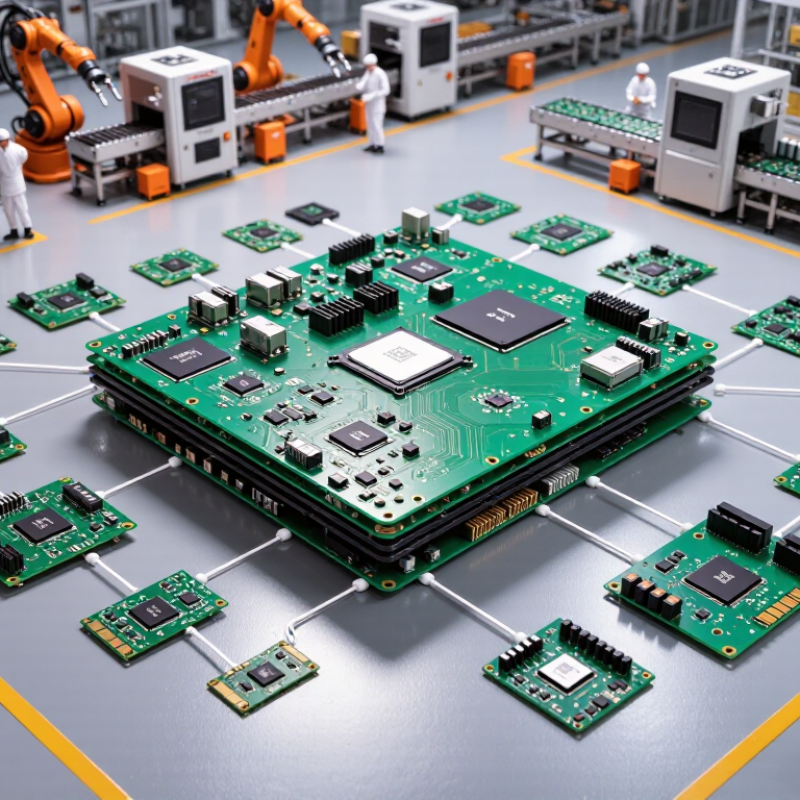
Why Choose Multi Circuit Boards for Global Sourcing?
In sourcing discussions, “multi-circuit board” usually means a multilayer printed circuit board. It contains several copper layers inside one compact panel. Each layer carries power, signals, or grounding paths. Insulating material separates these layers and controls electrical interference. Tiny plated vias connect selected layers through drilled holes. That is the mechanism.
This structure supports dense designs without making the board much larger. It suits industrial controls, medical instruments, communication equipment, and automotive electronics. Prismark’s 2024 global PCB industry data places worldwide sales near US$69 billion in 2023. Grand View Research also projects continued market expansion through 2030, driven by connected devices and advanced electronics. The numbers indicate demand, not guaranteed quality.
For global sourcing, layer count affects cost, lead time, testing, and factory capability. A four-layer board may solve routing problems. An eight-layer design can improve grounding and signal integrity. More layers are not always better. A thicker board may complicate drilling, heat removal, and assembly. In practice, I would review stack-up drawings, impedance targets, copper thickness, and inspection records before comparing prices. IPC-2221 design guidance helps define reliable spacing and materials, but it cannot replace production verification. One assumption can fail. A supplier may meet the drawing yet miss performance under heat, vibration, or repeated cycling. Small pilot batches and cross-section analysis expose those weaknesses early.
| Dimension | What It Means | Typical Technical Data | Importance for Global Sourcing |
|---|---|---|---|
| Basic definition | A multi-circuit board is a printed circuit board that contains several electrically connected conductive layers separated by insulating dielectric material. | Commonly produced as 4-layer, 6-layer, 8-layer, or higher-layer boards; the required layer count depends on circuit density, power distribution, and signal-integrity requirements. | A standardized multilayer design can support multiple manufacturing locations while maintaining the same electrical architecture. |
| Layer structure | Signal, power, and ground layers are stacked into one compact board and electrically connected through plated holes or microvias. | A typical 6-layer stack-up may use four signal layers plus dedicated power and ground planes, although the exact arrangement varies by design. | A documented stack-up reduces interpretation differences between suppliers and improves quotation comparability. |
| How electrical connections work | Copper traces carry current and signals, while vias provide vertical connections between different copper layers. | Through vias pass through the entire board; blind vias connect an outer layer to an internal layer; buried vias connect internal layers only. | The required via technology affects tooling, inspection, yield, cost, and the number of qualified suppliers. |
| Substrate material | The dielectric material electrically separates copper layers and provides mechanical support. | Epoxy-glass laminate materials are widely used for general-purpose multilayer boards; high-frequency, high-temperature, or low-loss applications may require specialized laminates. | Material availability, approved alternatives, compliance documentation, and thermal performance should be checked before selecting a sourcing region. |
| Copper thickness | Copper thickness determines current-carrying capacity, resistance, heat generation, and manufacturing requirements. | Common finished copper values include approximately 18, 35, and 70 micrometres; heavier copper may be specified for higher-current circuits. | Clear copper specifications help prevent substitutions that could change impedance, temperature rise, or finished-board thickness. |
| Signal integrity | The board structure controls signal impedance, crosstalk, electromagnetic interference, and return-current paths. | Controlled-impedance designs commonly specify target values such as 50 ohms for single-ended traces or approximately 90–100 ohms for differential pairs, depending on the interface. | Global suppliers must receive the approved stack-up, trace geometry, dielectric data, and impedance tolerances to reproduce electrical performance. |
| Thermal management | Power planes, copper distribution, thermal vias, and component placement help move heat away from high-power areas. | Thermal vias are commonly placed beneath or near heat-generating components to transfer heat toward internal or external copper areas. | Thermal design rules should be verified with fabrication drawings because material changes and copper distribution can affect reliability. |
| Dimensional capability | Board thickness, layer registration, hole size, trace width, spacing, and finished dimensions determine manufacturability. | Practical tolerances vary by board thickness, layer count, material, feature size, and process capability; the fabricator’s capability table should be used for final limits. | Comparing capability tables before design release can reduce redesigns, nonconformities, and unexpected tooling charges. |
| Manufacturing sequence | Typical production includes imaging, etching, lamination, drilling, hole plating, outer-layer processing, solder-mask application, surface finishing, electrical testing, and inspection. | Multilayer fabrication requires repeated registration and bonding steps, making process control more complex than for a simple single-layer board. | Suppliers should be evaluated for process controls, traceability, inspection equipment, change management, and corrective-action procedures. |
| Quality verification | Testing confirms that the board meets electrical, dimensional, material, and visual requirements. | Common checks include automated optical inspection, electrical continuity and isolation testing, microsection analysis, dimensional inspection, and impedance testing when specified. | A consistent inspection plan makes quality results more comparable across countries and production sites. |
| Supply-chain flexibility | A qualified design can often be produced by more than one facility when materials, stack-up, tolerances, and process controls are equivalent. | Second-source approval generally requires sample builds, engineering review, test data, and confirmation that the alternative process does not alter fit, form, or function. | Multi-sourcing can reduce dependence on one production location and improve resilience during capacity, logistics, or regional disruption. |
| Cost drivers | Price is influenced by material, board area, layer count, copper weight, drilling complexity, surface finish, order quantity, testing, and yield. | Higher layer counts, smaller features, sequential lamination, microvias, special laminates, and heavy copper generally increase manufacturing complexity and cost. | A total-cost comparison should include tooling, testing, freight, duties, quality control, inventory, and engineering-change costs rather than unit price alone. |
| Compliance and documentation | Compliance covers restricted substances, material declarations, product safety requirements, and manufacturing records relevant to the end market. | Typical documentation may include material declarations, certificates of conformity, test reports, process records, and revision-controlled fabrication data. | Defined documentation requirements simplify customs, customer audits, regulatory review, and supplier transitions across regions. |
Note: Technical values are representative industry ranges or examples. Final specifications must be confirmed against the approved PCB stack-up, fabrication drawing, applicable standards, and the selected supplier’s capability documentation.
It is a multilayer circuit board with several copper layers inside one compact panel. Insulating material separates the layers. Small plated holes connect selected layers.
Multiple layers carry power, signals, and grounding paths efficiently. This supports compact equipment and reduces difficult surface routing. More layers are not always better.
Layer count influences cost, drilling difficulty, testing, and production time. A four-layer board may solve routing needs. An eight-layer board may improve grounding and signal control.
Compare glass-transition temperature, thermal expansion, dielectric properties, moisture resistance, and heat performance. A material label alone does not prove identical performance.
Check trace width, finished-hole tolerance, via structure, solder-mask alignment, and electrical testing. Ask for inspection records and actual capacity. Promises can be optimistic.
Request a pilot batch and inspect cross-sections. Review copper thickness, hole walls, layer registration, and surface finish. Thermal cycling may reveal hidden weaknesses.
No. Compare tooling, testing, freight, rework, yield, and possible field failures. My earlier focus on unit price was not always sound.
Use strong packaging and moisture protection for shipment. Allow time for congestion and customs handling. Keep a backup route. Schedules sometimes fail.
Keep revision-controlled drawings, stack-up details, test methods, and written change approvals. Clear acceptance limits prevent arguments later. Small omissions become expensive.
Multi Circuit Boards are engineered assemblies that combine multiple circuit layers or interconnected board sections to support complex electrical functions in a compact, reliable format. This article explains how their layered structures work and why they are well suited to global sourcing, including design flexibility, efficient space utilization, scalable production, and compatibility with diverse electronic applications. It also highlights how buyers can compare board layouts, materials, surface finishes, layer counts, and manufacturing methods according to performance and project requirements.
Selecting an international supplier requires more than comparing unit prices. Buyers should assess technical capabilities, production consistency, inspection procedures, communication, and capacity to meet delivery schedules. Quality certifications, material traceability, regulatory compliance, packaging standards, shipping arrangements, and total landed cost are also important considerations. By evaluating these factors together, companies can reduce sourcing risks, improve supply continuity, and choose Multi Circuit Boards that provide dependable performance and long-term value.

 STHL PCBA