Explore our high-performance electronic manufacturing capabilities serving global enterprise projects from prototyping to volume execution.
Modern electronic engineering demands agility, adaptability, and high reliability. The transition from traditional rigid boards to advanced flexible printed circuits (Flex PCBs) is driven by the industry's push towards miniaturization, complex spatial integration, and high dynamic bending requirements. High-Quality Quick Turn Flex PCB services play a critical role in this shift, offering rapid prototyping that bridges the gap between layout validation and high-volume factory production.
Flexible circuits utilize specialized thin substrates, such as polyimide, to deliver unparalleled design flexibility. These characteristics enable hardware engineers to fit complex electronic systems into tight, irregularly shaped spaces, reducing total assembly weight by up to 70% and assembly steps by replacing bulky wire harnesses. However, executing quick-turn flex PCBs requires precise material management, advanced manufacturing capabilities, and rigorous quality testing to ensure the integrity of the flexible traces under persistent thermal and mechanical stress.
STHL offers comprehensive solutions designed to streamline this path. By utilizing state-of-the-art lamination machinery, automated optical alignment, and localized high-purity raw material logistics, we eliminate standard production bottlenecks. Our services ensure that complex single-sided, double-sided, and multi-layer flex circuits are designed, fabricated, and validated rapidly, maintaining compliance with military and medical performance standards.
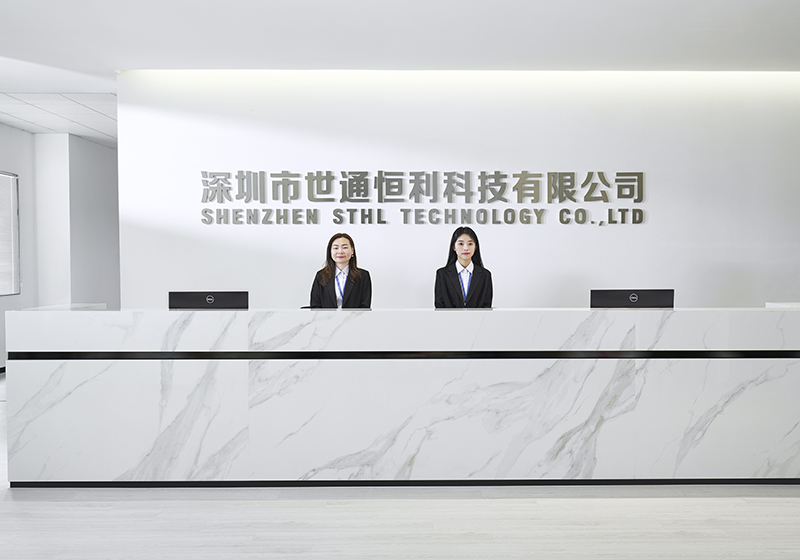
Established in 2006, STHL has built 20 years of expertise in electronics contract assembly manufacturing, expanding to a dedicated workforce of over 220 skilled specialists.
Our 10,000 sqm production facility operates 7 high-speed SMT assembly lines, 2 DIP/THT lines, 2 dedicated functional testing lines, and 2 complete box build packaging lines.
We deliver specialized electronics assembly services to leading firms in the USA, Germany, Italy, UK, Poland, New Zealand, Argentina, Brazil, Turkey, Korea, Thailand, and over 90 regions globally.
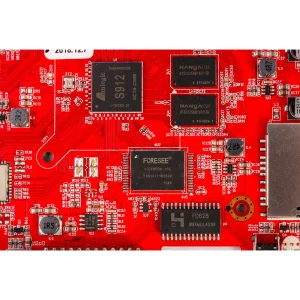
At STHL, we handle a wide range of advanced, high-density components with high precision. Our manufacturing infrastructure is designed to place complex components with strict pitch spacing down to 0.35mm.
Ball Grid Array (BGA) & Ultra-Fine BGA (uBGA): We have the engineering expertise to process complex BGAs and micro-BGAs, utilizing automated pick-and-place equipment and custom thermal profiling to ensure reliable solder joint formation.
QFN, QFP, SOIC, & PLCC Packages: Our advanced automated optical alignment tools handle various surface-mount packages efficiently, preventing bridging and voids under components with bottom-terminated pads.
Package-on-Package (PoP) & Small Chip Packages: We are equipped to mount 0201 and 01005 passives alongside complex vertically integrated logic structures (PoP) with high precision.
Our commitment to quality extends through every stage of production. We utilize advanced inspection techniques, including high-definition Automated Optical Inspection (AOI) and 3D X-Ray laminography, to verify internal solder integrity and guarantee defect-free assembly.
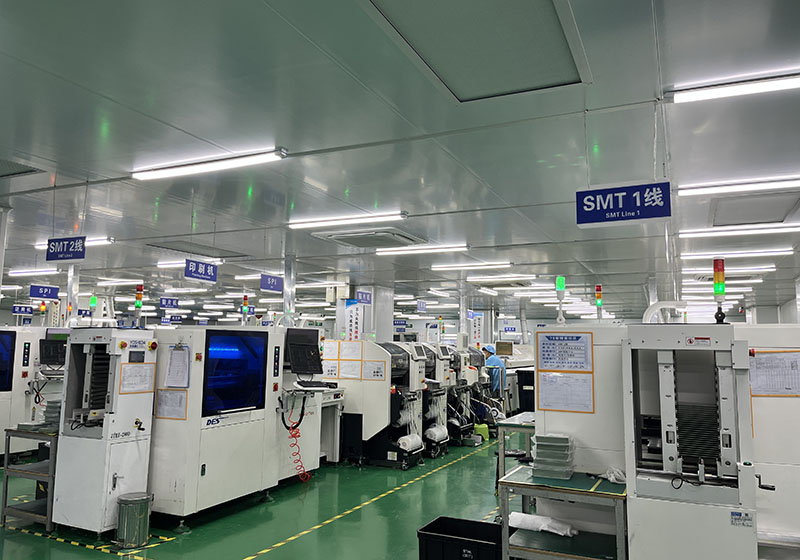
Even in an industry focused on miniaturization, Through-Hole Technology (THT) remains critical for power delivery, connector integrity, and heavy mechanical stress distribution. STHL offers specialized THT services that run alongside our SMT lines.
Manual & Automatic Component Insertion: We combine automated lead forming and insertion equipment with manual placement by IPC-A-610 trained technicians for complex or non-standard components.
Custom THT Assembly Fixtures: We design and manufacture custom wave solder carriers and fixtures to protect surface mount components on the bottom side of double-sided boards, ensuring uniform heat transfer and solder distribution.
ESD & RoHS Compliant Soldering: Our processes operate under electrostatic discharge (ESD) protected conditions and align with RoHS requirements, utilizing lead-free wave soldering and selective soldering machines.
Rigorous Inspection & Functional Validation: Just like our SMT assemblies, THT boards undergo automated visual checks, manual inspection, and custom functional testing (FCT) before packaging and shipping.
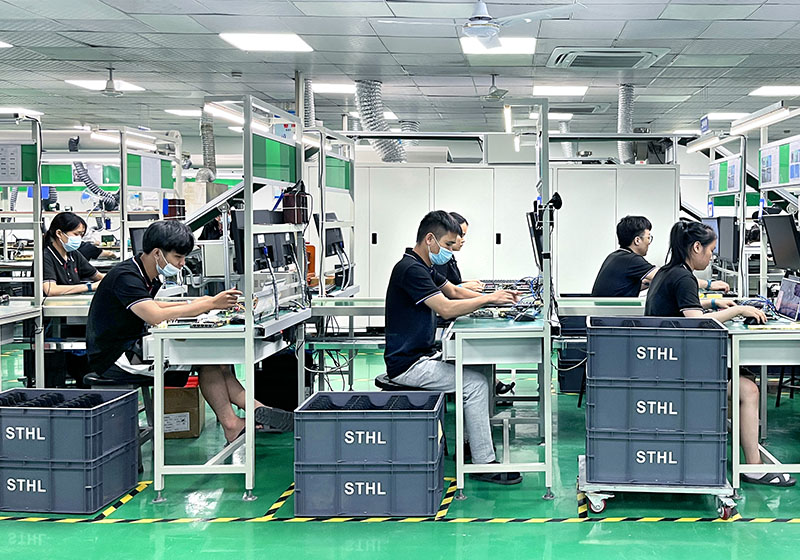
Our services are optimized to support product development from initial design and rapid prototyping to large-scale volume production.
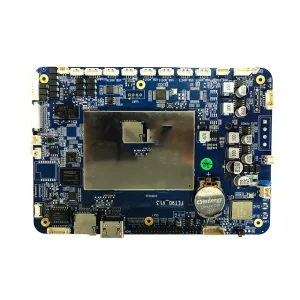
STHL operates 7 automated PCB assembly lines for both prototype and mass production. Advanced SMT ensures precise component placement and quality. Skilled technicians provide efficient THT assembly and RoHS-compliant lead-free soldering.
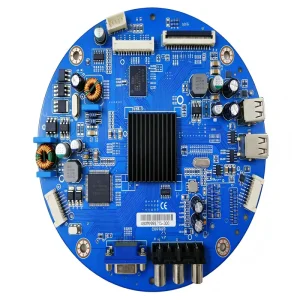
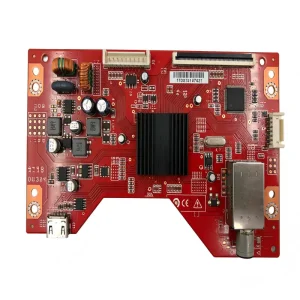
STHL PCB fabrication service produces high-quality, reliable printed circuit boards from simple singles to complex multi-layers, from flex PCB to rigid-flex PCB, we use premium materials and controlled processes to meet precise specifications.
STHL offers global electronic component sourcing and supply chain solutions. Our vast supplier network and expertise ensure access to genuine, certified parts, mitigating risks of counterfeits, allocation, and long lead times to secure your production schedule.
With the precision manufacturing of cable assembly components including handles, retention systems, connectors, and shielding in a wide range of materials and finishes, we have performed many successful cable assembly for many customers from various industrial applications.
Making your projects at STHL from SMT assembly to box build assembly is very cost-effective and fast to market. Covering everything from putting a PCBA into the enclosure with all functions testing to a complete product assembly packaged and ready for delivery to your customers, we can supply the full support.
STHL conducts functional testing (FCT) to verify product performance, preventing defects such as circuit issues, missing or incorrect components. This ensures delivered products are stable and fully qualified.
Analyzing structural market transitions, advanced material characteristics, and strategic sourcing parameters.
As 5G networks, ADAS automotive systems, and IoT communication protocols scale, standard polyimide substrates often reach their dielectric performance limits. Liquid Crystal Polymer (LCP) and Modified Polyimide (MPI) have emerged as key materials for high-frequency applications. LCP features a low dielectric constant (Dk ~2.9) and dissipation factor (Df ~0.002) that remain stable up to 110 GHz, while also providing high moisture barrier properties. STHL utilizes advanced vacuum press profiles to maintain material consistency during lamination, helping to prevent moisture retention and trace separation.
Miniaturization in medical diagnostics and consumer wearables requires tight line widths and trace spacing (down to 25μm). To maintain structural integrity on flexible substrates, specialized chemical etching and cleanroom processes are essential. Our cleanroom facilities feature dust control systems to prevent airborne particulates from settling during dry-film imaging. This helps prevent trace fractures or impedance variations that can occur during dynamic bending cycles.
Procurement managers face challenges such as material shortages and component obsolescence. STHL addresses this through real-time API integrations with leading global component distributors and a network of audited local component manufacturers. We maintain inventory buffers of critical substrates, coverlay materials, and common passive components. This setup allows us to execute quick-turn prototype builds within 24 to 72 hours, reducing the risk of project delays.
Multi-layer flex circuits offer design freedom but can accumulate thermal energy. We integrate specialized heat sinks, selective metal backing (aluminum and stainless steel stiffeners), and high-conductivity thermal interface materials (TIM). Using advanced thermal profiling, we design thermal reliefs that protect heat-sensitive surface-mount components, helping to ensure long-term reliability under varying temperature cycles.
Engineered for high performance. Our factory processes flexible printed circuit boards to meet strict aerospace, automotive, and industrial specifications.
1 to 8 Layers for Pure Flex; up to 20 Layers for Rigid-Flex hybrids.
0.05 mm / 0.05 mm (2 mil / 2 mil) under controlled etching conditions.
Polyimide (PI), Liquid Crystal Polymer (LCP), Polyester (PET).
12μm (1/3 oz), 18μm (1/2 oz), 35μm (1 oz), up to 70μm (2 oz).
Polyimide (PI), FR4, Stainless Steel, Aluminum, Polyester.
ENIG, ENEPIG, Immersion Tin, Immersion Silver, OSP.
≤ 0.12% after thermal processing and curing cycles.
± 10% standard; ± 5% with custom engineering design support.
Our quality assurance framework features end-to-end traceability, strict process controls, and international compliance certifications.
At STHL, quality control is integrated into every phase of manufacturing. As an IATF16949, ISO9001, ISO14001, and ISO13485 certified electronics manufacturer, we align our production lines with high quality and regulatory compliance standards. These certifications enable us to support demanding sectors such as automotive electronics, medical device manufacturing, and industrial automation.
We implement automated traceability throughout the manufacturing process. From raw material receipt to final functional testing, every board is marked with a unique barcode. This enables real-time tracking of laminator thermal profiles, reflow oven temperature curves, solder paste deposition metrics, and operator touchpoints.
Common technical questions on flexible circuit design, material selection, and rapid manufacturing prototyping.
Our assemblies support demanding applications across various industries, including medical, automotive, and industrial automation.
 STHL PCBA