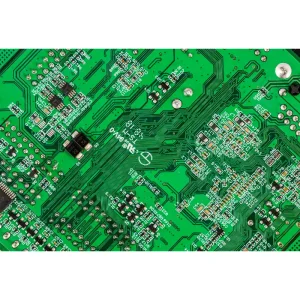
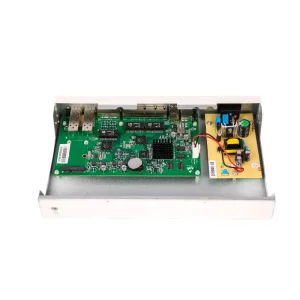
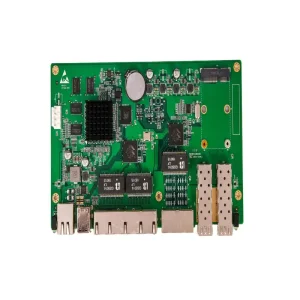
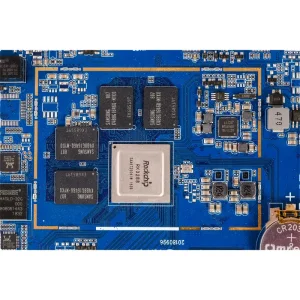
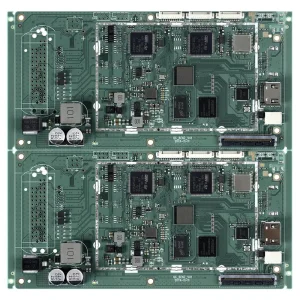
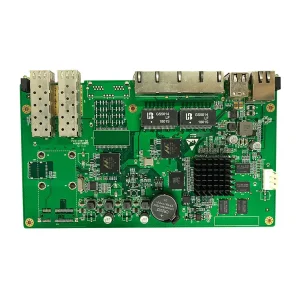
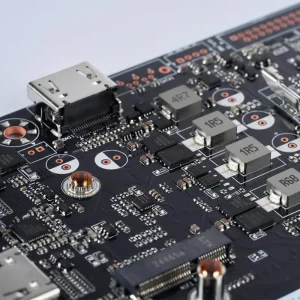
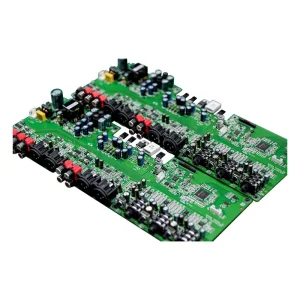
Deploying state-of-the-art SMT and THT systems to execute high-density component placement on multi-layer PCBs, built in compliance with international aerospace, automotive, and automation regulatory frameworks.
Canada’s modern industrial framework is heavily dependent on reliable, robust microelectronics. Across technology hubs in Ontario (Toronto, Waterloo, Ottawa), Quebec (Montreal's aerospace cluster), British Columbia (Vancouver's IoT & Clean-tech innovators), and Alberta (Calgary's industrial automation and smart grid systems), local businesses require high-standard engineering capabilities.
Whether it is managing severe temperature fluctuations in Arctic monitoring gear, withstanding physical vibrations in heavy oilfield drilling equipment, or delivering failure-free operations in medical support applications, Canadian OEMs need more than simple board assembly. They require comprehensive product lifecycle assistance, Design for Manufacturability (DFM) verification, and certified quality standard compliance.
STHL bridges this operational gap by combining rigorous, certified manufacturing workflows with agile supply chain structures, enabling Canadian tech enterprises to lower overall development costs while maintaining superior product reliability.
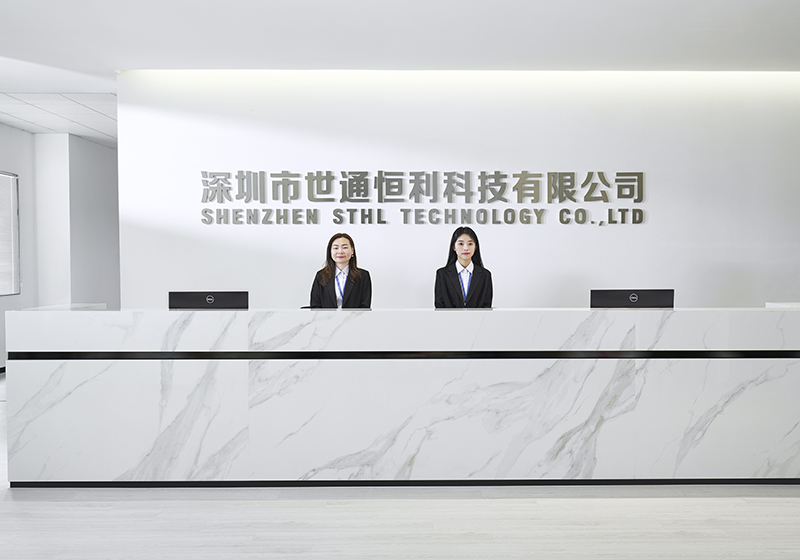
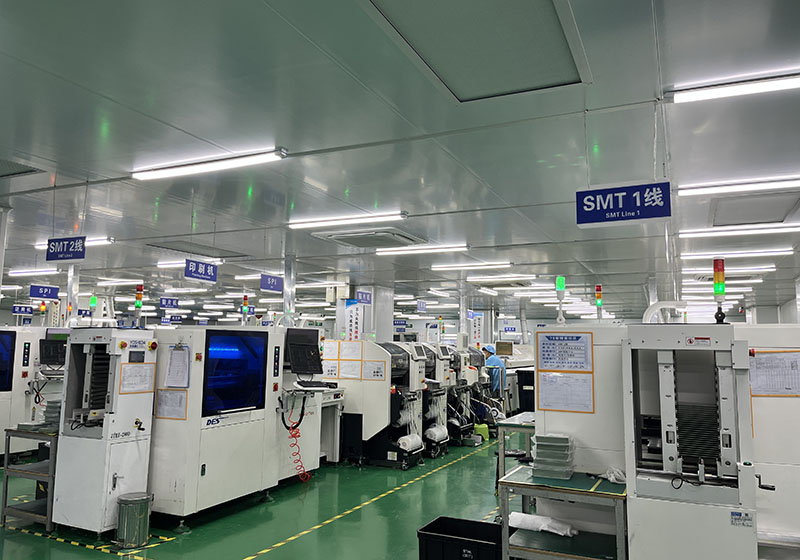
Shenzhen STHL is a premier provider of electronics manufacturing services (EMS) based in China, delivering end-to-end integration across the electronics product lifecycle to global clients. Our services support the entire industry chain, including PCB layout, component sourcing, PCB fabrication, PCBA assembly, cable assembly, box-build assembly, and functional testing.
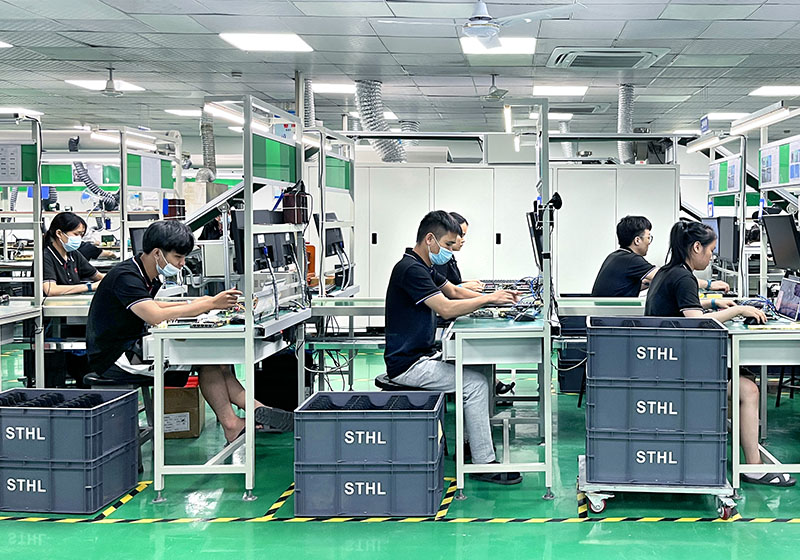
Established in 2006, STHL has built 20 years of experience in contract electronics manufacturing. We support our global partners with a dedicated workforce of over 220 professionals, working across a 10,000-square-meter production facility. This infrastructure is equipped with 7 automated SMT lines, 2 DIP/THT lines, 2 functional testing lines, and 2 full system integration assembly lines.
We supply specialized assembly services for energy power systems, communications networks, automotive modules, healthcare devices, consumer electronics, computer systems, security controls, and complex industrial instrumentation. Our client portfolio spans the USA, Germany, Italy, the UK, Poland, New Zealand, Argentina, Brazil, Turkey, South Korea, Thailand, and more than 90 other countries and regions worldwide.
STHL is certified under IATF 16949 (Automotive), ISO 9001 (Quality Management), ISO 14001 (Environmental Management), and ISO 13485 (Medical Devices). Our assemblies comply strictly with RoHS environmental directives and global safety requirements. Backed by structured material sourcing, automated AOI/X-Ray inspection, and functional verification, we serve as a reliable long-term manufacturing partner for businesses requiring high-level precision.
Our technical capability spans both high-precision surface mount (SMT) and high-durability through-hole (THT) assembly technologies, designed to support high-performance industrial requirements.
We assemble high-density component geometries, including Ball Grid Array (BGA) and Ultra-Fine BGA (uBGA) with fine pitch spacing, QFN, QFP, SOIC, PLCC packages, and Package-on-Package (PoP) structures. Utilizing high-resolution automated optical inspection (AOI) and real-time 3D X-Ray laminography, we confirm clean solder joints, accurate alignment, and void-free placement under concealed pins.
Our THT processes are designed for components subjected to mechanical strain. We utilize both manual placement for custom geometries and automated wave soldering systems for large batches. Supported by custom-milled soldering fixtures, ESD-protected assembly environments, and RoHS-compliant lead-free solder alloys, we verify strong, stable connection points across all structural boards.
Our Quality Management workflow subjects assemblies to comprehensive electrical and environmental testing. This includes in-circuit testing (ICT) to locate component defects, customized functional testing (FCT) to verify device operation, and thermal cycling to screen for potential field infant mortality. These testing protocols prevent structural defects and guarantee that delivered units arrive ready for immediate system deployment.
Deploying electronic components in Canada requires strict adherence to distinct national and regional standards. Electronic devices sold in the Canadian market must often carry certifications like CSA (Canadian Standards Association) mark, comply with UL/cUL safety standards, and follow Innovation, Science and Economic Development Canada (ISED) regulations for electromagnetic compatibility (EMC/EMI).
At STHL, our engineering team works closely with your local design teams to review schematic files and BOM layouts (DFM/DFT) before production. This early design review helps ensure compatibility with compliance testing protocols, preventing delays during certification phases.
Additionally, we understand Canada's distinct climate conditions. Industrial systems, outdoor telecommunication hubs, and transit controllers must operate reliably in sub-zero winter temperatures. We provide conformal coating options (acrylic, polyurethane, or silicone) to safeguard critical circuitry against humidity, thermal cycling, and oxidation.
Managing electronics manufacturing involves navigating component availability and logistics. Working with STHL gives Canadian OEMs a direct gateway to the Shenzhen electronics cluster—the heart of the global component supply chain. This physical proximity allows us to source verified, original active and passive components rapidly, bypassing multi-step import delays.
We work directly with primary silicon manufacturers and franchised distributors (Arrow, Avnet, Future Electronics, DigiKey, Mouser) to source parts and secure hard-to-find components during supply allocations, maintaining stable production schedules.
We offer rapid prototyping services to help Canadian engineering departments validate design revisions quickly, accelerating overall time-to-market. Once verified, we scale directly to large-batch production within the same facility.
We handle customs clearance, export declarations, and air/sea freight logistics to primary Canadian hubs, including Vancouver, Calgary, Toronto, and Montreal, ensuring smooth transit and reliable delivery schedules.
The electronics manufacturing industry is evolving rapidly, driven by IoT, edge computing, electric vehicles (EV), and high-power green energy systems. Modern PCBA designs demand tighter spacing, higher thermal dissipation capacities, and lower signal losses. Multi-layer rigid-flex boards and high-density interconnect (HDI) structures are becoming the standard for compact smart devices and wearable healthcare monitors.
At STHL, we address these challenges by investing in our manufacturing systems. Our reflow ovens utilize nitrogen atmosphere environments to prevent oxidation on micro-pads, ensuring clean solder joints for components down to 01005 footprints. Our assembly operations employ automated inspection protocols to verify assembly quality on complex multi-layer designs.
Additionally, green manufacturing is a key priority. We use clean lead-free chemistry, energy-efficient curing processes, and follow ISO 14001 guidelines to help our Canadian clients meet their corporate sustainability and environmental targets.
We support high-density interconnect designs, micro-via geometries, and ultra-fine pitch component placement for complex processor applications.
We assemble thick copper PCBs designed to handle high current levels and provide stable thermal management in EV chargers and power converters.
Our processes use halogen-free materials, lead-free soldering systems, and adhere strictly to RoHS environmental standards.
We provide end-to-end contract manufacturing services, managing the fabrication process from initial PCB layout verification through component sourcing, assembly, and final system testing.
STHL runs 7 automated assembly lines configured to process prototype runs and mass production batches. Our surface mount (SMT) machinery handles high-density arrays, while our through-hole (THT) assembly setups deliver robust connections for heavier components.
We manufacture rigid, flexible, and rigid-flex multi-layer boards. Using certified FR-4 materials, metal cores, and high-frequency laminates, we build substrates that align with your electrical and mechanical requirements.
We coordinate procurement across a verified supply network. By managing global component sourcing directly, we verify component trace integrity, source hard-to-find parts, and help mitigate supply chain risks.
We assemble and test custom wire harnesses, specialized power lines, and interface cables. We build complete interconnect assemblies utilizing custom connectors and shielding options to support demanding industrial environments.
Our box-build services handle complete system integration. We install completed boards into custom enclosures, run sub-assembly cabling, integrate user interfaces, and execute final functional verification testing to deliver fully packaged products.
We build dedicated testing jigs to run automated test scripts, verify circuit levels, and test system communications. This ensures that every completed device complies with operational specifications before leaving our facility.
We manufacture custom PCB assemblies for multiple critical sectors, including smart home automation, telecommunications, aerospace systems, and energy infrastructure.
To ensure high quality across all shipments, STHL operates a multi-level quality control system designed to verify performance on every assembly.
We use automated inline solder paste inspection (SPI) and automated optical inspection (AOI) to evaluate paste thickness, alignment, component placement, and solder joints. For obscured connections beneath BGAs or leadless packages, we employ high-resolution 3D X-Ray transmission imaging to check for micro-voids, bridge defects, and structural integrity.
We build customized functional testing (FCT) jigs to simulate real-world operating environments for your boards. These functional tests run diagnostic scripts, verify key voltage and current levels, check communications, and ensure your assemblies perform to specification before shipment.
Find answers to common questions regarding logistics, quality standards, certification processes, and supply chain management for Canadian imports.
 STHL PCBA