Pre-engineered templates and production portfolios optimized for German industrial automation, safety standards, and commercial applications.
As the European industrial engine accelerates its transition towards Industry 4.0 and green electromobility, the demand for highly reliable, precision-engineered Printed Circuit Board Assemblies (PCBA) has reached unprecedented levels. German device developers, middle-market entities (the renowned Mittelstand), and multinational enterprises require manufacturing partners that not only scale production but also maintain strict compliance with global engineering standards. Shenzhen STHL has established itself as an authoritative leader in electronics manufacturing services (EMS), providing comprehensive end-to-end support across the entire value chain.
Founded in 2006, STHL has built 20 years of robust experience in electronics contract assembly manufacturing. Spanning a state-of-the-art 10,000 sqm production facility, we operate 7 high-speed SMT assembly lines, 2 DIP/THT lines, 2 functional testing (FCT) lines, and 2 finished device/box-build assembly lines. This operational setup allows us to seamlessly bridge the gap between initial DFM prototyping and high-volume serialized production, serving high-precision demands across Germany, Europe, North America, and over 90 regions globally.
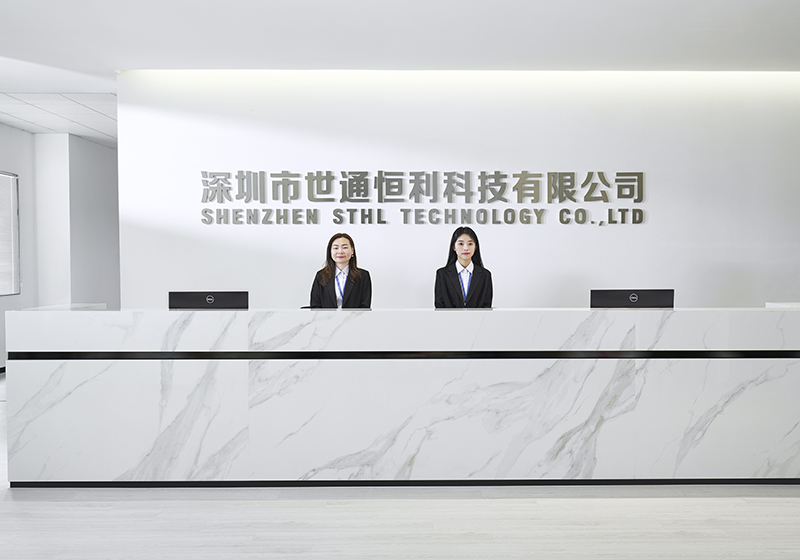
Enterprise capacity tailored to handle challenging layouts, rigid-flex substrates, and complex component configurations.
How Chinese supply chains support German machinery, automotive sectors, and the transition to renewable systems.
Germany leads the global automotive sector. The rise of Electric Vehicles (EVs), advanced Battery Management Systems (BMS), ADAS radar systems, and onboard charging systems demands rigorous adherence to IATF 16949. STHL provides heavy-copper PCBA, thermal management solutions, and high-frequency substrate assembly to support extreme driving environments.
Smart factories in Baden-Württemberg and Bavaria depend on reliable PLCs, multi-channel sensor arrays, and IoT gateways. We offer specialized Surface Mount Technology (SMT) and Through-Hole (THT) hybrid assembly that withstands vibration, wide thermal gradients, and electromagnetic interference typical of industrial floors.
With Germany's aggressive "Energiewende" targets, high-efficiency solar inverters, wind turbine control boards, and localized battery storage systems require robust power supply PCBA applications. We build high-voltage power PCBA with advanced component layout designs to ensure optimal thermal performance and minimal dissipation.
German engineering emphasizes zero-defect policies and long-term product durability. To meet this standard, STHL engages in early-stage engineering collaborations. By conducting comprehensive Design for Manufacturing (DFM) reviews prior to stencil creation, we identify potential trace routing conflicts, thermal bottlenecks, or component geometry mismatches. This proactive optimization significantly reduces iteration cycles, keeping German hardware projects on budget and aligned with target time-to-market windows.
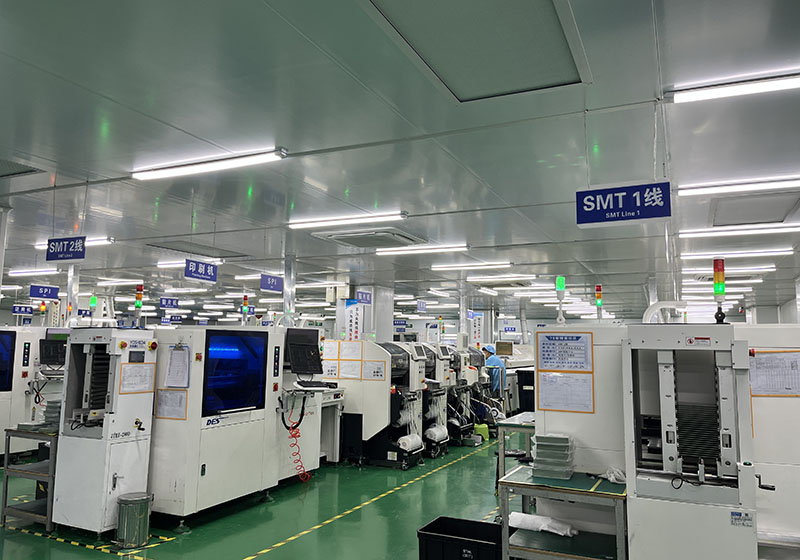
Modern electronic modules demand maximum component density. Our SMT production capabilities allow us to process highly complex multi-layer boards using state-of-the-art pick-and-place machinery. We can handle a wide range of advanced components, including:
Our SMT process is backed by automated solder paste inspection (SPI), multi-zone reflow ovens, and in-line Automatic Optical Inspection (AOI) to guarantee consistent solder joints across high-speed assembly runs.
For high-power, high-stress, and heavy mechanical interfaces, Through-Hole Technology (THT) remains indispensable. STHL maintains dedicated THT infrastructure to handle heavy-duty mechanical elements and high-voltage circuitry, offering:
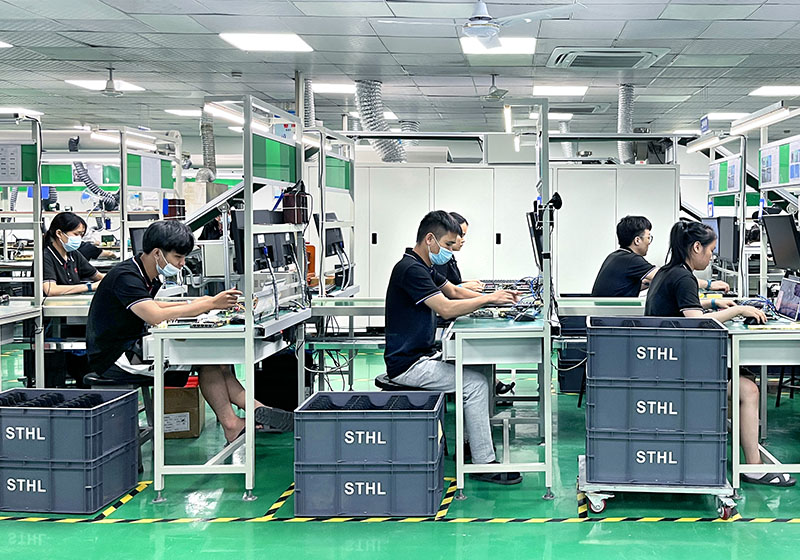
Complete product lifecycle management from design validation through component sourcing to final boxed system delivery.
Operating 7 automated SMT lines and 2 DIP/THT lines. Equipped to support both quick-turn prototyping and long-run serialized production with consistent placement quality.
Manufacturing multi-layer rigid, flex, and rigid-flex printed circuit boards. We implement controlled impedance, blind/buried vias, and advanced surface finishes (ENIG, HASL, OSP) to match precise customer specifications.
Overcoming supply chain hurdles with our global sourcing network. We utilize authorized distributors (Mouser, DigiKey, Arrow, Avnet) alongside verified local vendors to eliminate counterfeit risk and mitigate long lead times.
Custom cable manufacturing including shielding, automated termination, molded strain reliefs, and multi-pin connectors to ensure stable board-to-board and chassis connections.
Full-system assembly, housing integration, potting, and custom packaging. We deliver ready-to-sell hardware directly to your logistics hubs in Germany and worldwide.
Verifying performance with customized test rigs, boundary scans, ICT, and thermal stress testing. We guarantee that every shipped assembly operates reliably right out of the box.
Combining local engineering design with the fast-turnaround assembly speed of Shenzhen's industrial cluster.
For German companies operating in competitive international markets, component costs and production lead times are critical metrics. Procuring PCBAs directly from Shenzhen, China, offers key structural advantages:
Our facility is situated in Shenzhen, the global hub of electronic hardware. Raw materials, specialty substrate fabrics, solder materials, passive components, and custom metal/plastic enclosures are sourced within a 50km radius. This proximity drastically reduces procurement lead times, allowing us to respond quickly to engineering updates and design changes.
Setting up assembly lines in Central Europe can involve high initial setup and programming fees, which can limit pilot projects and early-stage scaling. STHL keeps tooling costs competitive, making it viable to manufacture small-to-medium batches (100 to 5,000 units) without compromising on advanced industrial-grade inspection steps like automated 3D SPI and X-Ray.
At STHL, our engineering team assesses your design files before production begins. We analyze copper balancing, pad spacing, via sizing, and thermal distribution to help prevent manufacturing issues such as tombstoning, voiding, or cold joints. This preventative engineering step is particularly beneficial for German developers who prioritize precision and long-term hardware reliability.
Explore our certified solutions engineered for telecommunications, consumer interfaces, medical systems, and smart automation.
Answers to common questions regarding lead times, quality management, component trace tracking, and IP safety.
Send us your Gerber files, Bill of Materials (BOM), and testing specifications. Our engineering team will review your files and provide a detailed DFM assessment alongside a competitive quote.
Send Inquiry Now STHL PCBA