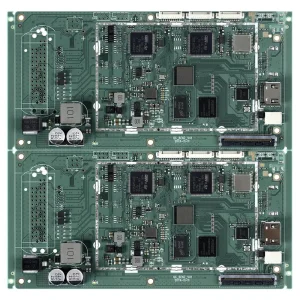
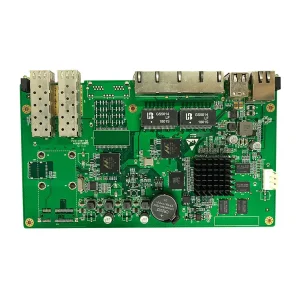
 STHL PCBA
1 / 1
Early challenges in energy storage system controller adoption—such as weak battery and power signal capture, electromagnetic interference (EMI), and poor safety isolation in high-power operation—have been overcome by specialized PCB assembly technologies, particularly high-density rigid PCBs and high-precision surface mount technology (SMT). These innovations effectively enhance the sensitivity of analog front-ends for capturing faint voltage, current, and energy state signals, while integrating EMI shielding layers to eliminate interference from grid equipment and energy storage modules. High-density rigid PCBs, in particular, balance compact form factors with reliable high-power signal transmission, supporting the miniaturization of energy storage control cabinets without compromising performance. This technological leap has enabled energy storage system controller PCB assemblies to outperform traditional control circuits.
Early challenges in sensor adoption—such as weak signal capture from low-output sensors, electromagnetic interference (EMI), and poor compatibility with diverse sensor types—have been overcome by specialized PCB assembly technologies, particularly high-density HDI PCBs and high-precision surface mount technology (SMT). These innovations effectively enhance the sensitivity of analog front-ends for capturing faint sensor signals, while integrating EMI shielding layers to eliminate interference from industrial equipment and environmental factors. HDI PCBs, in particular, balance compact form factors with reliable multi-channel signal transmission, supporting the miniaturization of integrated sensor modules without compromising data accuracy. This technological leap has enabled sensors PCBA assemblies to outperform traditional sensor circuits.
Early challenges in digital X-ray machine adoption—such as high-voltage breakdown risks, electromagnetic interference (EMI) during flat-panel detector (FPD) data acquisition, and the dilemma of balancing compact device design with stable operational performance—have been overcome by specialized PCB assembly technologies, particularly multilayer HDI PCBs and high-precision surface mount technology (SMT). These innovations effectively enhance the voltage tolerance of power control modules for X-ray generators, while integrating EMI shielding layers and low-noise signal paths to eliminate interference from mechanical components and external medical equipment. Multilayer HDI PCBs, in particular, balance high-density component integration with reliable high-speed data transmission, supporting the miniaturization of portable digital X-ray devices without compromising imaging quality. This technological leap has enabled digital X-ray machine PCB assemblies to outperform traditional control circuits.
Early challenges in ECG monitor adoption—such as weak signal capture, electromagnetic interference (EMI), and poor patient safety isolation—have been overcome by specialized PCB assembly technologies, particularly rigid-flex PCBs and high-precision surface mount technology (SMT). These innovations effectively enhance the sensitivity of analog front-ends for capturing faint cardiac electrical signals, while integrating EMI shielding layers to eliminate interference from external medical equipment. Rigid-flex PCBs, in particular, balance compact form factors with reliable signal transmission, supporting the miniaturization of portable and wearable ECG devices without compromising performance. This technological leap has enabled ECG monitor PCB assemblies to outperform traditional monitoring circuits.
Challenges like weak battery/power signal capture, electromagnetic interference (EMI), and poor safety isolation in high-power operation have been resolved through specialized PCB assembly technologies, specifically high-density rigid PCBs and high-precision SMT.
High-density HDI PCBs and high-precision SMT enhance the sensitivity of analog front-ends to capture faint signals, integrate EMI shielding layers to block interference, and support miniaturization while ensuring multi-channel signal transmission and data accuracy.
Multilayer HDI PCBs combined with SMT increase the voltage tolerance of power control modules, integrate EMI shielding layers, and provide low-noise signal paths to block interference from external devices and mechanical systems.
Rigid-flex PCBs successfully balance compact form factors with stable, reliable signal transmission, enabling the design of smaller, wearable ECG monitors without reducing overall performance.
By balancing small physical dimensions with secure high-power signal transmission, these PCBs facilitate the miniaturization of energy storage control cabinets without any performance degradation.