Home >
PCBA Application >
High-Quality Data Acquisition Systems PCBA Assembly Manufacturers, Service
1 / 1
High-Quality Data Acquisition Systems PCBA Assembly Manufacturers, Service
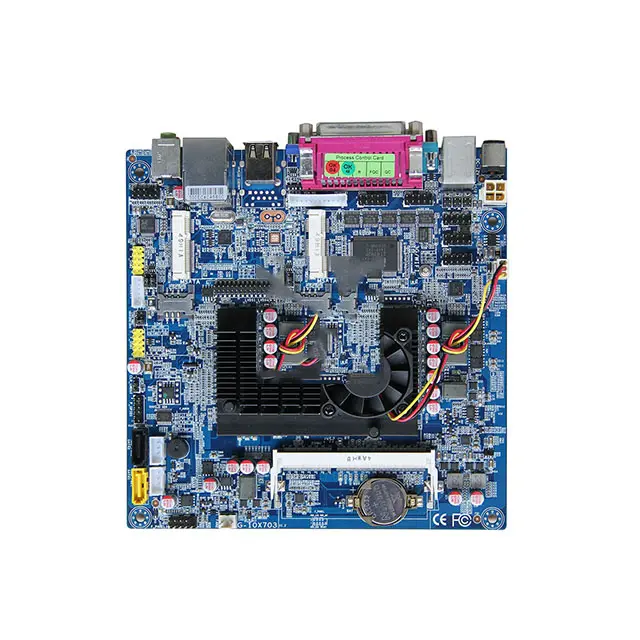
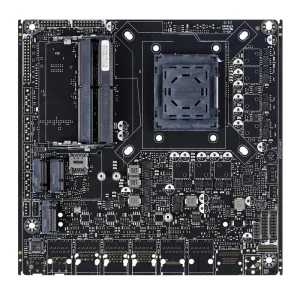
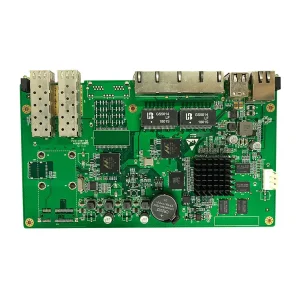
Data acquisition PCBs play a key role in industrial monitoring by efficiently collecting real-time analog signals from sensors measuring temperature, pressure, flow, voltage, and other critical parameters. They perform high-precision analog-to-digital conversion, filtering, and amplification to convert raw physical signals into clean, usable digital data for upper-level control systems. These boards support high-speed sampling and stable data transmission, ensuring accuracy and consistency in harsh industrial environments with electromagnetic interference. Designed for continuous operation, they enable real-time measurement, data logging, automated reporting, and remote monitoring. Our manufacturing emphasizes low noise, high linearity, and reliable signal integrity. By delivering accurate, structured data, these PCBs support process optimization, predictive maintenance, and strict quality control, helping enterprises improve efficiency, reduce costs, and achieve intelligent and standardized industrial management.
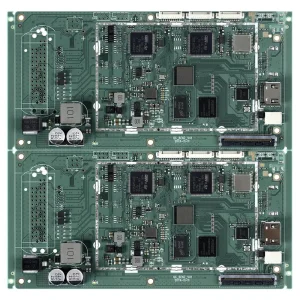
Early challenges in data acquisition systems PCBA adoption—such as weak multi-channel signal capture, electromagnetic interference (EMI), and poor signal isolation in complex industrial and testing scenarios—have been overcome by specialized PCB assembly technologies, particularly high-precision rigid-flex PCBs and high-precision surface mount technology (SMT). These innovations effectively enhance the sensitivity of analog front-ends for capturing faint data signals (analog, digital, frequency, and pulse), while integrating EMI shielding layers to eliminate interference from external industrial equipment, test instruments, and ambient electrical noise. Rigid-flex PCBs, in particular, balance compact form factors with reliable signal transmission, supporting the miniaturization of data acquisition modules without compromising data accuracy and transmission stability. This technological leap has enabled data acquisition systems PCBA assemblies to outperform traditional data collection circuits in key areas:
High-Precision Assembly: Rigid-flex PCBs and SMT technology optimize signal routing, ensuring clean multi-channel data capture.
EMI Shielding: Integrated isolation layers block external electrical noise and interference from ambient industrial machinery.
Miniaturization: Compact form factors allow integration into smaller modules without sacrificing performance or measurement accuracy.
Frequently Asked Questions
Q1
What were the early challenges in data acquisition PCBA systems?
The primary challenges included weak multi-channel signal capture, electromagnetic interference (EMI), and poor signal isolation when operating in complex industrial and testing environments.
Q2
How do high-precision rigid-flex PCBs solve these signal issues?
Rigid-flex PCBs balance compact design form factors with stable signal routing, allowing for reliable multi-channel transmission and shielding against external electrical noise.
Q3
What role does SMT play in modern data acquisition PCBA?
High-precision surface mount technology (SMT) enables the dense and accurate placement of components, enhancing the sensitivity of the analog front-end for capturing faint signals.
Q4
What types of signals can these advanced assemblies capture?
They are optimized to capture a wide range of faint data signals, including analog, digital, frequency, and pulse signals, with high sensitivity.
Q5
How is electromagnetic interference (EMI) addressed?
By integrating specialized EMI shielding layers directly within the PCB design, which effectively isolates and eliminates interference from ambient test instruments and industrial equipment.
Q6
Do smaller data acquisition modules compromise on accuracy?
No. The combination of rigid-flex design and high-density packaging supports the miniaturization of modules while maintaining complete data accuracy and transmission stability.
 STHL PCBA