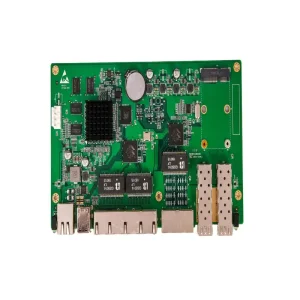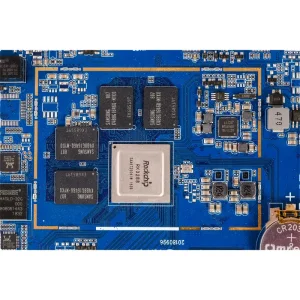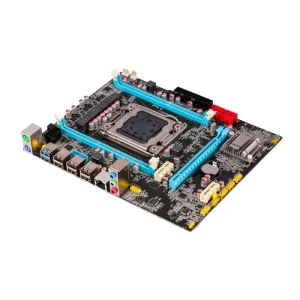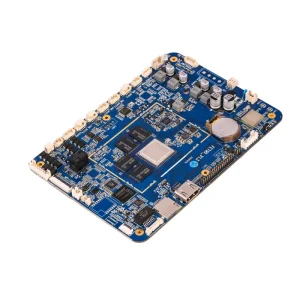
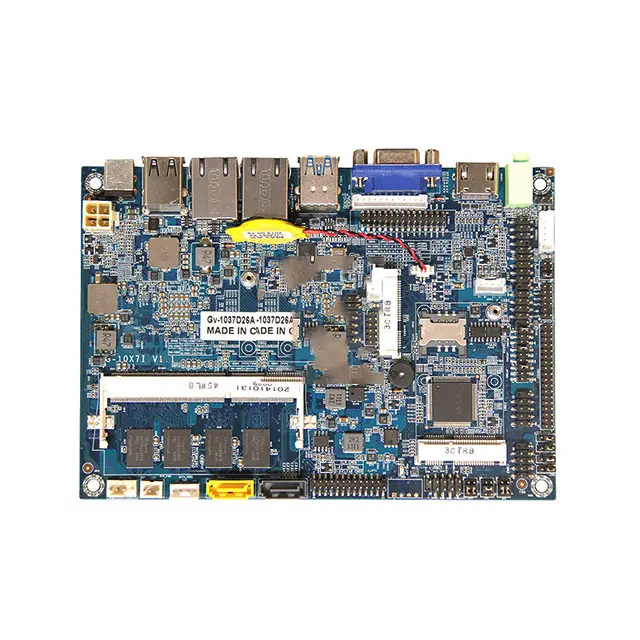
High-Quality Programmable Logic Controllers (PLCs) PCBA Assembly Manufacturers, Service

 PLC PCBs serve as the central nervous system of modern industrial automation, responsible for executing real-time logic control, sequential operations, and data processing for production lines, robotic arms, and various manufacturing processes. These high-stability modules integrate input signal detection, logic operation, and output drive functions, enabling flexible, programmable automation control. Engineered for extreme durability, they resist electromagnetic interference, high temperatures, dust, humidity, and prolonged continuous operation in harsh industrial environments. Our manufacturing emphasizes robust circuit design, stable signal transmission, and long-term reliability. With precise control logic and fault tolerance, these boards ensure consistent, repeatable performance, reducing downtime and enhancing production efficiency. As the foundational core of smart factories, PLC PCBs drive automated production, improve

Product Description

Programmable Logic Controllers (PLCs) PCBA Assembly

Early challenges in PLC adoption—such as weak industrial signal capture, severe electromagnetic interference (EMI), and insufficient isolation in harsh factory environments—have been overcome by specialized PCB assembly technologies, particularly high-stability rigid-flex PCBs and high-precision surface mount technology (SMT). These innovations effectively enhance the sensitivity of analog front-ends for collecting weak digital and analog control signals, while integrating multi-layer EMI shielding structures to suppress interference from motors, drives and high-power equipment. Rigid-flex PCBs, in particular, balance compact structure with reliable signal transmission, supporting the miniaturization of modular PLCs without compromising control stability. This technological leap has enabled PLCs PCBA assemblies to outperform traditional control circuits in key areas:

Key Advancements in PLC PCBA Technology

Enhanced Signal Capture

Specialized analog front-ends designed to collect even the weakest digital and analog control signals accurately.

EMI Shielding Structure

Multi-layer shielding designed to suppress electromagnetic interference from heavy machinery, motors, and high-power drives.

Rigid-Flex PCB Design

Combines mechanical flexibility and structural durability to ensure reliable connection in compact environments.

Modular Miniaturization

Enables the production of smaller, highly efficient modular PLCs without compromising operational stability.

Frequently Asked Questions

Q1 What were the early challenges faced in PLC adoption?

Early challenges included weak industrial signal capture, severe electromagnetic interference (EMI) from surrounding equipment, and insufficient electrical isolation in harsh factory environments.

Q2 How do specialized PCB assembly technologies solve these early challenges?

Specialized PCB assemblies, using high-stability rigid-flex PCBs and high-precision Surface Mount Technology (SMT), enhance the signal sensitivity of analog front-ends and integrate multi-layer shielding to withstand harsh industrial settings.

Q3 What is the role of multi-layer EMI shielding in PLC PCBAs?

Multi-layer EMI shielding structures suppress electromagnetic interference generated by external sources such as motors, drives, and high-power factory equipment, ensuring cleaner signal paths.

Q4 Why are rigid-flex PCBs highly valued in modern PLC designs?

Rigid-flex PCBs balance compact layout structure with highly reliable signal transmission. This enables modular PLCs to be scaled down in size without sacrificing control and operational stability.

Q5 How does SMT technology benefit PLC analog front-ends?

High-precision Surface Mount Technology (SMT) allows for precise component placement, which directly improves the sensitivity of analog front-ends in collecting faint digital and analog control signals.
Related Products