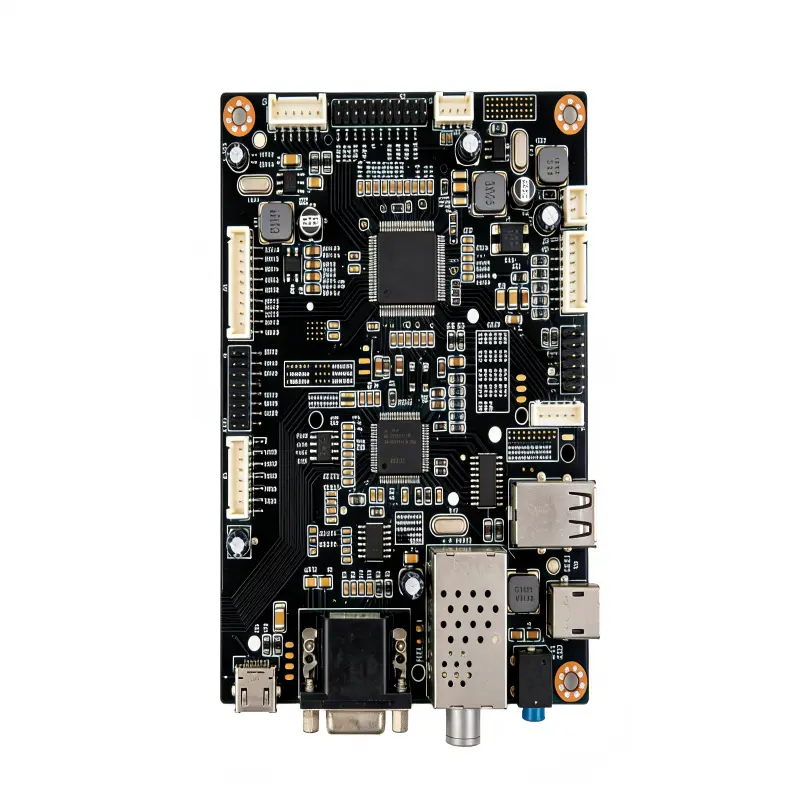
OEM Smart Blood Glucose Monitor PCB Assembly--STHL Manufacturer, Factory

Smart glucose meter PCBs are the core of modern blood glucose monitoring, applying precise and stable voltage to test strips, accurately measuring the weak electrical current generated by the glucoseoxidase reaction, and converting analog signals into digital values to calculate blood glucose concentration. Modern designs integrate lowpower Bluetooth modules for realtime data logging, trend recording, and seamless app connectivity for longterm diabetes management. Our strict, repeatable assembly process guarantees consistent electrochemical measurement accuracy, minimal signal drift, and stable wireless transmission. Every component placement and solder joint is optimized for reliability, ensuring users receive accurate readings and dependable data sync. This highprecision manufacturing supports safer, more convenient selfmonitoring and effective longterm health control for people with diabetes.

Product Description

Smart Blood Glucose Monitor PCB Assembly
Key Technological Evolution

Early challenges in smart blood glucose monitor adoption—such as weak biological signal capture, electromagnetic interference (EMI), and insufficient human body electrical isolation—have been overcome by specialized PCB assembly technologies, particularly rigid-flex PCBs and high-precision surface mount technology (SMT). These innovations effectively enhance the sensitivity of analog front-ends for capturing faint blood glucose biochemical electrical signals, while integrating EMI shielding layers to eliminate interference from surrounding household and medical electronic equipment. Rigid-flex PCBs, in particular, balance ultra-compact form factors with reliable signal transmission, supporting the miniaturization of handheld and portable blood glucose detection devices without compromising testing accuracy. This technological leap has enabled smart blood glucose monitor PCB assemblies to outperform traditional detection circuits in key areas:
Frequently Asked Questions
Q: What were the primary design challenges for early smart blood glucose monitors?
The primary challenges included capturing very weak biological signals, managing electromagnetic interference (EMI) from surrounding devices, and ensuring proper electrical isolation to protect the human body.
Q: How do modern PCB assembly technologies address biological signal capture?
Modern PCB assembly utilizes high-precision surface mount technology (SMT) and specialized analog front-ends that significantly enhance the sensitivity required to capture faint biochemical electrical signals.
Q: What role do rigid-flex PCBs play in smart blood glucose monitors?
Rigid-flex PCBs offer a balance between an ultra-compact form factor and reliable signal transmission. This enables the design of smaller, portable, and handheld blood glucose detection devices.
Q: How is electromagnetic interference (EMI) managed in these PCBAs?
Specialized PCB assemblies integrate dedicated EMI shielding layers that effectively eliminate signal interference from other household and medical electronics.
Q: Does miniaturization affect the testing accuracy of these devices?
No, because of advanced rigid-flex designs and stable signal transmission components, miniaturization is achieved without compromising testing precision.

Related Products