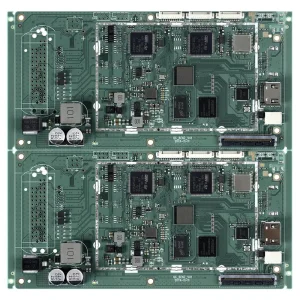
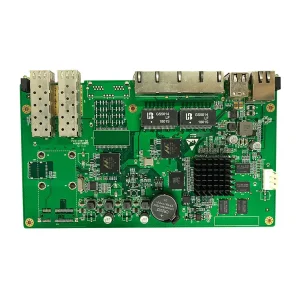
 STHL PCBA
1 / 1
Early challenges in Smart Home Hub PCBA adoption—such as weak signal capture, electromagnetic interference (EMI), and poor electrical safety isolation—have been overcome by specialized PCB assembly technologies, particularly rigid-flex PCBs and high-precision surface mount technology (SMT). These innovations effectively enhance the sensitivity of analog front-ends for capturing faint smart device signals, while integrating EMI shielding layers to eliminate interference from external electronic equipment. Rigid-flex PCBs, in particular, balance compact form factors with reliable signal transmission, supporting the miniaturization of smart home hub devices without compromising performance. This technological leap has enabled Smart Home Hub PCBA assemblies to outperform traditional hub circuits in key areas:
Advanced impedance-controlled routing and ultra-low-noise PCB substrates minimize signal attenuation during the capture and amplification of weak smart device signals. Equipped with high-resolution (≥16-bit) ADC integration, they ensure the accuracy of high-reliability signal waveforms, laying the foundation for precise device connection and stable data transmission.
Rigid-flex PCBs effectively combine the benefits of both rigid and flexible substrates. They balance compact form factors with reliable signal transmission, enabling the design of highly miniaturized smart home hub devices without sacrificing overall performance.
High-precision Surface Mount Technology (SMT) allows for extremely accurate placement of microcomponents. This optimizes the layout of the analog front-end, dramatically improving its sensitivity to capture even the faintest signals from connected smart home devices.
Modern assemblies integrate dedicated EMI shielding layers and implement advanced impedance-controlled routing. These design features block and eliminate interference generated by external electronic devices and power lines, ensuring clean signal paths.
Integrating high-resolution (≥16-bit) Analog-to-Digital Converters (ADCs) ensures that incoming analog signals are digitized with high accuracy. This precise waveform reconstruction is essential for establishing stable, high-reliability device connections and data transfer.
To prevent operational hazards, specialized electrical safety isolation is incorporated into the PCBA layout. This protects the sensitive low-voltage microcontrollers and communication units from voltage fluctuations and current spikes, ensuring safe operation within residential environments.