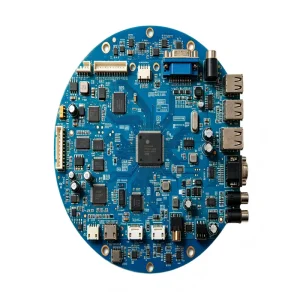
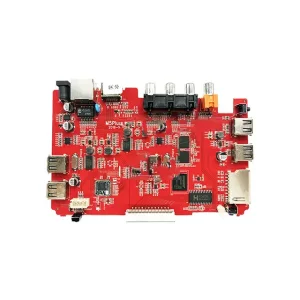
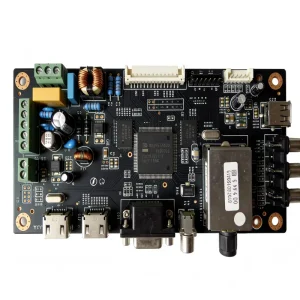
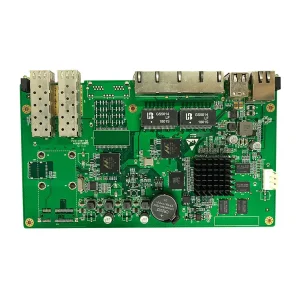
The European electronics sector is undergoing a profound paradigm shift driven by geopolitical diversification, the European Chips Act, and a concerted push towards sustainable, carbon-neutral supply chains. Industrial clusters across Germany, Italy, Poland, the UK, and France are increasingly requiring higher levels of technical agility, demanding that manufacturing partners merge the localization benefits of regional factories with the scale and speed of top-tier Asian production facilities.
Historically, the reliance on fragmented logistics models led to supply bottlenecks. Today, the strategic approach involves hybrid contract manufacturing, where localized engineering standards meet high-capacity Shenzhen infrastructure. European OEMs (Original Equipment Manufacturers) require strict adherence to regulatory schemes such as RoHS, REACH, CE, and country-specific directives while keeping overhead low. STHL bridges this divide, establishing an optimized channel of reliable assembly that functions as a natural extension of European design desks.
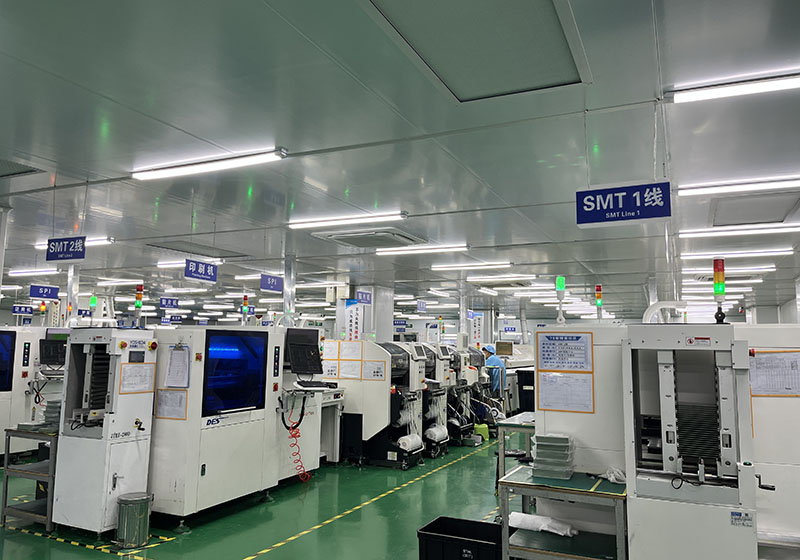
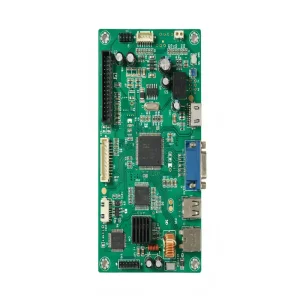
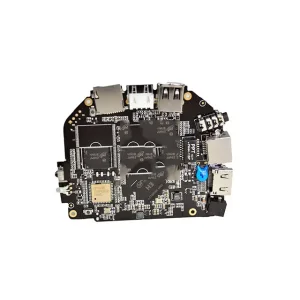
Miniaturization and high signal speeds dictate the modern PCBA design rules. At STHL, SMT (Surface Mount Technology) processes are built around handling sub-millimeter component layouts with extreme placement precision. We maintain dedicated lines equipped with advanced Pick-and-Place machinery capable of mounting fine-pitch arrays and micro-BGAs.
Our component-level capabilities include:
To assure perfect physical and electrical execution, our processing is paired with automated 3D SPI (Solder Paste Inspection), in-line AOI (Automated Optical Inspection), and high-resolution 3D X-Ray Inspection for hidden solder joints beneath BGAs.
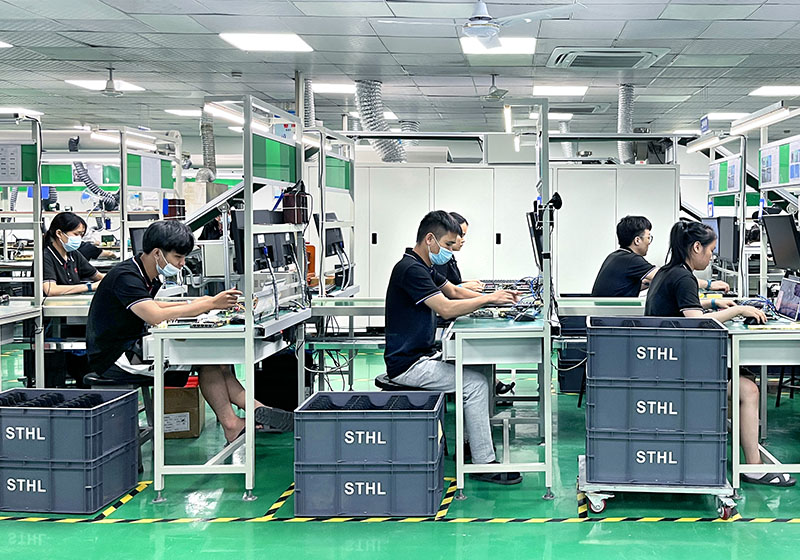
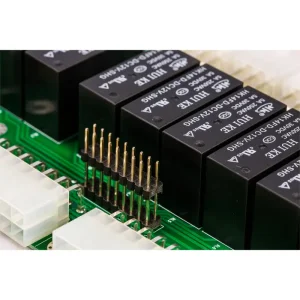
While SMT dominates high-density logic circuits, Through-Hole Technology (THT) remains indispensable for power electronics, automotive control systems, industrial relays, and components subjected to structural stress. European industrial architectures often rely on hybrid boards combining heavy-gauge THT power connectors with multi-core SMT microcontrollers.
STHL's THT facility leverages specialized tooling to optimize reliability and environmental safety:
From conceptual prototype to mass production scaling, STHL delivers turnkey services that keep your electronic hardware design robust, secure, and compliant.
Operating 7 fully automated high-speed SMT lines and 2 DIP/THT lines. Flexible enough to scale from quick-turn prototype batches to multi-thousand mass production runs with lead-free soldering and AOI controls.
Fabricating high-reliability rigid, flex, and rigid-flex PCBs. Utilizing high-Tg materials, controlled impedance stacks, and microvia laser drilling to ensure optimal integrity for multi-layer high-speed digital boards.
Global network with authorized component distributors. Rigorous anti-counterfeit testing, complete batch traceability, and alternative-part suggestion engines to bypass component allocation and supply delays.
Precision manufacturing of electrical wiring harnesses, overmolded connectors, and shielding elements. Customized layouts designed for industrial machine cabinets, automotive routing, and medical devices.
Complete system integration, mounting PCBAs inside customized plastic, aluminum, or sheet-metal enclosures. Handling optical alignments, button configurations, and mechanical locks for a drop-shipped final product.
Comprehensive debugging and operational verification using customized ICT fixtures, diagnostic software, and simulation loads. Eliminates assembly errors and early life cycle failures before delivery.
European design guidelines place severe weight on lifecycle safety and long-term durability. The localized deployment of electronics in European climates—ranging from sub-zero marine installations in the Nordics to warm industrial operations in Southern Europe—demands highly specialized PCB layout rules and assembly protection schemes. STHL addresses these environments with tailored PCBA setups:
Heavy copper layers, thick gold plating, and robust SMT mounting are required to survive thermal shocks in electric vehicles (EVs). Our processes cater to Battery Management Systems (BMS), high-power charging control boards, and Electronic Stability Programs (ESP) that match automotive standards.
For patient monitoring devices, biochemical analyzers, and diagnostic equipment, reliability is critical. We use class-3 IPC standard controls, rigorous documentation, and clear component batch tracking to secure validation paths.
Low power consumption, compact profiles, and reliable RF shielding. We produce optimized gateway and controller boards that align with CE, FCC, and regional telecom rules, minimizing EMI (Electromagnetic Interference) leakage.
As microelectronics step closer to system-in-package (SiP) structures and embedded passives, the role of a traditional PCB assembler must transform. Over the next five years, European OEMs will shift from generic FR4 multi-layer boards to hybrid organic substrates, embedded optical channels, and ultra-high-density interconnects (HDI). STHL is expanding its technological capability in step with these market evolutions.
We are investing heavily in AI-driven optical systems that integrate real-time quality scanning data back into printing and placing units to auto-correct micro-offsets. Simultaneously, our engineering division is developing customized process protocols to support low-temperature soldering (LTS) alloys, which reduce thermal footprint and lower manufacturing carbon footprints, supporting European carbon offset targets.
Get direct, expert-level answers regarding certifications, shipping processes to Europe, IP safety, and hardware layout optimization.
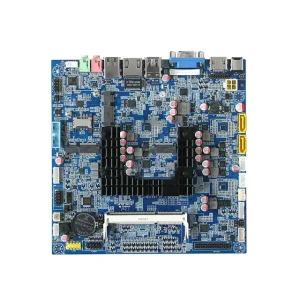
 STHL PCBA