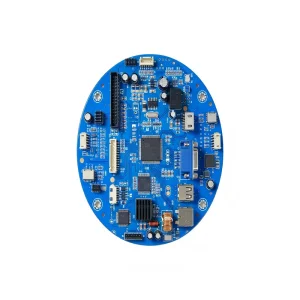
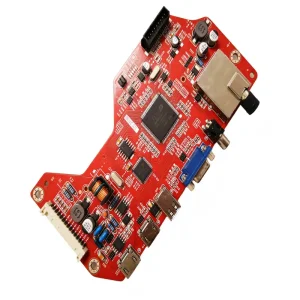
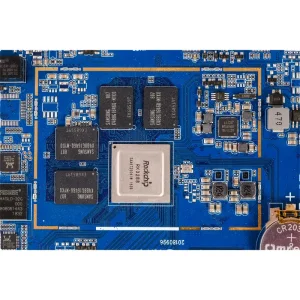
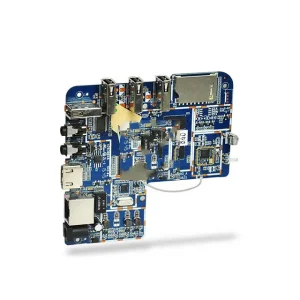
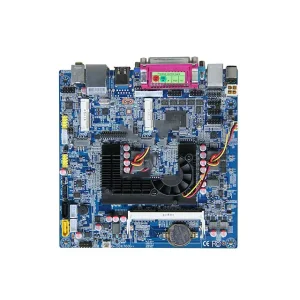
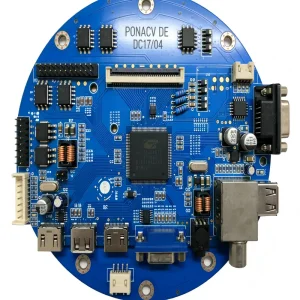
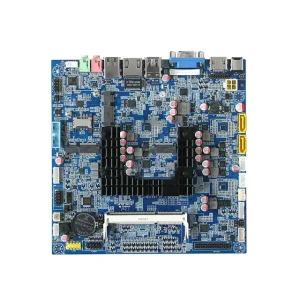
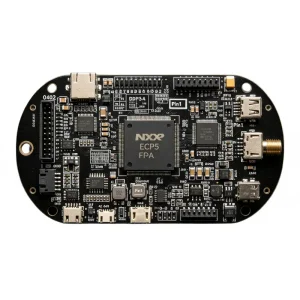
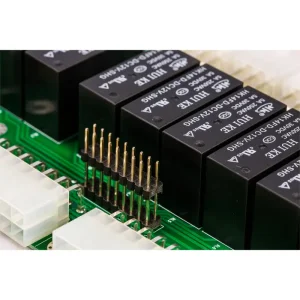
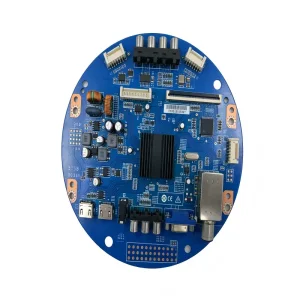
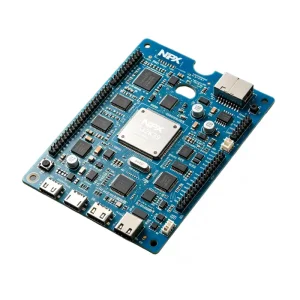
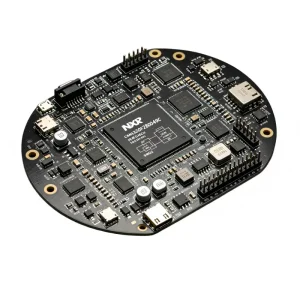
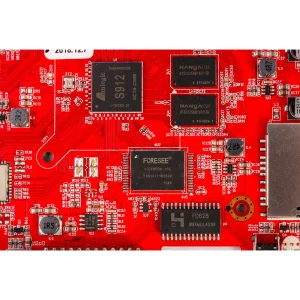
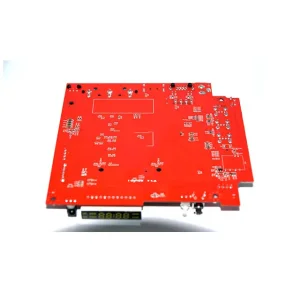
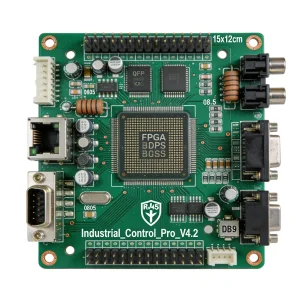
Shenzhen STHL is an industry-leading provider of comprehensive Electronics Manufacturing Services (EMS) located in the hardware innovation capital of China. We serve global technology innovators, OEMs, and tier-1 suppliers across the complete electronic product life cycle. Our integrated solutions cover expert PCB layout, global components sourcing, high-reliability PCB fabrication (FPC, Rigid, and Rigid-Flex), precision PCBA assembly, cable harness assembly, turnkey box build assembly, and exhaustive functional validation testing.
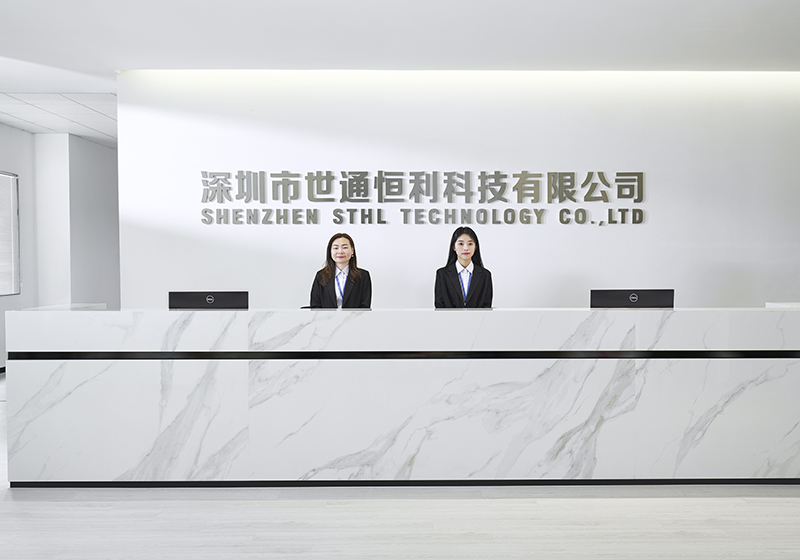
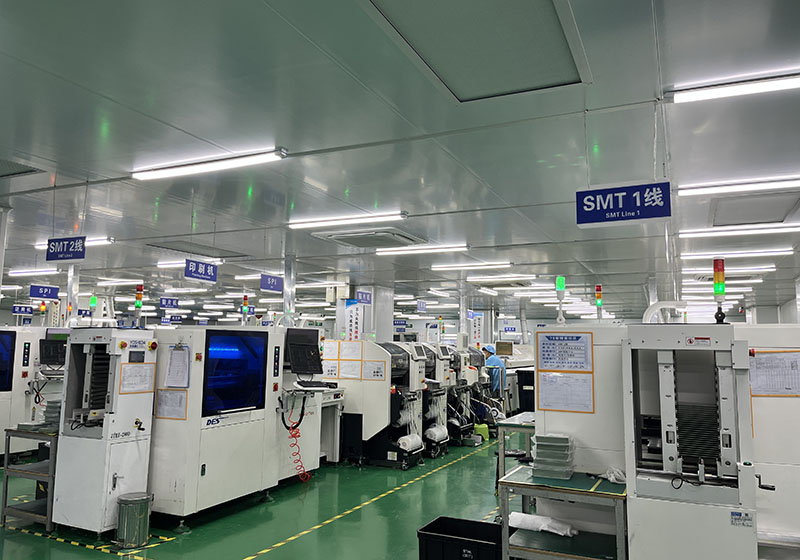
Established in 2006, STHL brings nearly two decades of engineering expertise to the contract manufacturing domain. Today, our 10,000-square-meter state-of-the-art facility in Shenzhen houses over 220 highly skilled technicians, engineers, and production experts. Our plant capacity is built around 7 automated SMT (Surface Mount Technology) assembly lines, 2 DIP/THT (Through-Hole Technology) lines, 2 dedicated functional testing areas, and 2 final product box-build and packaging lines, enabling us to transition projects seamlessly from fast prototype runs to high-volume commercial production.
Our global footprint spans critical high-performance markets including energy infrastructure, telecommunications, automotive electronics, medical instrumentation, advanced consumer products, computing & storage architectures, physical safety systems, and industrial automation. We are proud to act as a primary manufacturing partner for companies in the USA, Germany, Italy, the UK, Poland, New Zealand, Argentina, Brazil, Turkey, South Korea, Thailand, and over 90 other regions worldwide.
Modern electronic products demand extreme component density, thermal dissipation, and signal integrity. STHL's surface-mount production capability is specifically tuned for ultra-fine-pitch and complex assembly designs. We specialize in handling:
To ensure 100% compliance and reliability, we employ an advanced multi-stage inspection matrix. This includes high-resolution 3D Automated Optical Inspection (AOI), 3D X-Ray Inspection (AXI) for real-time validation of solder joints under BGA/QFN components, and In-Circuit Testing (ICT) to check for electrical continuity and passive component values.
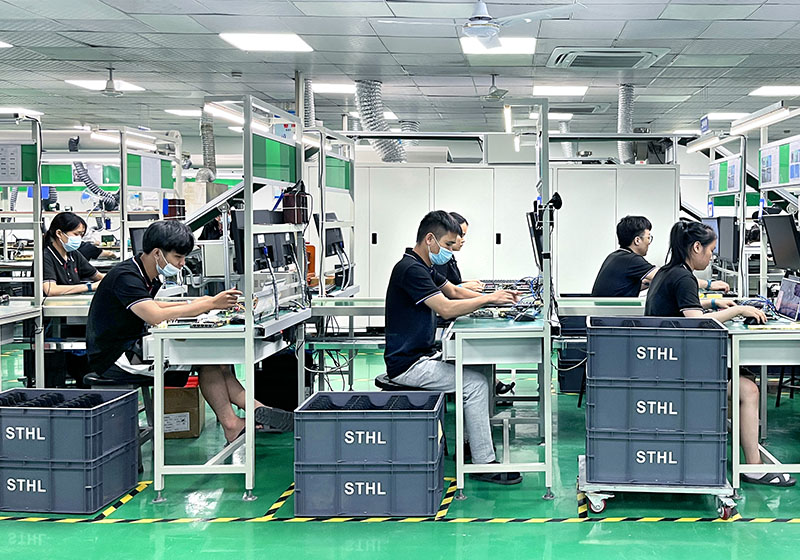
For applications subjected to high mechanical stress, vibration, or elevated thermal loads, Through-Hole Technology remains a vital component of robust circuit design. STHL maintains a dedicated, highly trained THT manufacturing department capable of executing complex mixed-technology assemblies.
From initial concept to volume supply chains, we provide vertical manufacturing integration for next-generation systems.
7 high-speed SMT lines feature automated stencil printing, pick-and-place precision, and multi-zone reflow ovens. Designed to handle both rapid prototypes and high-volume, complex hybrid assemblies.
Advanced fabrication of single-sided, double-sided, and multi-layered flexible printed circuits (FPCs) alongside complex rigid-flex boards. We utilize polyimides (PI), copper foils, and custom stiffeners for reliable dynamic flexing.
Mitigate supply chain disruptions with our component sourcing services. Leveraging partnerships with top component manufacturers and authorized global distributors, we ensure traceabilty and combat counterfeit components.
We assemble reliable custom wire harnesses and multi-conductor cables. Our custom process features automated wire stripping, crimping, shielding, and overmolding, providing robust signal transmission in demanding environments.
Move from board level to finished device. We integrate final PCBA boards, screens, battery systems, cabling, and enclosures into finished consumer or industrial products, shipped directly to your global warehouse.
We configure custom testing fixtures (FCT), bed-of-nails systems, and firmware flashing steps to validate 100% of your boards, avoiding costly field failures and ensuring stable operations under real-world conditions.
The structural shift from rigid FR4 boards to flexible circuit technology is accelerating across modern industries.
Over the last decade, the electronics manufacturing sector has transitioned away from bulky mechanical designs in favor of dense, lightweight, and versatile configurations. Flexible Printed Circuits (FPCs) have evolved from simple static interconnect cables to complex, multi-layered component-carrying substrates. By utilizing base materials like polyimide or Liquid Crystal Polymer (LCP), modern flex circuits allow engineers to design around 3D geometry rather than flat surfaces.
This structural change is driven by the rise of 5G, medical implants, next-generation electric vehicles (EVs), and wearable devices. FPCs offer up to a 70% weight reduction compared to conventional rigid boards and reduce assembly wire routing by up to 60%, drastically decreasing the risk of interconnect failure. The global flexible electronics market is projected to grow rapidly, driven by the demand for compact, lightweight electronics.
FPCs survive millions of bend cycles, making them ideal for dynamic hinge applications, disk drives, camera modules, and industrial robotic arm joints.
Polyimide base materials exhibit excellent thermal stability, allowing flex circuits to operate reliably in high-temperature industrial environments.
By combining multiple rigid sections with integrated flexible hinges, rigid-flex boards simplify assembly by eliminating connector modules.
Flexible circuits provide key design advantages across critical real-world applications.
Modern battery management systems (BMS) for electric vehicles utilize flexible printed circuits to monitor cell voltage and temperature. FPCs replace heavy, complex wire harnesses with flat, reliable networks that save space and resist battery vibration.
Medical devices like biochemical analyzers, ventilators, and smart medical scanners require high-density interconnects. Biocompatible polyimide flex circuits allow packaging within compact devices while maintaining signal transmission integrity.
Industrial edge computers and smart home gateways pack dense processing power and wireless communication arrays into small housings. Rigid-flex circuits allow complex board shapes to fit cleanly into tight, compact enclosure profiles.
The technological evolution of flexible printed circuits as we move toward high-frequency, high-density applications.
Laser Direct Imaging (LDI) achieves sub-35um line trace/space geometry, maximizing board density and accommodating high-pin-count BGA chips.
Replacing standard PI with modified materials to support high-frequency signals, ensuring low insertion loss for automotive radar systems.
Adopting Liquid Crystal Polymer (LCP) as a substrate for 5G/6G systems, offering near-zero moisture absorption and low dielectric constant values.
Direct 3D printing of conductive inks onto flexible substrates, allowing fully customized multi-layer structures without traditional chemical etching.
Operating from Shenzhen, STHL leverages a comprehensive, localized electronics ecosystem. By clustering raw material suppliers, copper foil manufacturers, polyimide processors, and component distributors within the Pearl River Delta, we accelerate manufacturing turnaround times.
Our supply chain model helps mitigate international component shortages. We maintain partnerships with global component distributors and domestic manufacturers, helping you locate pin-to-pin functional replacements for long-lead-time active components, protecting your production schedules.
STHL combines localized supply chain speed with international standards. We utilize automated production tracking systems to streamline transit, handle international customs compliance, and manage overseas delivery logistics to your factory or warehouse.
Our processes meet strict global industry certifications and environmental guidelines.
Compliance with global quality standards for industrial, commercial, and safety-critical automotive electronics manufacturing.
Strict quality control processes, traceability protocols, and risk-management systems for manufacturing medical devices.
Lead-free manufacturing workflows and environmental management systems that align with global sustainability initiatives.
Answers to common design and manufacturing questions regarding flexible and rigid-flex assemblies.
 STHL PCBA