Decoding the differences in supply chain architecture, engineering workflows, and procurement outcomes.
In the global electronics sector, distinguishing between a raw Printed Circuit Board (PCB) and a fully integrated Printed Circuit Board Assembly (PCBA) is not merely a matter of terminology—it is a critical architectural decision that shapes your product's speed-to-market, risk profile, and overall manufacturing cost. Global procurement managers, system designers, and engineering leads must carefully evaluate whether to purchase bare boards and manage components in-house, or partner with a turnkey EMS provider capable of executing complete assembly.
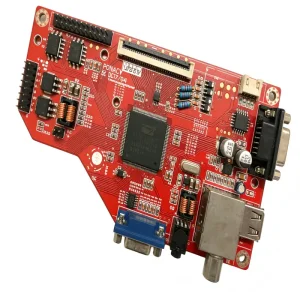
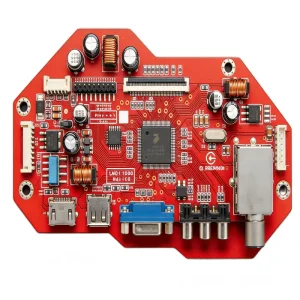
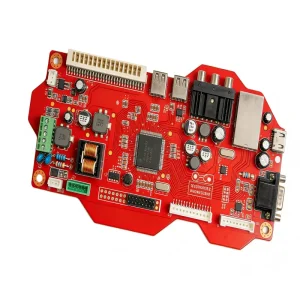
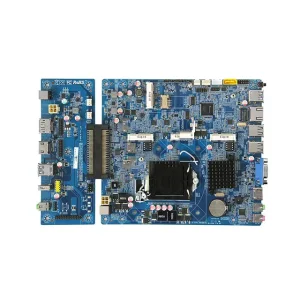
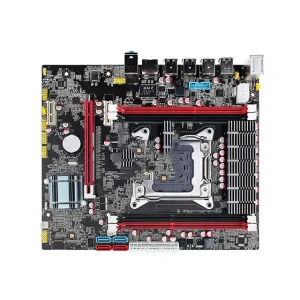
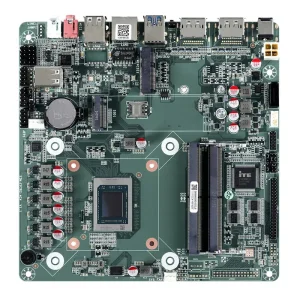
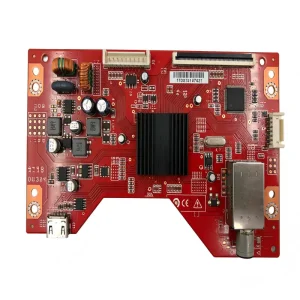
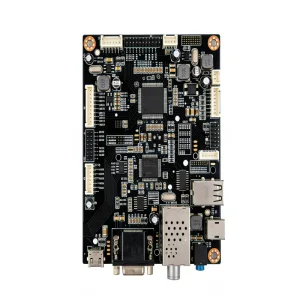
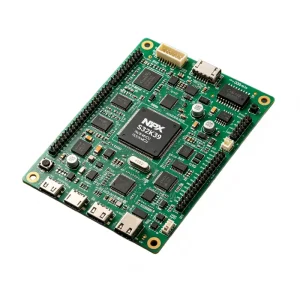
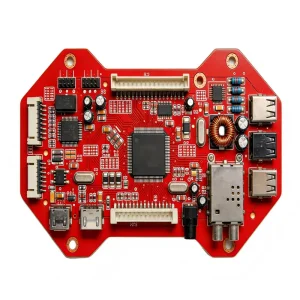
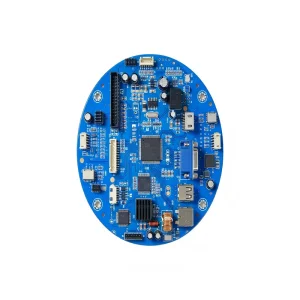
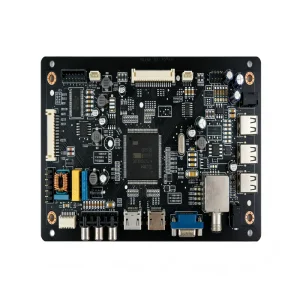
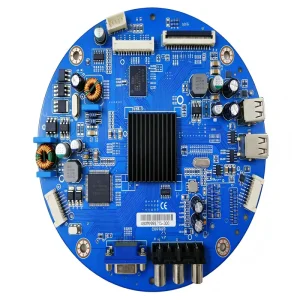
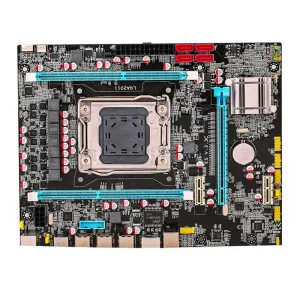
A bare OEM PCB is the structural foundation—a board configured with copper traces, vias, and substrate layers (such as FR-4, polyimide, or metal cores) designed to interconnect active and passive electronic components. Conversely, a PCBA represents the completed integration where all required microchips, capacitors, resistors, and connectors are soldered onto the board using Surface Mount Technology (SMT) or Through-Hole Technology (THT).
This whitepaper provides an exhaustive technical and commercial breakdown of the engineering pipelines, assembly protocols, testing systems, and global regulatory standards required to transition from a bare substrate to a high-reliability system.
| Parameter / Feature | OEM PCB (Bare Fabrication) | OEM PCBA (Full Assembly) | Strategic Value / Engineering Impact |
|---|---|---|---|
| Definition & Composition | Bare substrate board with etched copper pathways, soldermask, and surface finish. No active elements. | Fully populated board containing active ICs, passive components, connectors, and solder joints. | PCBA is the functional engine; PCB is the pathway matrix. |
| Primary Technology | Photolithography, drilling, chemical copper plating, lamination, and electrical bare-board testing (ET). | Solder paste printing (SPI), Surface Mount SMT placement, Reflow profiling, THT, and Wave Soldering. | PCBA requires advanced thermal profiling and precision component placement. |
| Supply Chain Depth | Sourcing raw laminates (FR-4, Rogers, Megtron) and copper foil. Low component count. | Global procurement of thousands of active/passive parts, managing BOM risks and lead times. | PCBA demands robust global supply networks and counterfeit prevention. |
| Testing Protocols | Flying probe test, bed-of-nails continuity test, impedance control verification. | Automated Optical Inspection (AOI), 3D X-Ray (AXI), In-Circuit Test (ICT), and Functional Test (FCT). | PCBA requires active electrical validation under simulated operating loads. |
| IPC Quality Class | IPC-A-600 (Class 2 & Class 3 criteria for board anomalies). | IPC-A-610 (Class 2 & Class 3 criteria for component placement and solder joints). | Aerospace and Medical designs dictate Class 3 strict adherence. |
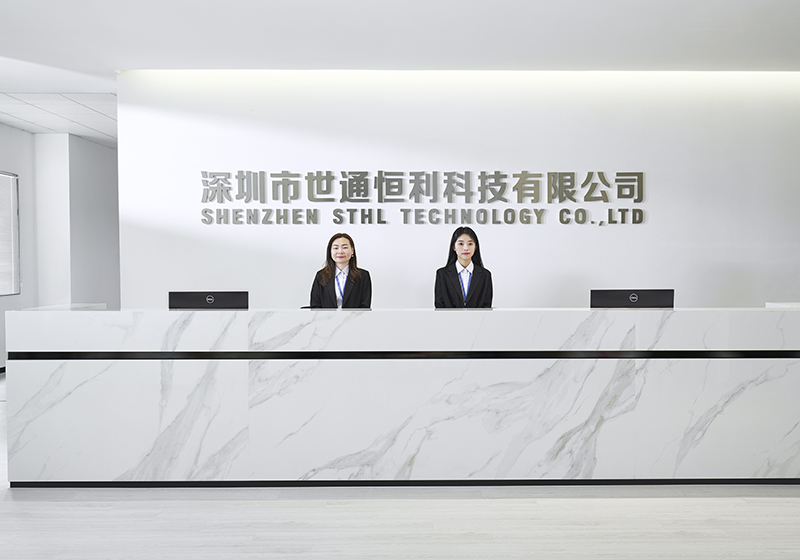
Shenzhen STHL is a high-quality provider of electronics manufacturing services (EMS) in China, we serve customers worldwide along the whole industry chain including PCB layout, components sourcing, PCB fabrication, PCBA assembly, cable assembly, box build assembly and comprehensive testing services.
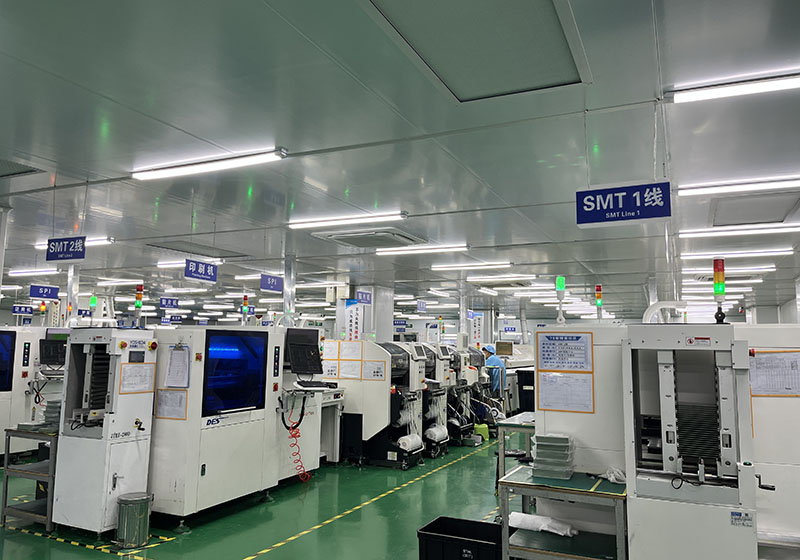
It was established in 2006, with 20 years of experience in electronics contract assembly manufacturing. Currently, STHL has 220+ staff members. Our 10,000 sqm facilities include 7 SMT assembly lines, 2 DIP/THT lines, 2 function testing lines and 2 finished device assembly lines.
At STHL, we provide electronics assembly services for energy power, communications, automotive, medical, consumer electronics, computers & storage, safety & security, commercial and industrial products. Our customers mainly from USA, Germany, Italy, UK, Poland, New Zealand, Argentina, Brazil, Turkey, Korea, Thailand, and the other 90 regions of the world.
As an IATF16949, ISO9001, ISO14001, and ISO13485 certificated electronics assembly manufacturer, we produce products exactly comply with RoHS standard and quality guarantee. Based on our excellent engineering and production capacities in technical areas such as materials analysis & storage, advanced equipment, reliability testing (AOI, X-RAY, ICT test and function test), high effective SMT and THT assembly, we are recognized as a long-term reliable PCBA vendor by more and more customers worldwide.
Advanced SMD placement, micro-pitch components processing, and precision hand soldering controls.
We can handle a wide range of advanced components, including:
But our commitment to quality goes beyond component expertise. We utilize advanced inspection techniques, including AOI and X-Ray inspection, to guarantee flawless assembly. High-speed placement heads coupled with multi-zone reflow ovens allow STHL to establish precise thermal profiles designed to eliminate thermal shock, head-in-pillow defects, and micro-voiding within lead-free solder joints.
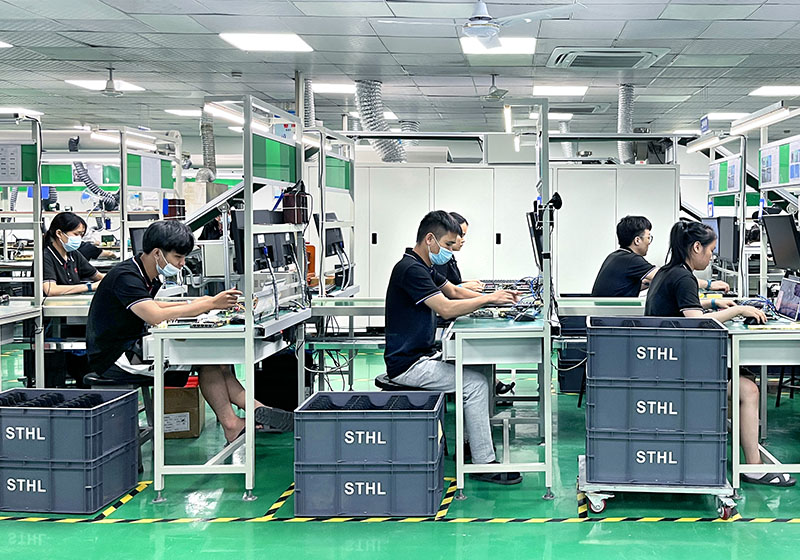
STHL PCBA also excels in Through-Hole Technology (THT) assembly. Our services encompass:
Dual-wave soldering machinery is carefully calibrated for temperature curve stability, preventing board warping and thermal stress. This is crucial for mixed-technology PCBA boards that require structural durability alongside dense digital circuitry.
Full spectrum Electronics Manufacturing Services (EMS) from raw fabrication to final product box build assembly.
STHL operates 7 automated PCB assembly lines for both prototype and mass production. Advanced SMT ensures precise component placement and quality. Skilled technicians provide efficient THT assembly and RoHS-compliant lead-free soldering.
STHL PCB fabrication service produces high-quality, reliable printed circuit boards from simple singles to complex multi-layers, from flex PCB to rigid-flex PCB, we use premium materials and controlled processes to meet precise specifications.
STHL offer global electronic component sourcing and supply chain solutions. Our vast supplier network and expertise ensure access to genuine, certified parts, mitigating risks of counterfeits, allocation, and long lead times to secure your production schedule.
With the precision manufacturing of cable assembly components including handles, retention systems, connectors, and shielding in a wide range of materials and finishes, we have performed many successful cable assembly for many customers from various industrial applications.
Making your projects at STHL from SMT assembly to box build assembly is very cost-effective and fast to market. Covering everything from putting a PCBA into the enclosure with all functions testing to a complete product assembly packaged and ready for delivery to your customers, we can supply the full support.
STHL conducts functional testing (FCT) to verify product performance, preventing defects such as circuit issues, missing or incorrect components. This ensures delivered products are stable and fully qualified.
Deploying OEM PCB and PCBA configurations in high-criticality, high-frequency, and extreme-environment systems.
Industrial applications demand highly tailored materials, thermal considerations, and copper-weight parameters. Below, we examine the systemic hurdles and OEM PCBA configurations across major industrial domains.
Application: Pacemaker PCB Assemblies & Diagnostics.
Engineering Parameters: Compliance with ISO 13485 Standards is absolute. High-density interconnects (HDI), micro-vias, and bio-compatible surface finishes (such as ENIG or ENEPIG) prevent oxidation. The assemblies undergo 100% 3D X-Ray validation to guarantee zero voiding in micro-BGAs.
Application: Millimeter-Wave Radar Assemblies (77GHz-79GHz).
Engineering Parameters: Requires specialty substrates like Rogers or PTFE laminates for low signal loss and controlled impedance. SMT placement must be ultra-precise to avoid parasitic capacitance. Manufactured strictly under IATF 16949 processes to guarantee structural integrity against vibration.
Application: Wind Power Controller & Inverter Assemblies.
Engineering Parameters: High-power grids handle extreme voltage swings. These designs require heavy copper layers (up to 4oz or more) to sustain massive currents, combined with high-performance thermal interfaces (TIMs) and custom heat sinks to dissipate heat efficiently.
Application: Remote Sensor & Analysis Modules.
Engineering Parameters: Exposed to humidity, chemicals, and extreme temperatures. Requires conformal coating (acrylic, polyurethane, or silicone) to block moisture ingress. STHL integrates robust isolation circuits to protect components from external voltage spikes.
Application: Multifunction Displays & LED Backlights.
Engineering Parameters: Challenges center on thermal expansion matching (CTE) and board flatness across large physical dimensions. SMT lines utilize high-speed LED mounting parameters to place thousands of light-emitting components with highly consistent height and spacing.
Application: Voice Assistant Devices & Headsets.
Engineering Parameters: Demands ultra-compact designs. STHL utilizes rigid-flex substrates combined with ultra-fine pitch BGAs and 01005 passives. Rigorous audio loopback and RF shielding verification prevent unwanted noise interference in the signal path.
Navigating global regulatory certifications, trade compliance, and component obsolescence.
Sourcing electronic components in a complex global market requires strict validation protocols to avoid counterfeits, long lead times, and allocation bottlenecks. STHL combats these challenges by integrating component tracing and materials analysis into our workflow.
We maintain long-term partnerships with certified original manufacturers and franchised distributors. For hard-to-find or obsolete components, our engineering team performs alternative component analysis, suggesting drop-in replacements that undergo engineering verification before design approval.
Key Quality Frameworks Managed at STHL:
Effective collaboration between your engineering teams and our manufacturing facility is vital. STHL coordinates directly with partners in the USA, Germany, Italy, UK, and beyond, providing real-time engineering feedback (DFM, DFA) to resolve design anomalies before production.
Our logistics network supports multiple delivery models, including FOB, DAP, DDP, and door-to-door air freight. Whether you require small-batch prototyping or mass production scales, our team manages export documentation, customs clearance, and compliance declarations to ensure hassle-free delivery.
How advanced packaging, eco-friendly materials, and smart automation are redefining the future of PCB assembly.
As microprocessors grow more powerful, trace widths and space tolerances are shrinking below 30 microns. SLP technology bridges the gap between conventional PCBs and IC substrates, allowing fine-pitch designs for next-generation mobile and AI-edge systems.
Embedding resistors, capacitors, and inductors directly within the internal substrate layers of a PCB frees up surface area for active SMT ICs. This reduces parasitic inductance, improves signal integrity, and optimizes thermal performance in high-speed RF designs.
Environmental standards are driving the adoption of bio-based resins, recyclable substrates, and halogen-free laminates. OEMs are shifting toward manufacturing processes that lower the overall carbon footprint of electronic waste.
Integrating machine learning algorithms into solder paste inspection (SPI) and automated optical inspection (AOI) equipment enables real-time adjustments. These systems analyze defects, predict stencil wear, and fine-tune placement parameters dynamically to achieve near-zero-defect manufacturing.
A step-by-step decision framework for sourcing directors and engineering leads.
Does your manufacturer provide a complete DFM review before manufacturing? Over 80% of PCB board defects stem from design mismatches, including improper pad sizing, lack of thermal vias, or poor trace routes. Selecting a partner that performs thorough DFM and DFA checks mitigates these issues early on.
Evaluate whether a turnkey solution is more beneficial than supplying components yourself. Turnkey sourcing shifts component inventory management, incoming inspection, and component storage responsibilities directly to the EMS provider, saving your team valuable administrative time and overhead costs.
Verify that your supplier offers complete testing, including 3D AOI, X-Ray, In-Circuit Test (ICT), and Functional Test (FCT). Relying solely on visual inspection is not enough for complex assemblies. Active diagnostic testing ensures the final product works reliably under real-world operating conditions.
Addressing the top technical and purchasing inquiries regarding OEM PCB and PCBA production.
The primary cost drivers in PCBA are component procurement (bill of materials or BOM cost) and the engineering setup for SMT placement. While raw PCB cost is determined by layers, substrate type, and surface finish, PCBA costs scale with component counts, fine-pitch density (like BGAs), double-sided assembly requirements, and the complexity of programming and functional testing.
STHL enforces a strict supply chain management protocol. We source parts directly from original component manufacturers (OCMs) or franchised global distributors. In cases where independent distributors must be used, components undergo incoming inspections including date code checks, package verification, and, if necessary, laboratory analysis to ensure authenticity and performance before entering SMT production.
IATF 16949 is the global quality standard for the automotive supply chain. It requires rigorous process controls, defect prevention mechanisms, and continuous variation reduction. Selecting an IATF 16949 certified manufacturer like STHL ensures your automotive assemblies, such as millimeter-wave radars, are produced with high quality, traceability, and reliability.
Yes, STHL operates 7 automated SMT lines and 2 dedicated DIP/THT lines. We specialize in mixed-technology PCB assemblies, where fine-pitch components are placed on the surface using SMT, and heavy-duty connectors, relays, or capacitors are mounted using through-hole technology. Both SMT and THT processes are calibrated to meet lead-free, RoHS-compliant requirements.
 STHL PCBA