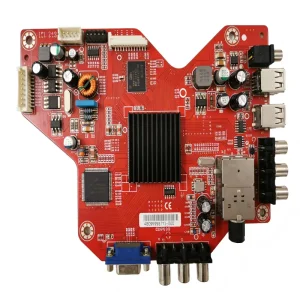
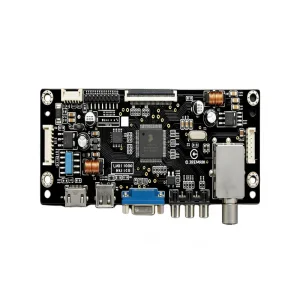
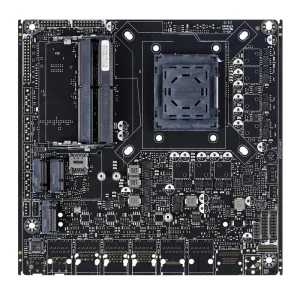
Delivering high-reliability electronics manufacturing services since 2006 with absolute compliance and process precision.
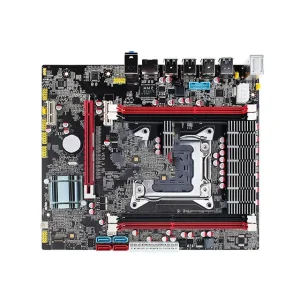
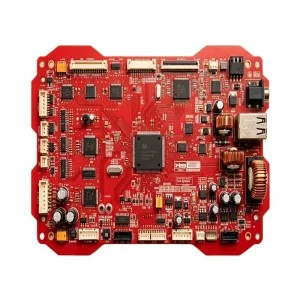
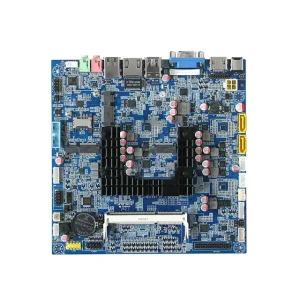
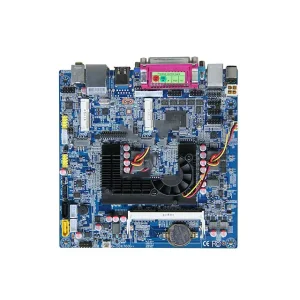
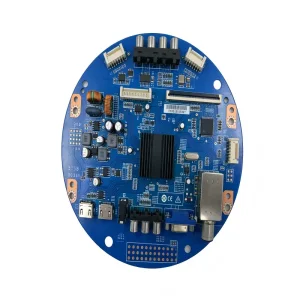
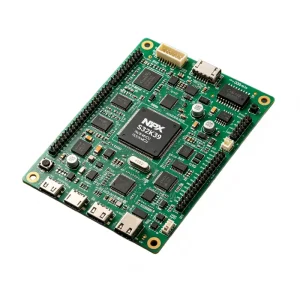
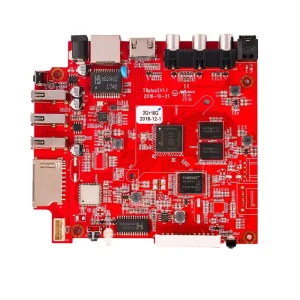
Shenzhen STHL is a high-quality provider of electronics manufacturing services (EMS) in China, serving customers worldwide along the whole industry chain including PCB layout, components sourcing, PCB fabrication, PCBA assembly, cable assembly, box build assembly and comprehensive testing services.
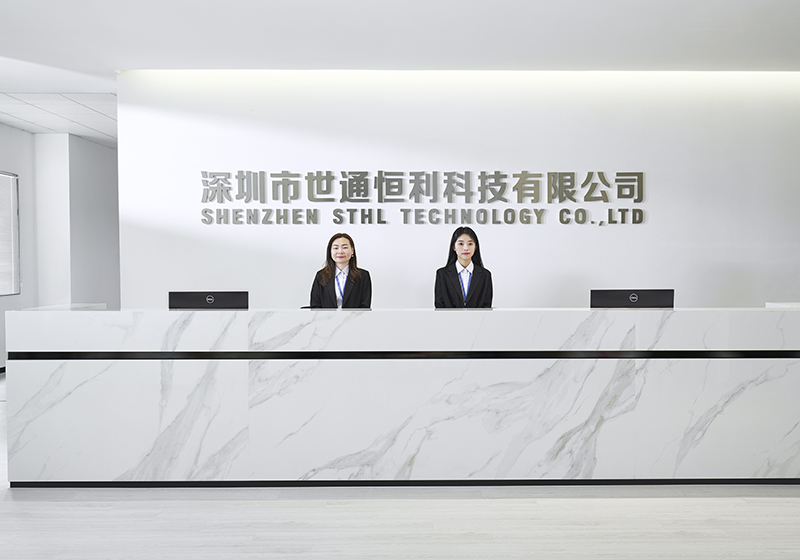
Established in 2006, with over 20 years of experience in electronics contract assembly manufacturing. Currently, STHL operates a 10,000 sqm state-of-the-art facility featuring 220+ dedicated staff, 7 SMT assembly lines, 2 DIP/THT lines, 2 function testing lines and 2 finished device assembly lines.
At STHL, we provide high-grade protective treatments and conformal coating solutions for industries including energy power, communications, automotive, medical, consumer electronics, computers & storage, safety & security, and heavy industrial automation. Our global customer base spans the USA, Germany, Italy, UK, Poland, New Zealand, Argentina, Brazil, Turkey, Korea, Thailand, and 90+ other global regions.
Certified Quality Benchmarks: IATF16949, ISO9001, ISO14001, and ISO13485.
Providing vital defense for mission-critical PCBA assemblies against moisture, dust, chemical ingress, and electrical leakage.
Choosing the correct chemical resin determines environmental survivability. We deploy Acrylics (AR) for ease of rework, Polyurethanes (UR) for extreme solvent/moisture protection, Silicones (SR) for high thermal-stability ranges, and Epoxies (ER) for unmatched mechanical toughness.
Implementing advanced selective spray automation prevents coating ingress on connectors, test points, and vias. Automated machinery maintains uniform thickness metrics (ranging strictly between 30μm and 130μm) tailored to IPC-CC-830 standards.
To ensure no voids, capillary bubbles, or delamination, we conduct UV light inspection (fluorescent trace indicators), microscopic cross-section scanning, and environmental chambers testing simulating extreme thermal cycling.
| Coating Chemistry | Common Thickness Standards | Thermal Threshold Range | Primary Advantages | Ideal Industry Use-Cases |
|---|---|---|---|---|
| Acrylic (AR) | 30μm - 75μm | -65°C to 125°C | Excellent dielectric barrier, easily reworked/removed | Consumer Electronics, Smart Home Gateway, Smart IoT devices |
| Polyurethane (UR) | 30μm - 75μm | -65°C to 125°C | Extreme solvent protection, high moisture barrier properties | Industrial Control PCBA, Energy Storage Systems, Automotive ADAS |
| Silicone (SR) | 50μm - 210μm | -65°C to 200°C | Incredible thermal variance range, UV radiation stability | Automotive Under-hood Engine Controls, Outdoor Solar Systems |
| Epoxy (ER) | 30μm - 75μm | -65°C to 150°C | Superior abrasion resistance, high hardness barrier | Heavy Machinery Controls, Mining Systems, Marine electronics |
Integrating SMT and Through-Hole assembly protocols alongside strict quality validation processes.
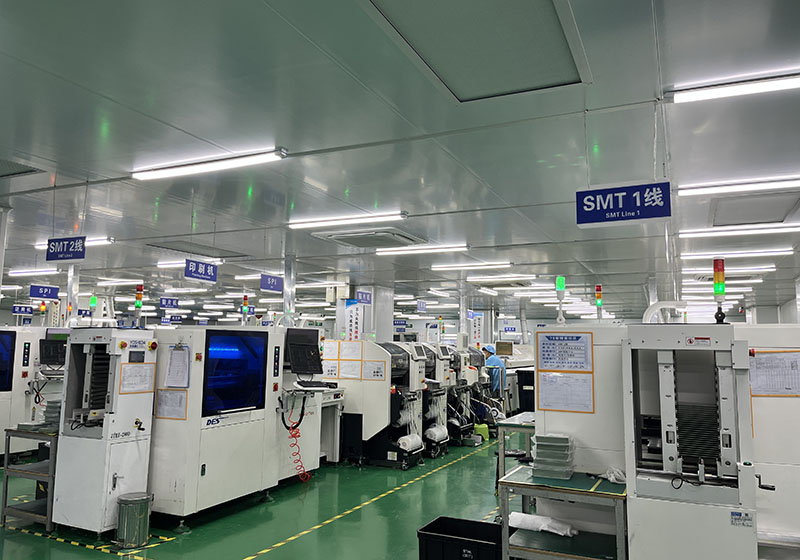
Our SMT manufacturing lines handle an expansive array of complex components with tight pitch demands:
We employ advanced non-destructive inspection technologies, integrating automated 3D AOI and real-time X-Ray imaging, to identify internal voids and placement offsets before conformal coating processes begin.
For high-stress power and connector assemblies, STHL excels in robust THT fabrication:
THT assemblies undergo comprehensive post-soldering inspection and end-to-end functional testing (FCT) to verify trace integrity under active current conditions.
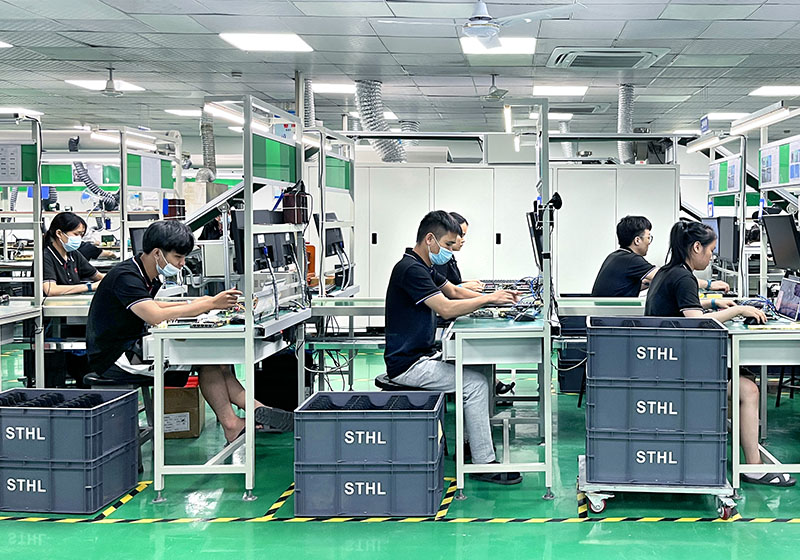
STHL provides a cohesive supply chain interface from bare board fabrication to fully packaged electronic systems.
Operating 7 automated SMT lines and 2 DIP/THT lines. We scale effortlessly from rapid prototypes to high-volume production, incorporating lead-free RoHS-compliant reflow and wave-soldering processes.
Handling HDI boards, multi-layer rigid boards up to 32 layers, flexible circuits, and rigid-flex options. High-precision trace limits down to 3mil line widths for high-frequency applications.
Direct relationships with global authorized chip distributors combined with local Chinese supply networks. Rigorous component incoming quality testing (IQC) to block counterfeits.
Custom wiring harnesses, high-speed data transmission cables, shielding terminations, and rugged molded strain reliefs. Fully compliant with IPC-A-620 guidelines.
Enclosure integration, mechanical sub-assembly, cabling layout routing, thermal pad installation, display fittings, and final packaging for retail-ready distribution.
ICT, flying probe, and customized dynamic functional testing (FCT) setups. Ensuring the board parameters align with your firmware specifications prior to boxing.
Addressing the shifting trends in modern circuit protection: Miniaturization, Environmental greening, and AI deposition controls.
Standard solvent-based coatings release Volatile Organic Compounds (VOCs) and require prolonged thermal oven cure cycles. The industry is moving rapidly toward UV-curable polyurethane and acrylate chemistries. They cure within seconds under intense UV spectrum exposure, optimizing cycle times and meeting the strictest eco-protection guidelines.
As component densities squeeze together, masking becomes difficult. The future lies in AI-programmed micro-dispensing heads that navigate around non-coat zones with 50-micron accuracy, alongside Automated Optical Inspection (AOI) equipped with machine-vision algorithms trained to identify conformal coating pinholes and runs.
Customized protection strategies tailored specifically for unique environmental hazards across different product applications.
VCUs, battery management controllers, and radar systems face temperature fluctuations, road salt mist, and mechanical vibration. We apply thick, flexible silicone or polyurethane coatings that withstand severe thermal shock testing cycles.
IATF 16949 StandardSolar inverters and energy storage management boards operate in unconditioned outdoor environments. High-moisture, dust buildup, and humidity require excellent hydrophobic coatings like acrylic-urethane blends.
UL746E ApprovedImplantable components or diagnostic control boards require sterile integrity. Here, biocompatible coating materials (like Parylene vapor deposition or advanced inert acrylics) prevent chemical interactions.
ISO 13485 CompliantHow STHL leverages Shenzhen’s manufacturing ecosystem to deliver unrivaled cost-to-quality performance.
Manufacturing in Shenzhen, China provides direct access to the world's most complete electronics raw material cluster. From bare glass-reinforced epoxy laminates to high-end microcontrollers, we source, inspect, mount, coat, and box-build products under one roof, reducing international freight delays.
Vertical Integration Advantage: Having PCB fabrication, automated assembly, and conformal coating lines in a single facility avoids secondary shipping routes, preventing humidity buildup on PCBs before the hydrophobic protection layers are applied. This ensures the best possible adhesion index.
ERP-managed warehousing allows dynamic tracking of moisture-sensitive components, ensuring proper baking pre-assembly.
Automated fluid dispensing controls reduce chemical waste, aligning with eco-conscious manufacturing targets.
We secure your access to global markets by ensuring strict compliance with safety, environmental, and industry-specific regulations.
All chemical materials used, including solvent diluents and cleaning detergents, are strictly RoHS and REACH compliant, preventing heavy metals or halogenated compounds from finding their way into consumer products.
We test our coating processes to meet the performance criteria of military qualification standards and IPC guidelines, including electrical insulation resistance and moisture resistance under load.
Every coating batch is traceable back to the material lot, spray program parameter logs, viscosity level monitoring data sheets, and post-bake temperature curing profiles.
Expert answers on technical requirements, process constraints, and selection guidelines.
 STHL PCBA