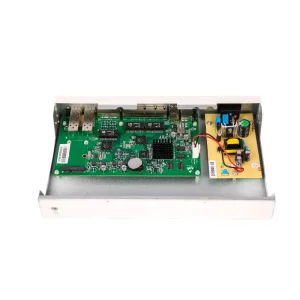
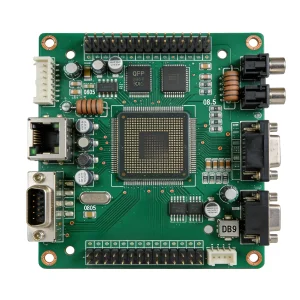
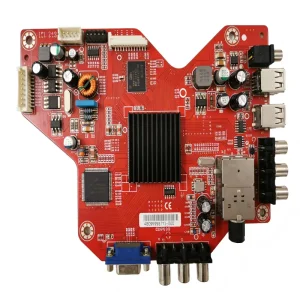
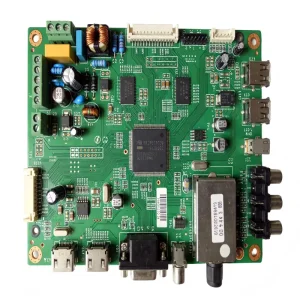
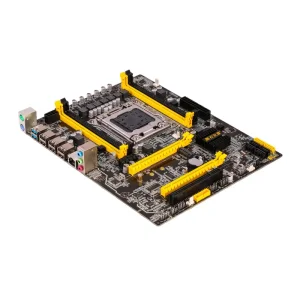
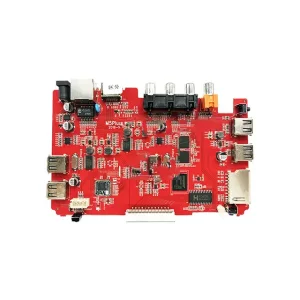
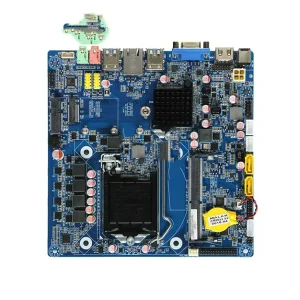
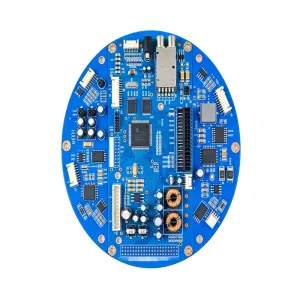
Shenzhen STHL is a high-quality provider of electronics manufacturing services (EMS) in China, we serve customers worldwide along the whole industry chain including PCB layout, components sourcing, PCB fabrication, PCBA assembly, cable assembly, box build assembly and comprehensive testing services.
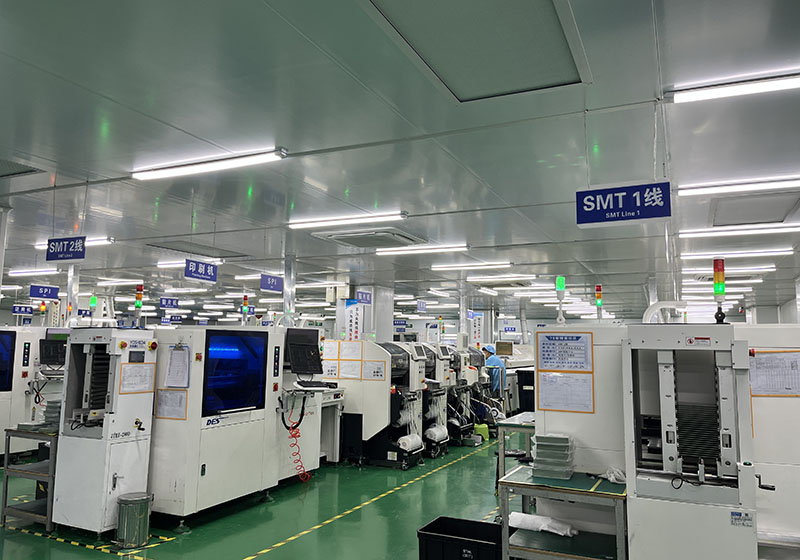
It was established in 2006, with 20 years of experience in electronics contract assembly manufacturing. Currently, STHL has 220+ staff members. Our 10,000 sqm facilities include 7 SMT assembly lines, 2 DIP/THT lines, 2 function testing lines and 2 finished device assembly lines.
At STHL, we provide electronics assembly services for energy power, communications, automotive, medical, consumer electronics, computers & storage, safety & security, commercial and industrial products. Our customers mainly from USA, Germany, Italy, UK, Poland, New Zealand, Argentina, Brazil, Turkey, Korea, Thailand, and the other 90 regions of the world.
As an IATF16949, ISO9001, ISO14001, and ISO13485 certificated electronics assembly manufacturer, we produce products exactly comply with RoHS standard and quality guarantee. Based on our excellent engineering and production capacities in technical areas such as materials analysis & storage, advanced equipment, reliability testing (AOI, X-RAY, ICT test and function test), high effective SMT and THT assembly, we are recognized as a long-term reliable PCBA vendor by more and more customers worldwide.
Welcome to visit STHL factory at any time.
We can handle a wide range of advanced components, including:
But our commitment to quality goes beyond component expertise. We utilize advanced inspection techniques, including AOI and X-Ray inspection, to guarantee flawless assembly.
STHL PCBA also excels in Through-Hole Technology (THT) assembly. Our services encompass:
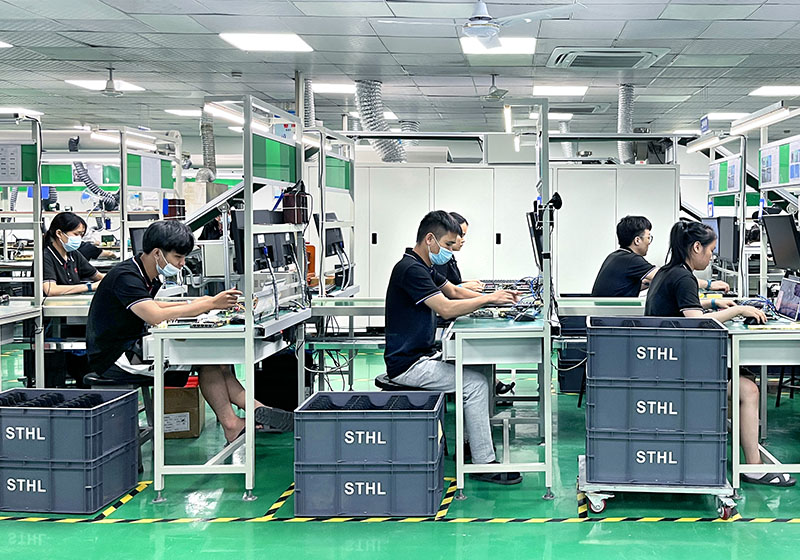
STHL operates 7 automated PCB assembly lines for both prototype and mass production. Advanced SMT ensures precise component placement and quality. Skilled technicians provide efficient THT assembly and RoHS-compliant lead-free soldering.
STHL PCB fabrication service produces high-quality, reliable printed circuit boards from simple singles to complex multi-layers, from flex PCB to rigid-flex PCB, we use premium materials and controlled processes to meet precise specifications.
STHL offer global electronic component sourcing and supply chain solutions. Our vast supplier network and expertise ensure access to genuine, certified parts, mitigating risks of counterfeits, allocation, and long lead times to secure your production schedule.
With the precision manufacturing of cable assembly components including handles, retention systems, connectors, and shielding in a wide range of materials and finishes, we have performed many successful cable assembly for many customers from various industrial applications.
Making your projects at STHL from SMT assembly to box build assembly is very cost-effective and fast to market. Covering everything from putting a PCBA into the enclosure with all functions testing to a complete product assembly packaged and ready for delivery to your customers, we can supply the full support.
STHL conducts functional testing (FCT) to verify product performance, preventing defects such as circuit issues, missing or incorrect components. This ensures delivered products are stable and fully qualified.
An In-Depth Tech Whitepaper by STHL's Engineering Team
The global printed circuit board (PCB) market is transitioning rapidly, driven by advanced computing architectures, the electrification of automotive networks, and the scaling of industrial IoT systems. Bare PCB boards—acting as the structural and electrical backbone of every electronic device—must now satisfy rigorous mechanical, thermal, and high-frequency constraints. The global demand for high-reliability bare PCBs has expanded from standardized FR-4 substrates to advanced High-Density Interconnect (HDI) structures, metal-clad thermal substrates (IMS), high-frequency Teflon/Rogers formulations, and polyimide-based flexible systems.
As microelectronics miniaturize, manufacturing bare PCBs demands sub-3-mil trace widths and spaces, precise blind and buried microvia architectures, and advanced surface finishes such as Electroless Nickel Immersion Gold (ENIG), Immersion Silver (ImAg), and Organic Solderability Preservatives (OSP). Modern assembly plants like Shenzhen STHL adapt to these needs by integrating structural fabrication directly with advanced component sourcing and SMT assembly under stringent international regulatory frameworks including IATF 16949 for automotive electronics and ISO 13485 for medical hardware diagnostics.
Choosing the correct bare board substrate is critical to the electrical integrity, thermal dissipation, and physical lifespan of the final system. Here is how standard industry laminates perform under critical stress metrics:
| Substrate Type | Glass Transition Temp (Tg) | Thermal Conductivity | Dielectric Constant (Dk @ 1GHz) | Primary Application Scenario |
|---|---|---|---|---|
| Standard FR-4 (High Tg) | 170°C - 180°C | 0.3 - 0.4 W/mK | 4.2 - 4.8 | Consumer Electronics, Industrial Control, Power Supplies |
| Aluminum/Metal Core (IMS) | 120°C - 140°C | 1.0 - 4.0 W/mK | N/A (Dielectric Layer Only) | LED Light Bars, High-Power Automotive converters |
| Polyimide (Flex) | 250°C - 320°C | 0.2 - 0.5 W/mK | 3.2 - 3.5 | Aerospace EFIS, Wearable Medical, High-Vibration Systems |
| Rogers / Teflon (PTFE) | 280°C | 0.5 - 0.8 W/mK | 2.2 - 3.0 (Ultra Low Loss) | RF Wireless Routers, 5G Base Stations, Radar Sensors |
Electronics contract manufacturing is no longer a one-size-fits-all model. Specialized industry domains dictate exact compliance thresholds, testing regimes, and trace materials:
Engineering the Next Generation of Circuit Boards
Transitioning fabrication standards to sub-25μm trace space configurations for high-density multi-layered computing platforms.
Integrating machine-learning models into Automated Optical Inspection stations to drastically reduce false calls and identify micro-voiding.
Expanding the deployment of halogen-free raw laminates and energy-efficient vacuum reflow oven profiles to minimize carbon footprints.
Embedding resistors and capacitors directly into inner PCB layers to optimize surface space for modern IoT architectures.
High quality is defined by dimensional stability, precise trace geometries, and robust layer adhesion. Standard compliance requires meeting IPC-A-600 Class 2 or Class 3 parameters. Crucial characteristics include accurate dielectric spacing, zero micro-cracks in copper plating, high Tg (Glass Transition Temperature) values, and clean surface finishes (like ENIG or OSP) that guarantee maximum solderability and shelf life.
IATF 16949 outlines the strict quality management system requirements for the automotive supply chain. It mandates a zero-defect framework, continuous improvement processes, and failure mode effects analysis (FMEA). For bare PCBs and assembly, it guarantees that boards used in critical subsystems like Supplemental Restraint Systems (SRS) or vehicle engine control units perform reliably under intense thermal and mechanical stress.
At STHL, we optimize reflow profiles using high-accuracy thermal profilers and use solder pastes engineered to minimize outgassing. After mounting BGAs, boards undergo 3D Automated Optical Inspection (AOI) and high-resolution X-ray inspection to detect solder voids, bridges, and misalignment within the hidden grid arrays, keeping the voiding ratio well below the 10% IPC threshold.
Consolidating fabrication, sourcing, and assembly with a single EMS partner like STHL reduces logistical overhead, avoids delays, and prevents layout-to-assembly design discrepancies. Our engineering team performs a thorough Design for Manufacturing (DFM) check before fabrication, identifying trace clearance issues, thermal relief problems, or component footprint mismatches before assembly lines are scheduled.
Our dedicated electronic component sourcing division utilizes an established network of authorized global distributors (Mouser, DigiKey, Arrow, etc.) alongside localized OEM networks. For obsolete parts, our component engineers suggest direct cross-references or recommend PCB redesign services to keep production lines running smoothly without compromising electrical characteristics.
Yes. We support global green initiatives by strictly adhering to EU Directive 2011/65/EU (RoHS) and subsequent amendments. We maintain designated Lead-Free SMT lines, wave-soldering equipment, and specialized reflow profiles designed for lead-free solder alloys (like SAC305) to ensure environmental compliance and reliable joint structures.
 STHL PCBA