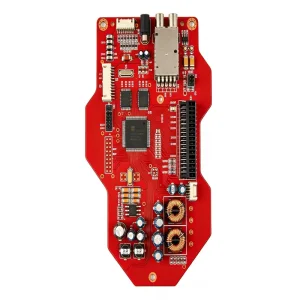
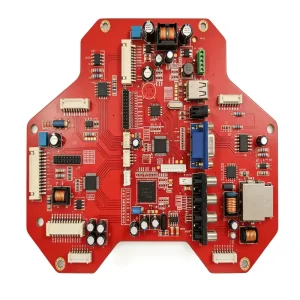
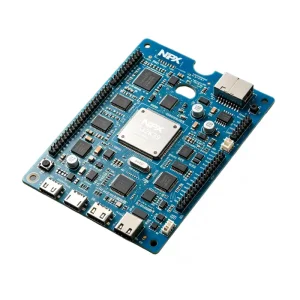
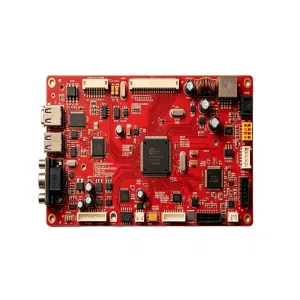
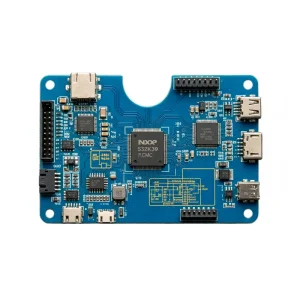
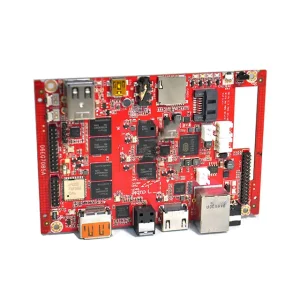
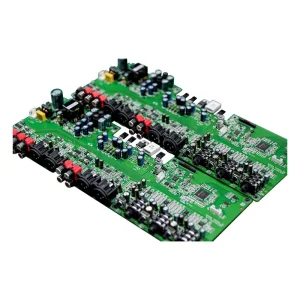
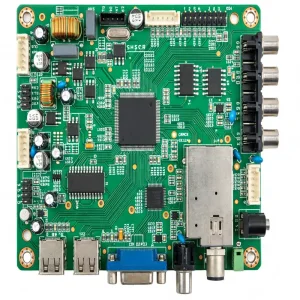
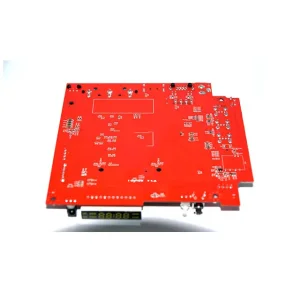
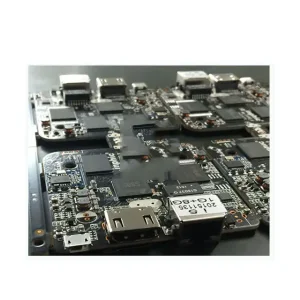
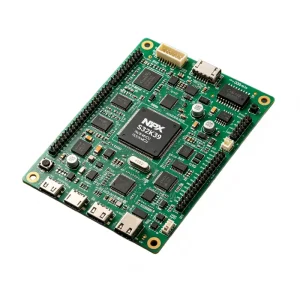
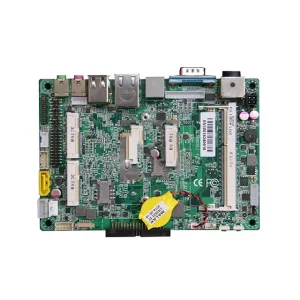
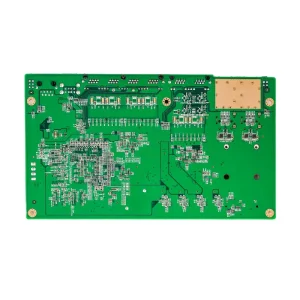
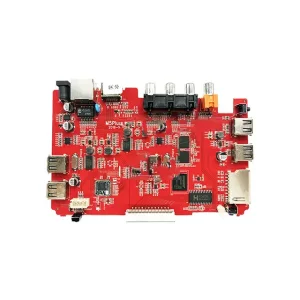
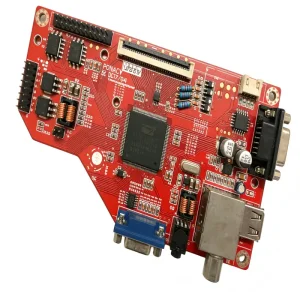
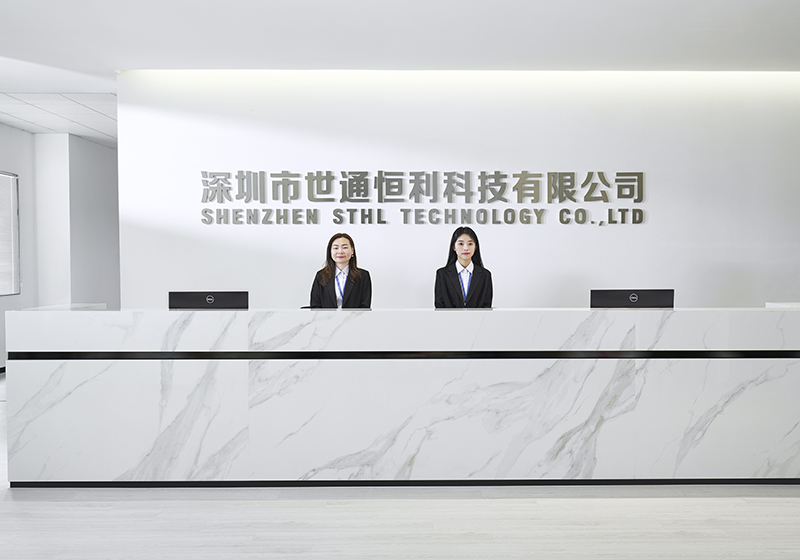
Shenzhen STHL stands as a leading high-quality provider of electronics manufacturing services (EMS) based in China, catering to an international clientele. We manage end-to-end integration across the electronics supply chain. Our offerings stretch from preliminary PCB layouts and components sourcing to multi-layered PCB fabrication, precise SMT/THT assembly, cable assembly, complex box build configurations, and exhaustive product testing.
Established in 2006, STHL has built 20 years of robust experience in electronic contract assembly manufacturing. Our modern 10,000 sqm production facilities in Shenzhen employ 220+ highly skilled staff members. Today, the facility houses 7 high-speed SMT assembly lines, 2 DIP/Through-Hole Technology (THT) lines, 2 dedicated functional testing (FCT) lines, and 2 complete finished device assembly/box-build lines. This capacity allows us to pivot rapidly from low-volume prototypes to high-speed mass production runs.
Our customer base extends across major technology hubs, with active partnerships in the USA, Germany, Italy, UK, Poland, New Zealand, Argentina, Brazil, Turkey, Korea, Thailand, and over 90 other regions worldwide. By strict compliance with standard operating procedures and a robust quality management framework, STHL delivers unparalleled manufacturing precision for sectors requiring high reliability: energy power systems, aerospace control units, automotive modules, advanced medical devices, smart consumer electronics, and demanding industrial control systems.
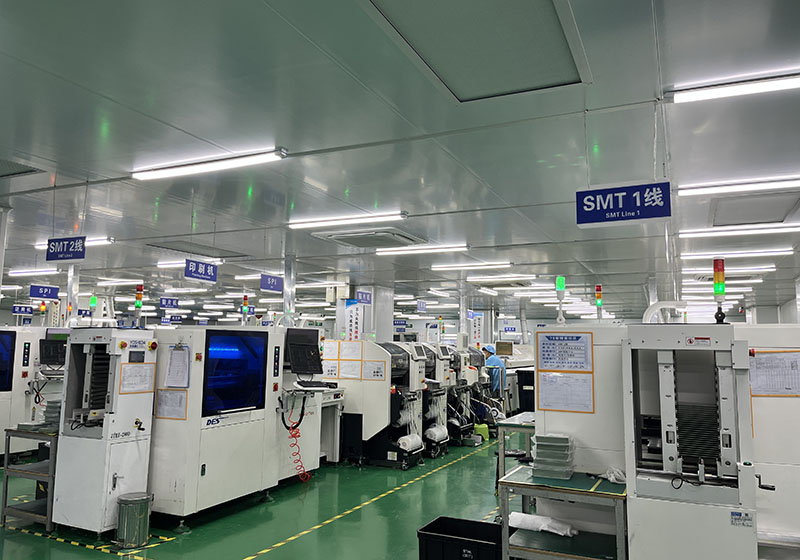
The core of modern miniaturized electronics lies in the Surface Mount Device (SMD) assembly process. As components shrink and system requirements dictate denser layouts, handling intricate packaging styles demands micro-precision tools, optimal paste rheology, and perfect thermal profiles. STHL is engineered to execute high-density packaging placements flawlessly, ensuring optimal joint alignment and structural reliability.
Our advanced pick-and-place systems and high-precision reflow ovens are calibrated to process a wide range of complex component architectures:
Beyond our hardware, quality is reinforced by a rigorous closed-loop inspection sequence. Solder Paste Inspection (SPI) evaluates height, volume, and alignment of solder prints before components are mounted. Subsequent Automated Optical Inspection (AOI) scans placement vectors, while 3D Automated X-ray Inspection (AXI) accesses hidden solder joint footprints under BGAs and QFNs to ensure absolute compliance with IPC-A-610 Class II/III standards.
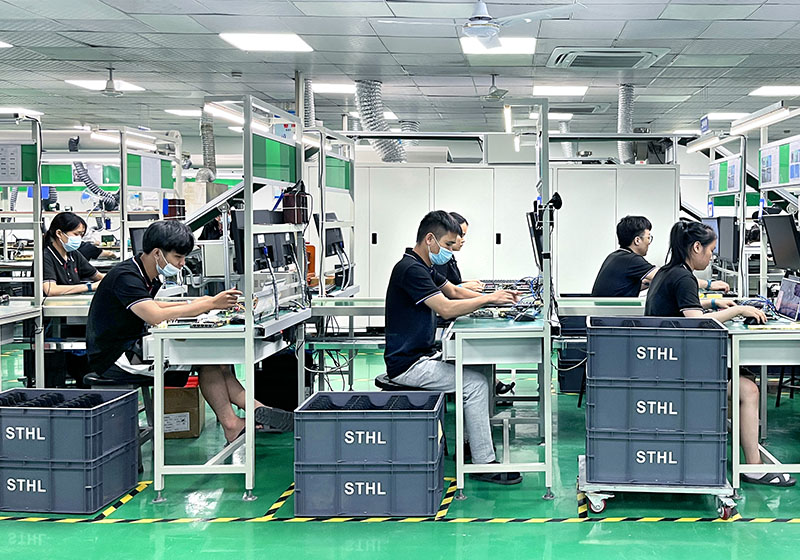
While SMT handles the high-density logic and memory chips, heavy-duty electronics, power converters, and systems subject to persistent mechanical vibration require the structural stability of Through-Hole Technology (THT). STHL integrates automated and manual insertion processes to deliver a robust hybrid or pure through-hole product line.
Our THT assembly workflow features a structured set of processing capabilities:
Consolidated data indicating scale, capability, and performance records over two decades of EMS operations.
The global semiconductor and electronic assembly landscape is undergoing a profound paradigm shift. As industries push toward electrification, miniaturization, and IoT integration, the demand for highly reliable SMD assembly processes is soaring. The complexity of electronic hardware is no longer confined to smartphones and desktop computers. It has moved into critical systems such as automotive powertrains, smart electrical grids, medical diagnostics, and telecommunication infrastructures.
Aerospace, automotive, and medical industries mandate zero-defect targets. An SMD assembly process manufacturer catering to these industries must strictly manage solder alloy grain structures, interfacial intermetallic compound (IMC) layer thickness, and void percentages within critical BGA joints. These standards are crucial for preventing thermal fatigue failures over years of operation.
Global original equipment manufacturers (OEMs) are shifting from fragmented component sourcing networks to single-source turnkey partners. Turnkey electronic manufacturing services (EMS) that integrate PCB layout validation, direct bare-board manufacturing, component component-sourcing networks, SMT assembly, and mechanical housing integration drastically lower operational latency and time-to-market.
With silicon dies shrinking and multi-chip modules becoming standard, assembly substrates are reaching higher routing densities. High-density interconnect (HDI) PCBs, coupled with fine-pitch SMD components, require stencil designs optimized with sub-mil tolerances. This ensures appropriate area ratios and clean paste transfer during printing cycles.
Comprehensive engineering solutions designed to support your product lifecycle from prototype to end-of-life support.
STHL operates 7 automated PCB assembly lines designed to handle prototype and high-volume mass production. High-speed placement heads ensure component positioning down to ±0.03mm. Our DIP/THT lines provide manual insertion under stringent ESD protocols, incorporating lead-free wave soldering for mechanical component stability.
We supply high-quality bare boards, ranging from standard single and double-sided boards to complex multilayer rigid, high-frequency, flexible, and rigid-flex configurations. Every board is produced with controlled impedance geometries, precise glass-transition temperatures (Tg), and surface finishes optimized for lead-free SMT processes.
Our direct procurement network establishes connections with authorized chip and component manufacturers. This enables global material sourcing that mitigates the risks of counterfeit parts and long lead times. We specialize in locating obsolete or highly allocated silicon, securing production timelines against supply disruptions.
We engineer custom wire harnesses and cable assemblies, including overmolded connectors, RF cable lines, power supply cords, and high-speed data transmission lines. All cable products undergo 100% continuity and high-pot testing to prevent insulation breakdown under high operating voltages.
From populated PCBA components to finished devices, our box build lines manage mechanical enclosure design integration, internal sub-assembly wiring, pneumatic connector placement, custom calibration cycles, and retail-ready packaging. This reduces the logistical steps required of our customers.
To assure a zero-defect yield at final delivery, we deploy customized functional testing beds. Using analog, digital, and high-frequency RF stimuli, we simulate real-world conditions to verify performance parameters, communication protocols, and firmware stability under thermal stress.
Different operating environments dictate specific SMT assembly processes. STHL engineers custom assemblies to meet the unique stressors of each operating landscape.
Automotive electronics, including On-board Chargers (OBC) and Telematics Units (T-Box), are exposed to continuous vibration, high humidity, and extreme thermal cycling (-40°C to 125°C). To ensure longevity, our SMD process incorporates lead-free solder alloys with high fatigue resistance (such as SAC305 or custom dopants). We apply selective conformal coatings (silicone, polyurethane, or acrylic) to prevent moisture ingress and dendrite growth. These processes comply with the IATF 16949 standard to safeguard critical automotive systems.
Class II and Class III medical systems, ranging from electronic medical records (EMR) interfaces to life-critical pacemakers, demand zero fail rates. Our assembly line uses cleanroom environments with controlled humidity and temperature. This prevents contamination from microscopic airborne dust during reflow. We use high-grade bio-compatible materials and complete trace-to-source documentation to meet ISO 13485 regulations. This ensures every passive capacitor, resistor, and active microcontroller is traceable to its manufacturing origin.
Power tool modules and Aerospace Air Data Inertial Reference Units (ADIRU) undergo significant mechanical shocks and high electrical currents. For these devices, THT manual soldering is integrated with SMT placements. We use thick copper PCBs (up to 4oz or more) to handle high currents without overheating. Solder joints are inspected using Automated X-Ray Inspection (AXI) to verify voiding levels are kept well below 10%, preventing hot spots and electrical failures under load.
Smart meters and industrial wastewater monitoring equipment are deployed outdoors in remote regions for decades. This exposes them to ambient humidity, electrostatic discharges, and voltage fluctuations. The SMD process for these boards includes transient voltage suppressors (TVS diodes) and gas discharge tubes, which are mounted with high-shear-strength solder joints. Every board is subjected to functional burn-in testing to identify infant component mortality before deployment.
Operating from Shenzhen, the global hub of electronics manufacturing, STHL leverages a mature, local supply chain ecosystem to optimize production timelines and costs.
90% of raw board elements, passive devices, connectors, and plastics are sourced within a 50km radius of Shenzhen. This local access minimizes logistics delays, enabling quick-turn prototyping and reducing production ramp-up periods from weeks to days.
Proximity to key international shipping hubs—such as Shenzhen Port, Hong Kong Port, and major cargo airports—enables flexible shipping options. Whether shipping by air, sea, or express transit, we ensure prompt customs processing and tracking to major international destinations.
Shenzhen hosts a deep talent pool of electronics, mechanical, and quality control engineers. This talent base allows us to offer Design for Manufacturing (DFM) reviews on every project, identifying layout errors, thermal mismatches, and pad misalignments before assembly begins.
As electronics transition toward higher functional densities and greener footprints, STHL is continuously modernizing its technical processes to meet next-generation requirements.
We are integrating real-time IoT sensors across our SMT lines. These sensors continuously monitor stencil pressure, solder paste viscosity, reflow oven temperature profiles, and component placement accuracy. By collecting and analyzing this data, we can adjust parameters dynamically to prevent defects before they occur, improving first-pass yields.
To reduce our environmental impact, we are expanding our use of halogen-free laminates, zero-clean low-residue flux formulas, and lead-free alloys. We are also optimizing energy consumption in our reflow and wave-solder systems, minimizing waste in accordance with ISO 14001 guidelines.
Quality is not just checked at the end of the line; it is engineered into our daily processes. We maintain rigorous certifications and quality management workflows to ensure global regulatory compliance.
Automotive Quality Management certification ensures rigorous process controls, defect prevention, and continuous variance reduction across all production lines.
Medical Devices Quality Management Standard mandates cleanroom production practices and comprehensive, long-term component trace-to-source tracking.
Core quality management system governing internal document versioning, production parameter verification, and customer feedback loops.
Every raw alloy, component surface plating, and liquid flux chemistry used is certified lead-free, protecting local environments and complying with global directives.
Insights and technical answers to common questions raised by our global partners and hardware engineers.
A: We use high-precision 3D Solder Paste Inspection (SPI) to check paste volume and alignment before placement. Post-reflow, every board undergoes 3D Automated Optical Inspection (AOI) to verify alignment. For hidden joints under BGAs and QFNs, we use Automated X-Ray Inspection (AXI) to check for voids, bridging, and solder balls, ensuring compliance with IPC-A-610 Class III standards.
A: Yes. Our 10,000 sqm facility features 7 high-speed SMT assembly lines, 2 DIP/THT lines, and 2 finished product assembly lines. This layout allows us to dedicate specific lines to fast-turn prototypes, while other lines run continuous, high-volume production, ensuring on-time delivery across different order volumes.
A: We hold IATF 16949 certification for automotive systems, ISO 13485 for medical electronics, ISO 9001 for quality systems, and ISO 14001 for environmental management. All materials and processes are fully RoHS compliant.
A: We procure components directly from original manufacturers or authorized global distributors (such as Arrow, DigiKey, and Mouser). For parts sourced from open-market vendors, we perform incoming inspection checks, including package inspection, date-code checks, and X-ray analysis, to verify component authenticity.
A: We require standard Gerber files (RS-274X format or ODB++), a complete Bill of Materials (BOM) in Excel format (including manufacturer part numbers, descriptions, package sizes, and designators), and a Pick-and-Place coordinate file for SMT component placement.
 STHL PCBA