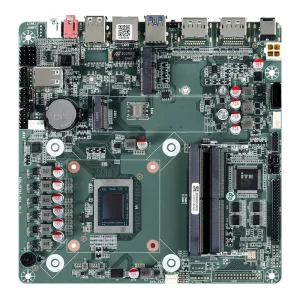
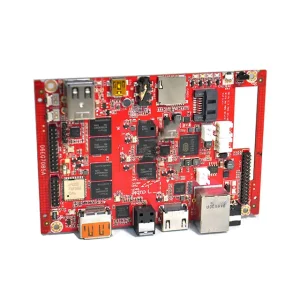
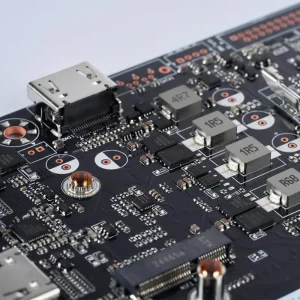
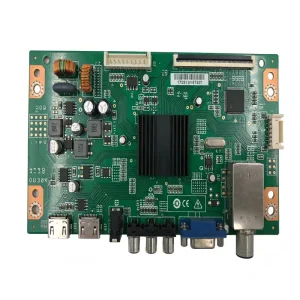
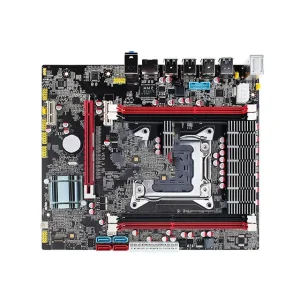
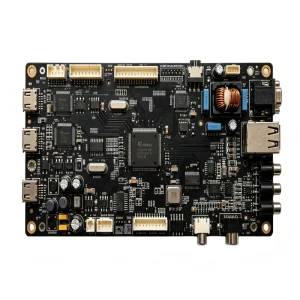
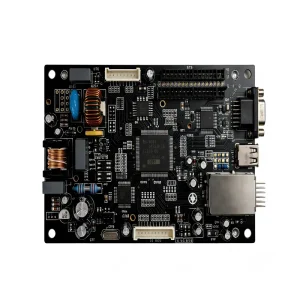
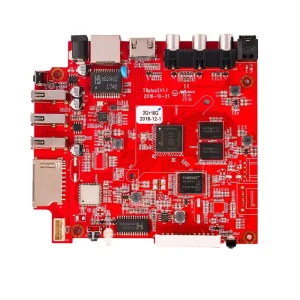
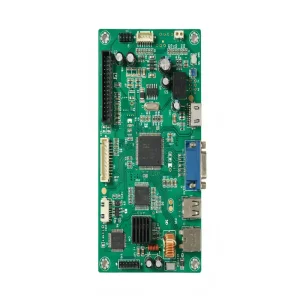
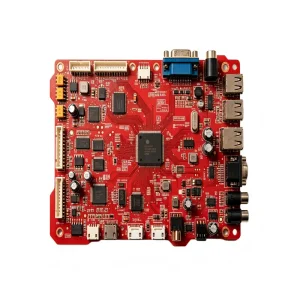
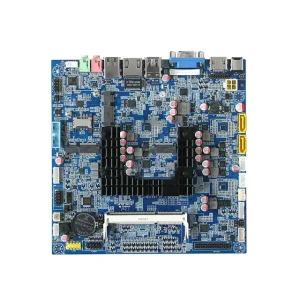
Explore our specialized applications engineered to meet strict international standards for medical, industrial, and high-speed communications.
In the modern electronics landscape, selecting the right partner for China Bare PCB manufacturing and assembly (PCBA) represents a critical strategic decision. The production of bare printed circuit boards forms the foundation of all electrical hardware, dictating the ultimate electrical performance, thermal dissipation efficiency, and long-term reliability of downstream modules. For global original equipment manufacturers (OEMs), procuring high-quality bare PCBs from Shenzhen’s specialized electronics ecosystem guarantees a cost-competitive pathway to scale, provided the manufacturing partner complies with tight geometric tolerances and rigorous testing frameworks.
As microelectronics shift toward higher density interconnects (HDI), advanced materials like high-Tg FR-4, polyimides, and ceramic substrates are increasingly deployed to manage excessive thermal output and high-frequency signal requirements. A professional manufacturing approach utilizes complex layer-stacking, precise microvia drilling, and robust surface finishes (such as Electroless Nickel Immersion Gold - ENIG) to prevent assembly faults. Choosing a vendor with comprehensive vertically-integrated capabilities—spanning raw PCB fabrication, component sourcing, through-hole/surface-mount assembly, and final system integration—effectively mitigates supply chain fragmentation risk.
Delivering high-quality Electronics Manufacturing Services (EMS) globally since 2006.
Established in 2006, Shenzhen STHL is a premier electronics contract manufacturer with two decades of refined experience. Our 10,000 sqm modern manufacturing facility is staffed by 220+ highly skilled professionals. To support complex high-volume operations, we run 7 SMT assembly lines, 2 DIP/THT lines, 2 functional testing lines, and 2 finished box-build device assembly lines.
We serve global customers in the USA, Germany, Italy, UK, Poland, New Zealand, Argentina, Brazil, Turkey, Korea, Thailand, and across 90 other regions. Our solutions span the entire product life cycle: PCB layout consultation, structural material analysis, component sourcing, PCB fabrication, cable harness assembly, box-build, and comprehensive electrical verification.
As a certified manufacturer under IATF 16949 (Automotive), ISO 9001 (Quality Management), ISO 14001 (Environmental Standards), and ISO 13485 (Medical Devices), we guarantee our processes yield RoHS-compliant products that perform flawlessly in harsh environments.
Modern microelectronics require exact positioning and clean solder joint integrity. We manage advanced component mounting profiles down to ultra-fine pitches:
Our surface mount technology utilizes SPI (Solder Paste Inspection) and automated optical inspection (AOI) stages to eliminate defects prior to reflow, ensuring zero-defect production runs.
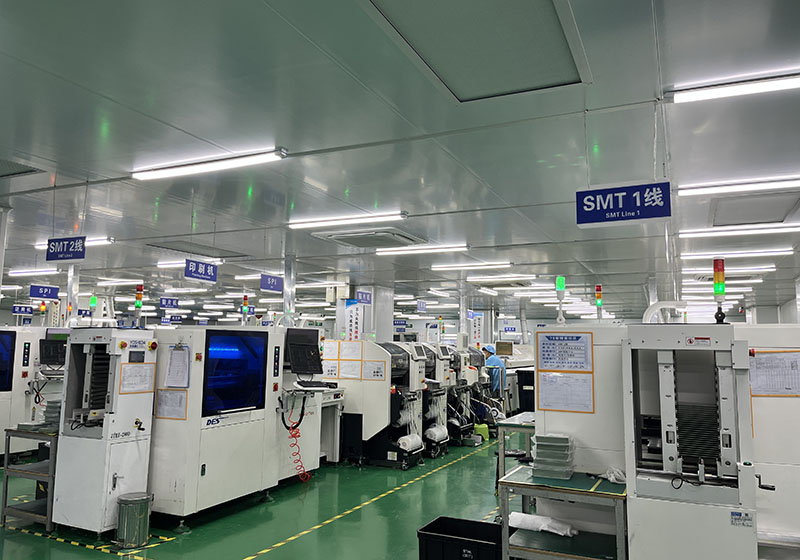
For applications subjected to heavy mechanical strain or requiring robust electrical interfaces, THT remains critical. STHL provides a robust suite of THT services:
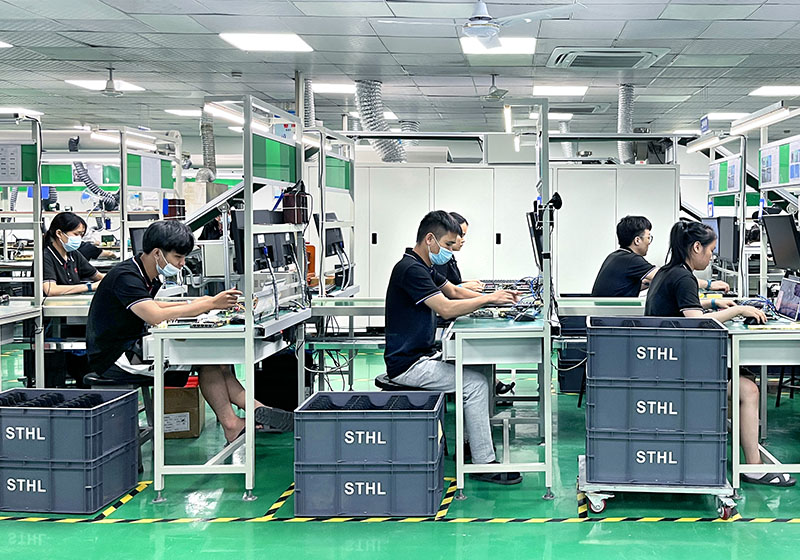
Providing comprehensive engineering and manufacturing solutions from concept to delivery.
Operating 7 automated assembly lines designed for prototyping and high-volume runs. Precision optical alignment systems ensure exact component landing on complex designs.
From single-sided to complex multi-layer boards, including flexible and rigid-flex configurations. We apply premium copper clad laminates to meet exact impedance limits.
Global supply chain integration utilizing approved and audited distributors. Real-time OCM tracking mitigates the risk of counterfeit components.
Full integration services encapsulating finalized PCBA units inside custom metal or plastic enclosures, complete with functional verification and custom packaging.
Advanced testing routines including In-Circuit Testing (ICT), Flying Probe, custom functional testing jigs, and climate-chamber aging simulations.
Precision manufacturing of interconnect systems featuring custom shielding, strain reliefs, and custom keying to ensure reliable signal routing.
Sourcing electronics from China has evolved from a transaction-based model into a collaborative engineering partnership. Global demand now shifts toward low-loss materials suitable for high-frequency applications like 5G infrastructure, edge-computing nodes, and automotive battery management systems (BMS). As operational frequencies rise, maintaining signal integrity requires specialized PCB substrates. Below is a comparison table outlining core material substrates deployed in modern industrial PCB manufacturing:
| Substrate Material | Dielectric Constant (Dk @ 1GHz) | Loss Tangent (Df @ 1GHz) | Glass Transition Temp (Tg) | Primary Industrial Applications |
|---|---|---|---|---|
| Standard FR-4 (Isola/Shengyi) | 4.2 - 4.7 | 0.015 - 0.020 | 130°C - 140°C | Consumer electronics, simple power supplies, LED strip controllers. |
| High-Tg FR-4 (IT180A) | 4.0 - 4.5 | 0.012 - 0.016 | 170°C - 180°C | Automotive modules, multi-layer computer motherboards, industrial sensors. |
| Polyimide (Flex PCB) | 3.2 - 3.5 | 0.002 - 0.008 | 220°C - 260°C | Aerospace instrumentation, medical probes, dynamic wearable electronics. |
| PTFE/Teflon (Rogers/Arlon) | 2.2 - 3.0 | 0.0009 - 0.003 | N/A (Thermoplastic) | RF radar modules, satellite communications, 5G high-speed base stations. |
In high-density PCB projects, a significant portion of manufacturing cost is determined before files ever reach the production floor. Design for Manufacturability (DFM) audits address spacing mismatches, copper-to-edge clearances, acid traps, and thermal relief anomalies. Implementing DFM early prevents line stoppages and reduces substrate wastage. For multi-layer stack-ups, maintaining structural symmetry prevents board warp during reflow profiles that exceed 250°C for lead-free assembly.
The global electronic components landscape remains susceptible to sudden supply fluctuations and long lead times. At STHL, our procurement division utilizes real-time APIs connected to verified global distributors and component manufacturers. This guarantees that all active and passive components—from microcontrollers to basic MLCCs—are authentic and fully traceable, preventing the installation of aged or gray-market components on critical customer designs.
As microchip packaging shrinks and power densities climb, PCB fabrication must evolve. STHL is updating its facilities to accommodate the next generation of hardware engineering:
Integrating resistors and capacitors directly into inner PCB layers. This frees outer surface space, allowing tighter layouts for BGAs and reducing parasitic inductance in high-frequency circuits.
Developing multi-layer boards with inner copper layers exceeding 4oz. This addresses power density demands in electric vehicles (EVs) and high-output renewable energy storage units.
Adopting halogen-free laminates and closed-loop water treatment systems. This aligns with international environmental standards and RoHS/REACH compliance requirements.
Providing clear answers to technical questions about PCB fabrication, assembly, and sourcing.
Prototype runs for standard double-sided or multi-layer boards (up to 8 layers) are typically completed in 3 to 7 working days. Medium-to-high volume production runs, including full components sourcing and SMT assembly, generally require 3 to 4 weeks depending on the complexity of the Bill of Materials (BOM) and component lead times.
We maintain partnerships with authorized franchise distributors such as Arrow, Avnet, DigiKey, and Mouser. For specialty or hard-to-source components, we utilize an audited network of independent distributors who provide traceable documentation, and we perform visual inspection and electrical testing to verify component authenticity.
We recommend Electroless Nickel Immersion Gold (ENIG) or Electroless Nickel Electroless Palladium Immersion Gold (ENEPIG) for fine-pitch BGAs. These finishes provide a flat coplanar surface that prevents bridging and ensures reliable solder joints. For cost-sensitive designs with standard pitches, Organic Solderability Preservative (OSP) or Lead-Free HASL is suitable.
STHL is certified under IATF 16949 for automotive electronics and ISO 13485 for medical device assembly. These standards require trace documentation, process validation, strict calibration schedules, and risk assessments for all manufactured components.
Yes, we support consigned (customer-supplied), partial turnkey (consigned core components + sourced passives), and full turnkey sourcing models. This flexibility allows customers to control proprietary silicon sourcing while delegating standard parts procurement to us.
Industrial, display, and power management assemblies built to support continuous field operation.
 STHL PCBA