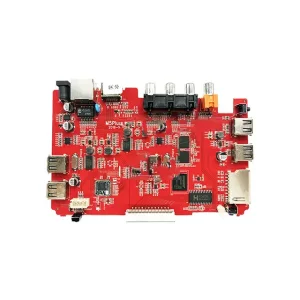
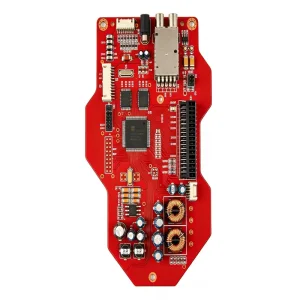
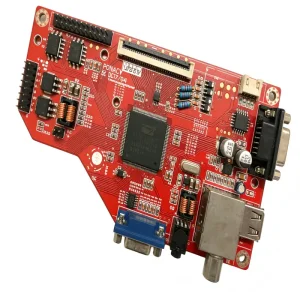
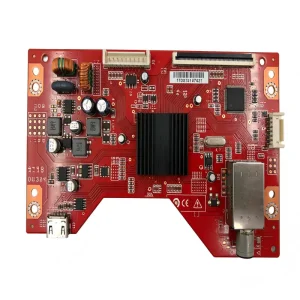
In the contemporary hardware landscape, finding a reliable China PCB printing manufacturer has evolved from a basic cost-saving transaction into a critical strategic partnership. As global industries accelerate toward Internet of Things (IoT) ecosystems, industrial automation (Factory 4.0), smart grids, and electric vehicles (EVs), the foundational print circuit board has transformed. Modern PCB manufacturing is no longer just about depositing copper lines on FR4 substrates; it is about managing thermal dynamics, signal integrity, high-density component placement, and environmental sustainability.
Global procurement teams face unprecedented challenges: raw material price fluctuations, complex logistical paths, components counterfeiting, and strict regulatory alignments such as RoHS, REACH, and domestic automotive standards. The role of specialized China PCB manufacturers has shifted to bridge these gaps. Advanced Chinese EMS factories now offer full-stack design for manufacturing (DFM) support, ensuring that multi-layer designs, rigid-flex boards, and high-density interconnect (HDI) arrays perform optimally in high-stress, real-world environments.
Quality guarantees are verified through internationally recognized frameworks. For aerospace, medical, automotive, and high-reliability industrial controls, a manufacturer's adherence to standards such as IATF 16949 (automotive), ISO 13485 (medical), and ISO 9001 (general quality control) is the baseline indicator of operational integrity. Chinese factories have capitalized heavily on upgrading internal controls, implementing automated optical inspection (AOI), real-time X-ray verification, and automatic components storage systems to eliminate human error and safeguard international supply chains.
Years of EMS Manufacturing
Sqm Production Facility
Automated SMT Production Lines
Export Regions & Countries
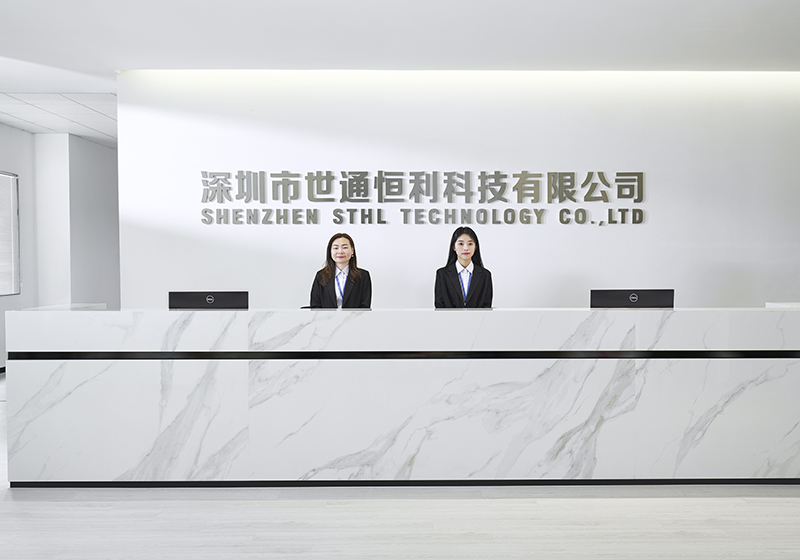
Established in 2006, Shenzhen STHL has grown into a leading, high-quality electronics manufacturing services (EMS) provider in China. With two decades of hands-on electronics contract assembly expertise, STHL bridges the gap between complex engineering concepts and stable, volume-produced electronic hardware. Our advanced 10,000 sqm production facility hosts a dedicated workforce of over 220 professionals, operating custom-calibrated production assets to satisfy strict industrial requirements.
Our operational capabilities cover the entire lifecycle of electronics production:
As a certified manufacturer under IATF16949, ISO9001, ISO14001, and ISO13485 frameworks, STHL is built on engineering reliability. We serve critical industries across North America, Europe (Germany, UK, Italy, Poland), South America (Brazil, Argentina), and Asia-Pacific (Korea, Thailand, New Zealand).
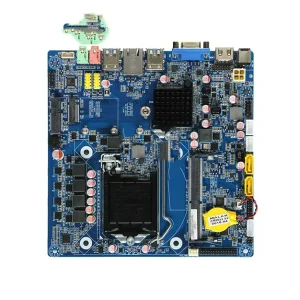
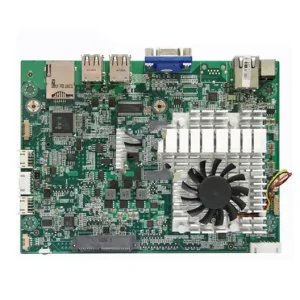
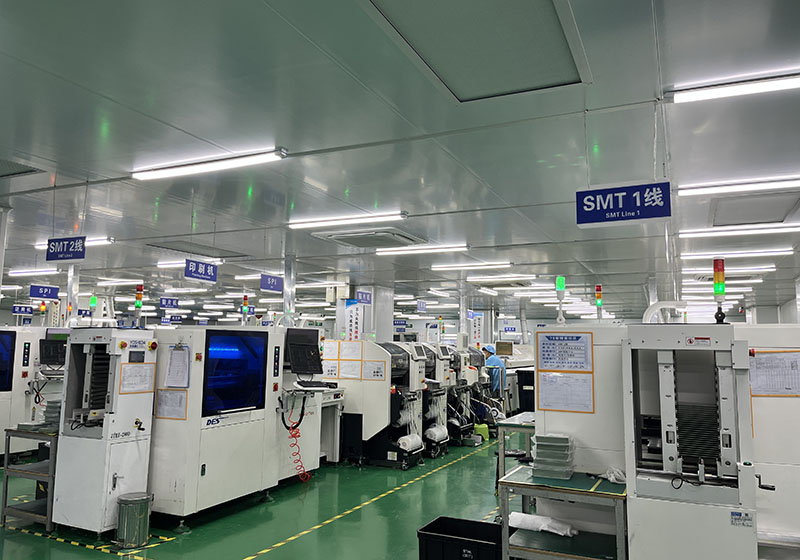
SMT forms the backbone of modern electronics manufacturing. STHL's SMT facilities are engineered to process high-density, multi-layer designs that power advanced computing, automotive controls, and compact IoT sensors. We maintain tight thermal profiling and precise pick-and-place calibrations to handle the industry’s smallest and most intricate component packages.
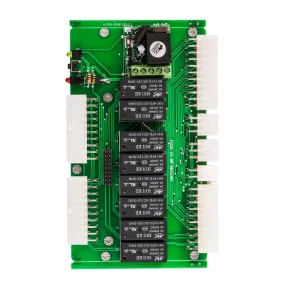
While SMT dominates high-density logic circuits, Through-Hole Technology (THT) remains indispensable for mechanical strength, high power dissipation, and high-voltage connections. STHL maintains robust DIP/THT lines capable of managing large component variations, heavy heat sinks, and terminal blocks for severe environments.
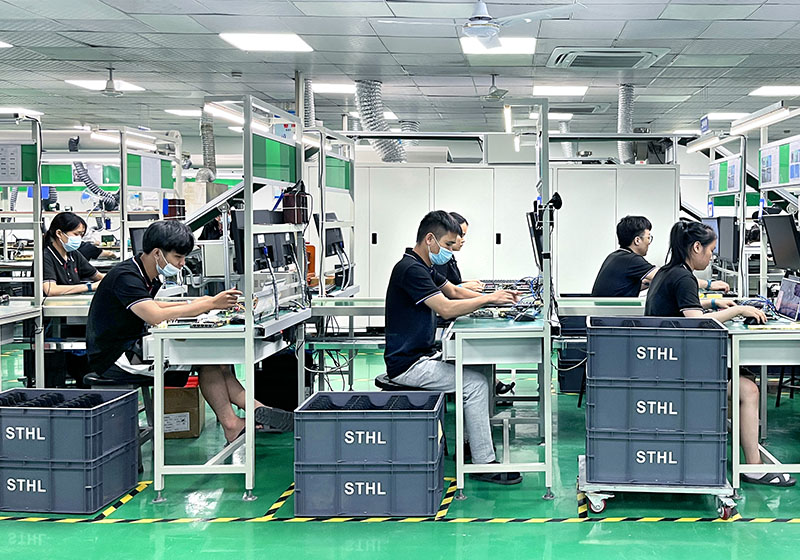
Operating 7 automated SMT lines and 2 DIP lines. High-speed, high-density pick-and-place lines, lead-free wave soldering, and reflow profile optimization for double-sided designs.
Fabricating high-reliability boards from standard single-sided designs up to 32-layer rigid-flex options. Engineered material processing using high-Tg FR4, Rogers, and aluminum backings.
Global supply network offering robust BOM scrubbing, trace verification, and counterfeit prevention. Fast lead times and active-obsolescence management algorithms.
Production of high-reliability cables, shielding jackets, termination points, and waterproof interfaces for industrial machinery, aerospace, and medical sensors.
Transition from raw PCBA to finished product packaging. Enclosure design integration, internal routing, sub-assembly mounting, and complete consumer-ready product packaging.
Custom structural and software functional test beds. Hardware-in-the-loop (HIL) simulations, boundary scan testing, ICT programming, and high-temp environmental stress test cycles.
The manufacturing capabilities in China have evolved significantly. Modern Chinese facilities leverage digital systems and automation to manage complexity at scale. The transition to Factory 4.0 integrates all parts of production—from raw materials receipt to automated optical inspection—into a unified data system.
At STHL, our execution strategy focuses on the following key operational pillars:
This automated infrastructure enhances production consistency and provides global buyers with structural transparency. With real-time yield monitoring, we identify potential issues early in the process, ensuring stable lead times and maintaining supply chain resilience for international clients.
Sourcing electronics globally requires a careful balance of cost, speed, and risk management. As technology cycles shorten, procurement teams need partners that provide supply chain resilience alongside component sourcing capabilities. STHL addresses this through active risk mitigation: alternative sourcing recommendations, component life-cycle tracking, and strategic buffering of critical silicon wafers.
We work directly with domestic and international suppliers to secure genuine parts, avoiding supply gaps and grey-market components. Our engineering team conducts incoming inspection protocols, including solderability tests, X-ray checks, and decapsulation analysis when needed, to ensure all materials meet strict specifications before entering production.
Modern printed circuit board assemblies are deployed in diverse environments, each requiring specialized material properties and designs:
 STHL PCBA