Explore our high-performance electronic manufacturing capabilities serving global safety, medical, energy, and smart home industries.
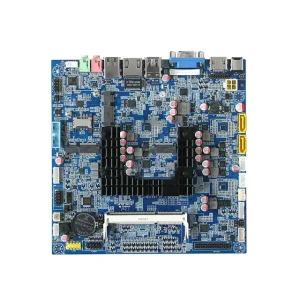
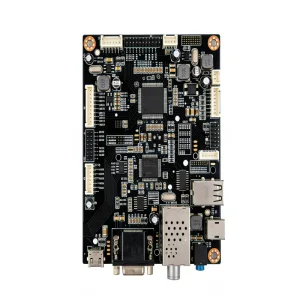
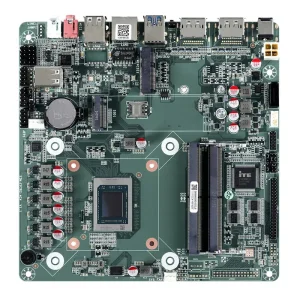
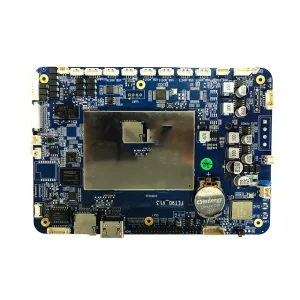
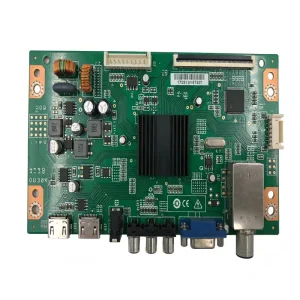
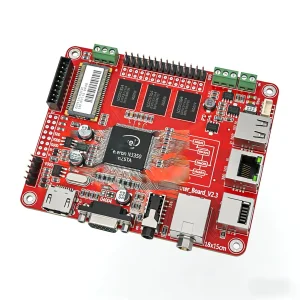
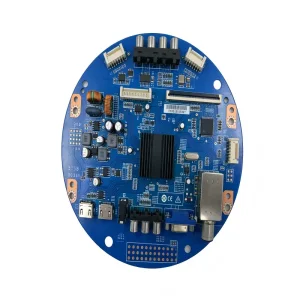
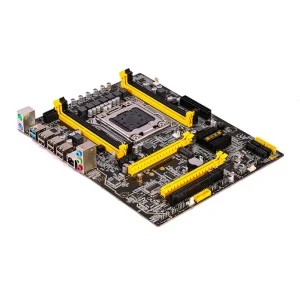
Analyzing the shifts in high-density integration, structural dynamics, and the convergence of flexible substrate interfaces in critical systems.
As system physical envelopes shrink, the electronics industry is moving away from modular wiring looms. Multi-layer rigid-flex circuits integrate dynamic structural flex areas directly with high-density HDI motherboards. The deployment of 2-to-12 layer rigid-flex boards reduces system volume by up to 60% and weight by up to 70% compared to traditional wire-harnessed PCB configurations.
Integrating low-Dk (dielectric constant) and low-Df (dissipation factor) polyimide formulations is vital for high-speed signal pathways. Advanced rigid-flex structures support controlled impedance differential microstrip lines, minimizing crosstalk and signal degradation. This is ideal for 5G, medical imaging, and radar systems operating at high frequencies.
Rigid-flex substrates offer superior thermal dissipation compared to traditional rigid designs, mitigating stress from mismatched Coefficients of Thermal Expansion (CTE). Under extreme temperature variation, the structural elasticity of the polyimide flex core prevents solder joint fatigue, stabilizing critical military and industrial controls.
Aligning global manufacturing demands with localized Chinese factory advantages for high-yield, cost-mitigated electronics manufacturing.
When sourcing rigid-flex products globally, Tier-1 OEMs assess the Total Cost of Ownership (TCO) beyond the initial PCB unit cost. Rigid-flex fabrication requires complex multi-step lamination and custom adhesive matrices, which can impact yields if not properly managed. Partnering with a China-based EMS supplier like STHL gives procurement teams access to fully integrated, specialized production lines.
STHL offers co-design DFM (Design for Manufacturing) services, assisting in layer stackup and bending area optimization. This significantly reduces initial prototyping iterations and prevents dynamic fatigue failure, helping shorten time-to-market.
Key Procurement Advantages: Direct access to raw material markets, automated layer alignment systems, laser direct imaging (LDI), and integrated testing parameters, reducing sourcing overhead by up to 35% compared to Western counterparts.
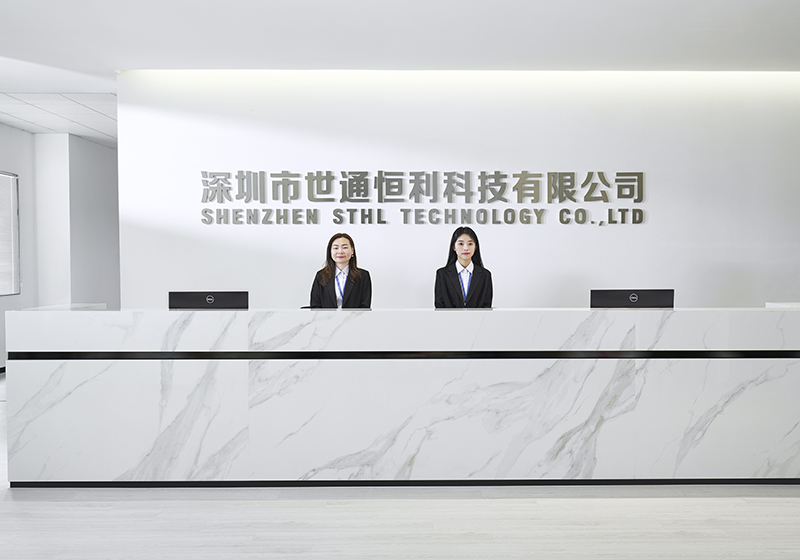
A look at Shenzhen STHL's 20-year history as a key electronics contract assembly manufacturing partner for leading global enterprises.
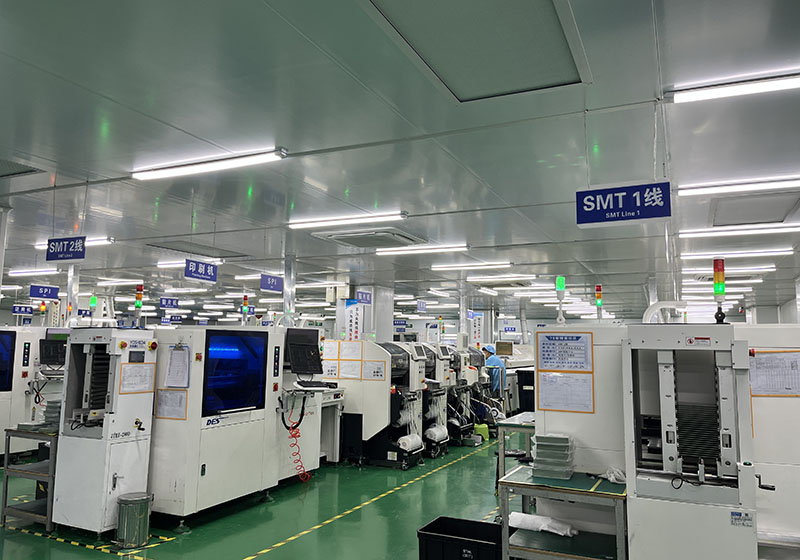
STHL offers high-accuracy placement across a wide range of advanced components, including:
Ball Grid Array (BGA) & Ultra-Fine BGA (uBGA): Precison placement down to 0.3mm pitches with 3D X-Ray Inspection for void-free solder joints.
QFN, QFP, SOIC, and PLCC Packages: Automated optical alignment handles modern compact packages efficiently.
Package-on-Package (PoP) & 01005 passives: Expert handling for ultra-miniature, high-density component placements.
We use advanced inspection techniques, including inline 3D AOI (Automated Optical Inspection) and high-resolution X-Ray, to help ensure solder joint integrity across all assemblies.
Alongside our surface-mount capabilities, STHL maintains dedicated THT infrastructure to handle rugged power supplies, heavy-duty industrial automation boards, and specialized connector interfaces:
Component Insertion: Leverages both high-precision automatic insertion machinery and skilled manual placement.
Custom Fixturing: Selective wave soldering fixtures shield heat-sensitive components while ensuring stable solder fillets.
Compliance & Reliability: ESD-protected workstations and RoHS-compliant lead-free processes help protect components during assembly.
All assembled boards undergo rigorous post-soldering inspection, and functional testing (FCT) is performed to ensure the electronics operate reliably under their intended application parameters.
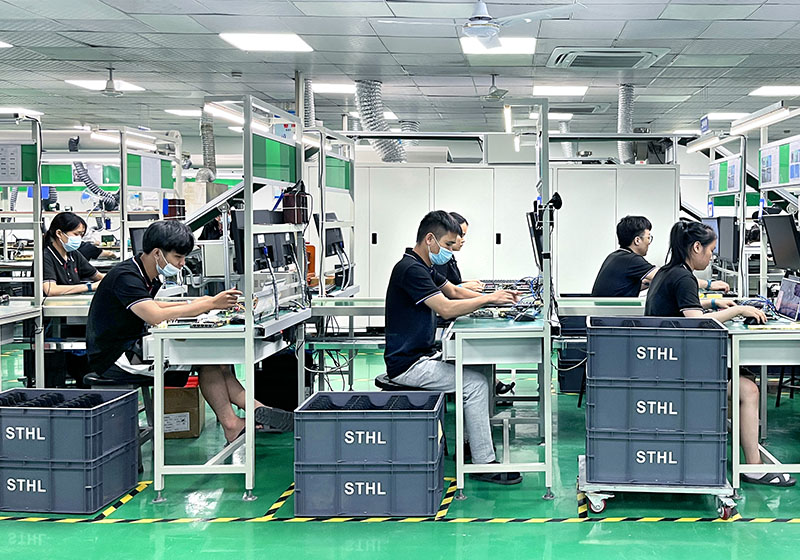
Our comprehensive EMS solutions cover everything from raw board fabrication to final device assembly and functional testing.
STHL operates 7 automated PCB assembly lines for both prototype and mass production. Advanced SMT ensures precise component placement and quality. Skilled technicians provide efficient THT assembly and RoHS-compliant lead-free soldering.
STHL PCB fabrication service produces high-quality, reliable printed circuit boards from simple singles to complex multi-layers, from flex PCB to rigid-flex PCB, we use premium materials and controlled processes to meet precise specifications.
STHL offers global electronic component sourcing and supply chain solutions. Our vast supplier network and expertise ensure access to genuine, certified parts, mitigating risks of counterfeits, allocation, and long lead times to secure your production schedule.
With the precision manufacturing of cable assembly components including handles, retention systems, connectors, and shielding in a wide range of materials and finishes, we have performed many successful cable assembly for many customers from various industrial applications.
Making your projects at STHL from SMT assembly to box build assembly is very cost-effective and fast to market. Covering everything from putting a PCBA into the enclosure with all functions testing to a complete product assembly packaged and ready for delivery to your customers, we can supply the full support.
STHL conducts functional testing (FCT) to verify product performance, preventing defects such as circuit issues, missing or incorrect components. This ensures delivered products are stable and fully qualified.
Our manufacturing tolerances and material specifications are tailored for high-reliability medical, automotive, and industrial applications.
| Feature Parameter | Standard Capability | Advanced / Precision Target | Testing & Compliance Standards |
|---|---|---|---|
| Layer Count Range | 2 to 12 Layers (Rigid-Flex) | 14 to 24 Layers | IPC-6013 Class 3, MIL-P-50884 |
| Base Polyimide Thickness | 25 µm (1 mil) / 50 µm (2 mil) | 12.5 µm (0.5 mil) Adhesiveless | IPC-FC-231C / DuPont Pyralux |
| Min Line Width / Space | 0.075 mm / 0.075 mm (3/3 mil) | 0.050 mm / 0.050 mm (2/2 mil) | LDI Laser Imaging Alignment |
| Aspect Ratio (PTH) | 8:1 | 12:1 | IPC-A-600 Class 3 Verification |
| Controlled Impedance | ± 10% Tolerances | ± 5% Tolerances | Polar Instruments Waveform Testing |
| Laser Micro-Via Size | 0.10 mm (4 mil) | 0.075 mm (3 mil) | Blind & Buried Via Electroplating |
| Bending Area Structures | Static & Flex Dynamic Types | Bookbinder & Hatched Grounding | Air-gap Lamination Mechanics |
We use adhesiveless copper-clad laminates (PI base) to minimize Z-axis thermal expansion within the transition zone where the flexible polyimide joins the rigid FR4 material. This helps reduce stress on the internal vias under thermal load.
To maintain board flexibility and manage EMI, we use hatched copper patterns instead of solid copper planes. This design choice helps retain the board's flexibility while providing necessary shielding.
We apply specialized acrylic or epoxy-based coverlays extending at least 1.5mm into the rigid area, paired with flexible solder masks. This helps prevent copper conductor stress fractures along the rigid-flex boundary.
STHL maintains international certification standards to support demanding medical, automotive, and industrial applications.
Automotive quality management certification. Ensures manufacturing lines, SMT component traceabilities, and FMEA reports meet strict automotive standards.
Medical device manufacturing standard. Requires strict traceabilities, environmental particle monitoring, and controlled production processes.
Ensures systematic quality control and strict adherence to environmental regulations throughout all manufacturing and assembly operations.
Guarantees lead-free, halogen-free, and hazard-free manufacturing. Supports global green supply chain initiatives.
Get answers to common engineering and sourcing questions regarding rigid-flex PCB fabrication and assembly.
Our assemblies support critical systems including medical monitors, programmable logic controllers, and power converters.
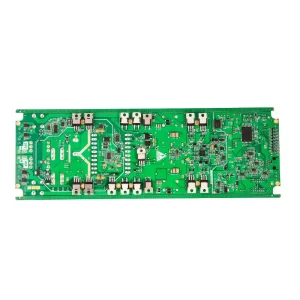
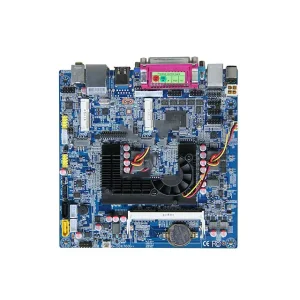
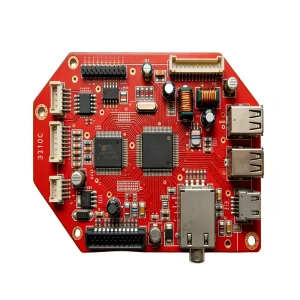
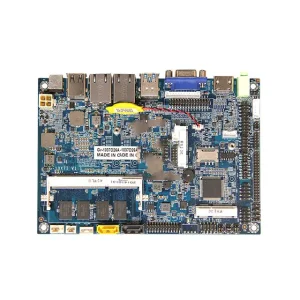
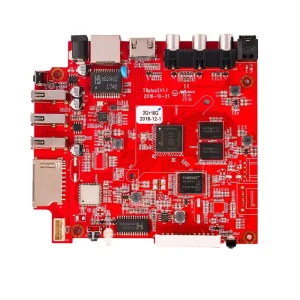
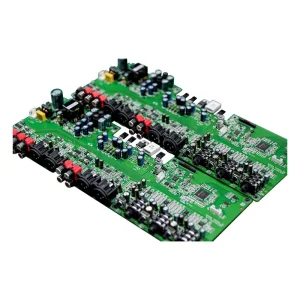
 STHL PCBA