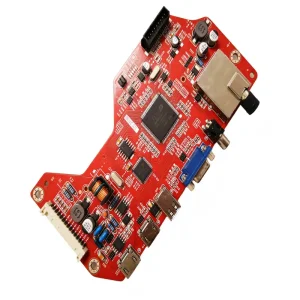
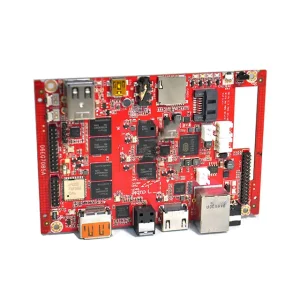
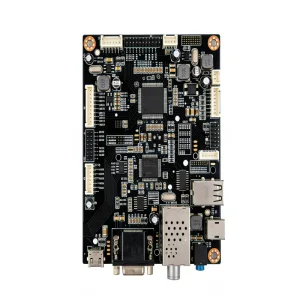
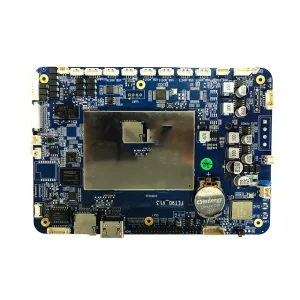
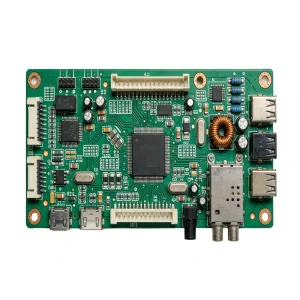
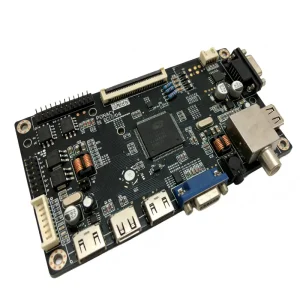
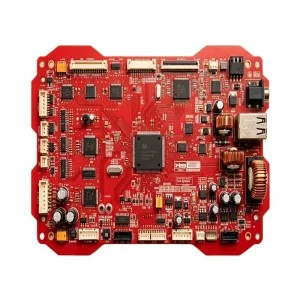
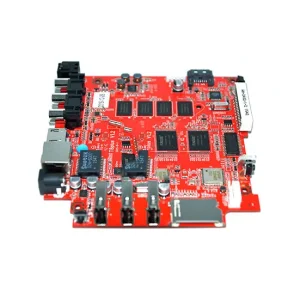
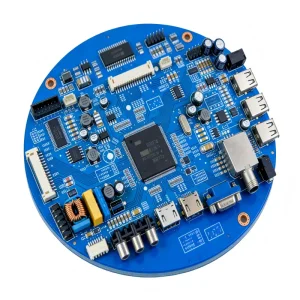
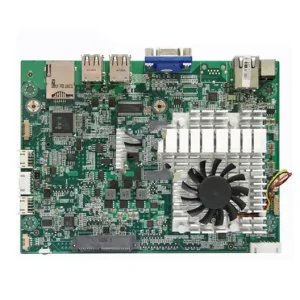
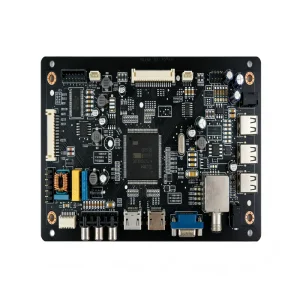
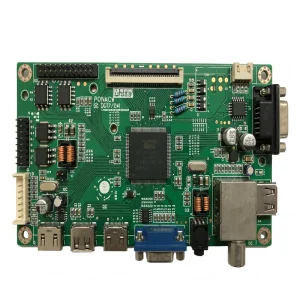
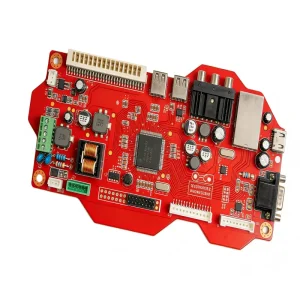
Explore our core product lineup manufactured under rigorous quality controls for various mission-critical and consumer electronics markets.
In the modern electronics landscape, searching for a "High-Quality PCB SMT Service & Factory" is no longer just about identifying a supplier that can solder components onto a printed circuit board. For procurement managers, hardware engineers, and supply chain directors, the search intent represents a quest for mitigating product failure risks, optimizing time-to-market, and locking in yield consistencies that directly impact brand reputation. High-density designs, structural packaging transitions (such as BGAs shrinking to micro-BGAs), and rigid-flex configurations demand manufacturing partners who operate beyond simple transactional contract work.
As global enterprise requirements migrate toward Turnkey EMS (Electronics Manufacturing Services), the line between design, board fabrication, component sourcing, and final box-build testing has blurred. The modern procurement lifecycle looks for full-process transparency and structural cost efficiency. System integrity is dictated by the weakest solder joint. Therefore, selecting a factory with advanced inspection technologies—including 3D Solder Paste Inspection (SPI), 3D Automated Optical Inspection (AOI), and high-resolution X-Ray analysis—is a baseline requirement for high-density, mission-critical electronics deployed in industrial control systems, automotive modules, and medical devices.
"The modern SMT landscape is defined by density, reliability, and speed. Quality is not inspected into a product; it must be built into the process through structural, systematic control loops at every phase of SMT and THT fabrication."
A look at our infrastructure, global footprints, and absolute manufacturing capacity.
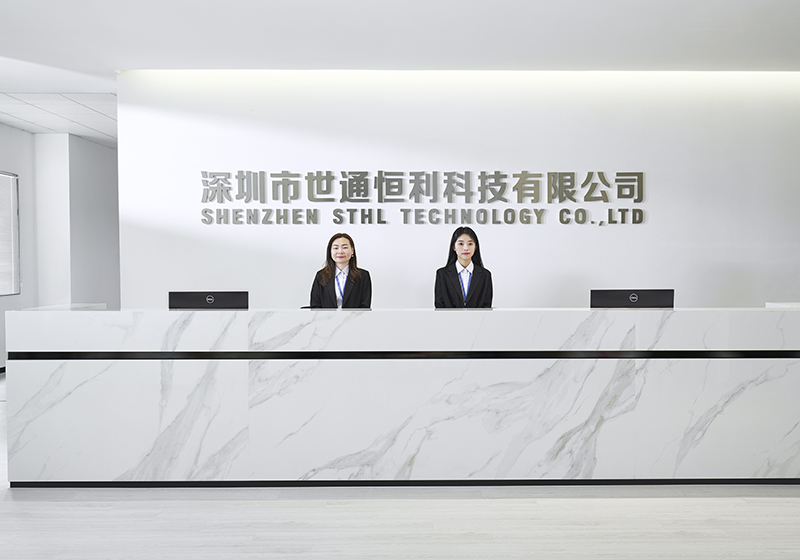
Shenzhen STHL is a premier provider of electronics manufacturing services (EMS) based in China, serving customers worldwide along the entire industry chain including PCB layout, components sourcing, PCB fabrication, PCBA assembly, cable assembly, box build assembly, and comprehensive testing services.
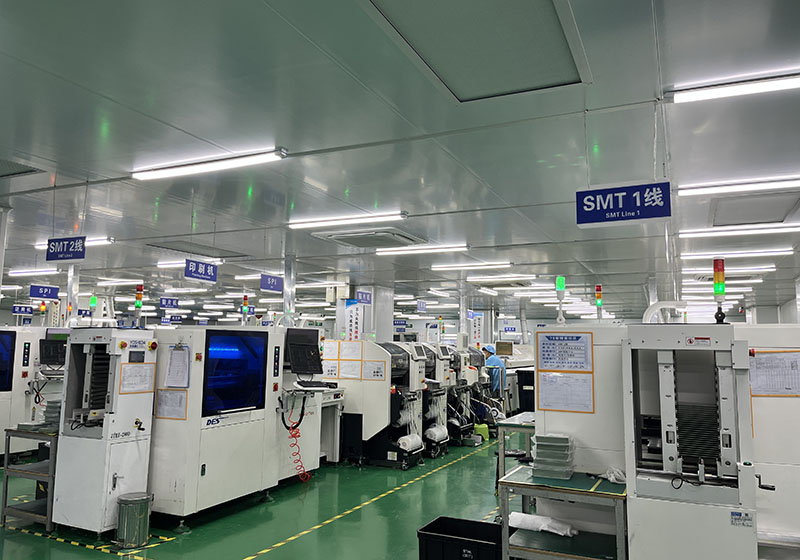
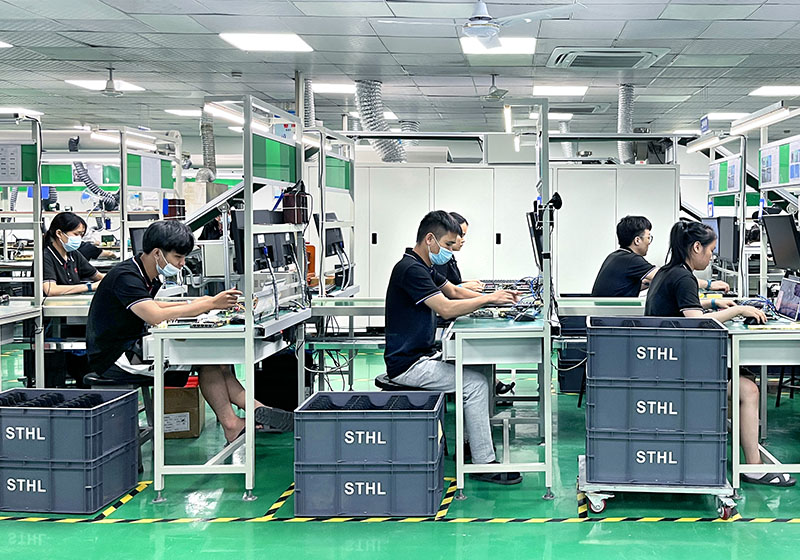
Currently, STHL houses 220+ dedicated staff members. Our 10,000 sqm modern manufacturing facilities are equipped with 7 state-of-the-art automated SMT assembly lines, 2 DIP/THT lines, 2 function testing (FCT) lines, and 2 finished device assembly lines. We provide robust electronics assembly services for energy power, communications, automotive, medical, consumer electronics, computers & storage, safety & security, commercial, and industrial products. Our primary customer footprints span the USA, Germany, Italy, UK, Poland, New Zealand, Argentina, Brazil, Turkey, Korea, Thailand, and over 90 other regions worldwide.
The efficiency of SMT assembly is intrinsically linked to material logistics and the localized availability of active and passive components. Shenzhen, China, stands as the epicenter of global electronics manufacturing, offering an unparalleled cluster advantage. Within a 50-kilometer radius, factories can access an exhaustive ecosystem of raw PCB laminates, solder alloy manufacturers, packaging suppliers, and component distributors. This micro-ecosystem allows STHL to bypass traditional logistical bottlenecks that delay Western production runs by weeks.
Furthermore, the component procurement process at STHL is backed by direct relationships with primary silicon manufacturers and global franchise distributors (such as Arrow, DigiKey, Mouser, and Avnet) alongside verified domestic component manufacturers. This hybrid sourcing strategy mitigates the risk of counterfeits, bypasses market allocations, and controls component lead times. When a design calls for hard-to-source microcontrollers or specific power management ICs, our engineering team can cross-reference alternatives, perform footprint analyses, and suggest drop-in replacements that maintain electrical compliance and keep production cycles on schedule.
Detailed overview of our handling capabilities for advanced components and structural assembly methods.
The electronics industry is experiencing major structural changes that present unique assembly challenges. In IoT and wearable devices, miniaturization requires the integration of microscopic components (such as 01005 components) on highly flexible substrates. Standard manufacturing tolerances are insufficient for these applications, as minor solder paste offsets can cause significant bridging or tombstoning defects. High-density packaging technologies, such as Package-on-Package (PoP) assemblies where logic devices are stacked directly on top of memory packages, demand high-resolution Solder Paste Inspection (SPI) to ensure precise control over vertical heights and solder volume.
Conversely, high-power sectors—such as industrial electric crane controllers, electric vehicle (EV) charging modules, and battery management systems (BMS) for energy storage—require thick copper PCBs, heavy wire components, and robust thermal management. Here, the challenge shifts from fine-pitch placement to managing high thermal mass. SMT ovens must be configured with precise multi-zone thermal profiles to prevent cold solder joint defects on thick boards while avoiding thermal shock to delicate chips. Wave soldering machines and selective soldering units must maintain stable nitrogen-inerted environments to prevent oxidization of heavy solder joints, ensuring mechanical and electrical integrity under continuous thermal and vibrational stress.
From initial bare-board fabrication to fully boxed, packaged, and tested electronics ready for the market.
STHL operates 7 automated PCB assembly lines for both rapid prototyping and high-volume mass production. Advanced automated SMT lines ensure precise component placement, while skilled technicians handle Through-Hole (THT) manual insertions utilizing RoHS-compliant lead-free soldering.
We produce high-quality, reliable printed circuit boards ranging from simple single-sided circuits to complex multi-layer boards, high-density interconnect (HDI) substrates, flexible PCBs, and rigid-flex configurations, using premium laminate materials under controlled temperature and chemical processes.
Our global electronic component sourcing and supply chain solutions leverage a vast supplier network. This ensures access to genuine, certified parts, mitigating the risks of counterfeit materials, long lead times, and sudden parts obsolescence to keep your production runs on schedule.
STHL provides custom wiring and cable harness manufacturing including connectors, handles, specialized shielding, and retention systems. Our team utilizes a wide range of materials and finishes to meet demanding requirements for industrial and rugged automotive environments.
Consolidate your supply chain by moving from SMT assembly to final mechanical box-build integration under one roof. We install PCBAs into enclosures, route internal wiring, perform final electrical testing, package products, and deliver them directly to your distribution channels.
We deploy robust functional testing systems that verify board performance, preventing common field failures. Our testers check circuit continuity, voltage drops, communication signals, and peripheral outputs to guarantee that all shipped boards meet functional specifications.
For industrial and medical devices, compliance is a core regulatory requirement. Regulatory compliance requires traceabilities at every level of assembly. STHL operates under a certified QMS structure, ensuring adherence to global standards:
IATF 16949 (Automotive Quality Management): This standard focuses on defect prevention, reduction of variation, and waste management across the automotive supply chain. Implementing IATF 16949 requires rigorous failure mode and effects analysis (FMEA) for high-stress applications such as EV chargers, body controllers, and telemetry systems.
ISO 13485 (Medical Device Manufacturing): The assembly of medical components—including biometric monitors, early warning systems, and diagnostic displays—requires strict clean-room assembly practices, process validation (IQ/OQ/PQ), and full material batch traceability.
ISO 9001 & ISO 14001: These standards guide our core operational workflows and environmental management practices. They ensure that from components receiving inspection, through moisture-sensitive device (MSD) baking, to lead-free soldering and wastewater treatment, all operations minimize risk to both the product and the environment.
How STHL adapts processes to meet diverse regional requirements and application-specific demands.
Industrial environments subject electronics to high dust, vibration, and thermal fluctuations. For applications like electric cranes, elevator controllers, and magnetometer systems, STHL utilizes selective conformal coating to protect assemblies from atmospheric moisture and particulate contamination. We select high-temperature laminates (High Tg FR4) and optimize our solder paste profiles to withstand structural mechanical stresses.
With the growth of battery energy storage systems (BESS) and electric vehicles, managing thermal dissipation and high voltage is a key design challenge. STHL assemblies for On-board Chargers (OBC) and energy storage controller boards are designed to handle thermal energy efficiently, using thick copper traces and direct thermal vias. Every board undergoes high-voltage isolation (Hi-pot) testing to verify user safety and electrical reliability.
At STHL, quality control is implemented at every stage of the assembly process. Our SMT lines feature inline 3D Solder Paste Inspection (SPI) systems. The SPI acts as a quality checkpoint: if the volume, area, or height alignment of a printed paste deposit deviates from the specification, the board is halted before component placement, preventing rework downstream.
Following high-speed component placement, boards enter multi-zone reflow ovens. Reflow profiling is tailored to each board's thermal density using thermal profiling sensors. Post-reflow, 3D Automated Optical Inspection (AOI) checks for soldering anomalies, including solder bridges, component tombstoning, and missing parts. For packages with hidden solder joints, such as BGAs and QFNs, we perform high-resolution X-Ray inspection to verify void rates and solder wetness. This closed-loop system ensures process deviations are detected and corrected in real time.
Detailed technical answers regarding our PCBA capabilities, supply chain, and quality standards.
We purchase components from manufacturer-direct channels and global authorized distributors. For hard-to-source components, we utilize third-party testing laboratories to perform decapsulation and X-ray analysis to verify part authenticity before assembly.
Our SMT lines feature automated placement systems that can place fine-pitch BGAs down to 0.3mm pitch. We run 3D X-Ray inspections to verify BGA solder joint integrity, checking for voids, bridging, and solder ball alignment.
Yes. Our PCB fabrication and assembly services cover multi-layer HDI boards with laser-drilled blind and buried vias, as well as rigid-flex circuits for compact, high-reliability applications.
We use multi-channel thermal profilers to monitor the temperature curves across different parts of the PCB. This allows us to adjust reflow zones and conveyer speeds to ensure uniform heat distribution without overheating sensitive components.
We build custom testing jigs in-house, designed around the client's specifications. These systems test microcontrollers, communication interfaces (such as CAN-bus, RS485, and Wi-Fi), and power output stages, logging test data to ensure full traceability.
We operate lead-free soldering lines compliant with the RoHS directive. Our materials receiving process tracks compliance declarations for all materials and components, ensuring compliance throughout the supply chain.
Prototype assemblies can be completed in 3 to 7 working days once components are sourced. Standard production runs typically range from 2 to 4 weeks, depending on component availability and complexity.
Yes. We provide IC programming services during the testing phase. We also offer automated conformal coating (such as acrylic, polyurethane, or silicone) to protect boards from environmental hazards.
A further selection of our manufacturing portfolio, including advanced automotive and industrial systems.
 STHL PCBA