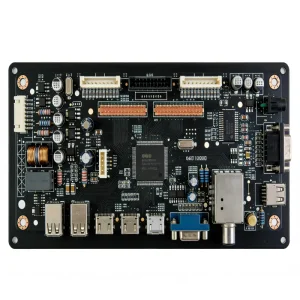
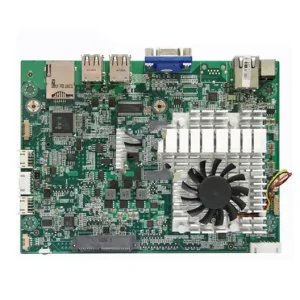
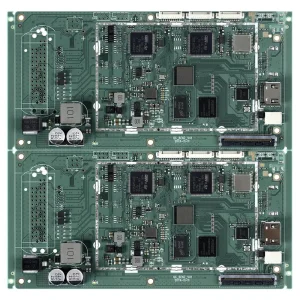
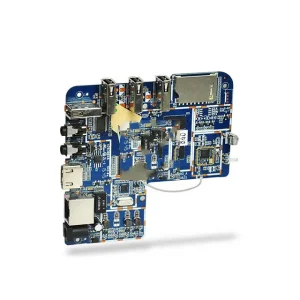
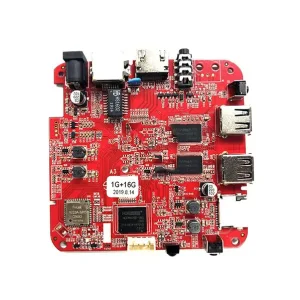
In the modern electronics landscape, the demand for miniaturization, weight reduction, and extreme mechanical reliability has pushed traditional rigid PCBs to their limits. As a premier China Rigid Flex PCB Manufacturer, Shenzhen STHL addresses these engineering challenges by integrating flexible polyimide circuits with robust FR4 rigid boards. This hybrid architecture eliminates the need for bulky connectors and ribbon cables, significantly reducing assembly failure points and optimizing signal integrity.
Rigid-flex PCBs represent the pinnacle of interconnect technology. By combining the structural integrity of rigid boards with the dynamic bendability of flexible circuits, designers can achieve three-dimensional spatial freedom. This is particularly critical in mission-critical sectors where space is at a premium and system failure is not an option.
Shenzhen STHL is a high-quality provider of electronics manufacturing services (EMS) in China. We serve customers worldwide along the whole industry chain including PCB layout, components sourcing, PCB fabrication, PCBA assembly, cable assembly, box build assembly, and comprehensive testing services.
Established in 2006, STHL brings 20 years of experience in electronics contract assembly manufacturing. Currently, STHL has 220+ staff members. Our 10,000 sqm facilities include 7 SMT assembly lines, 2 DIP/THT lines, 2 function testing lines, and 2 finished device assembly lines.
At STHL, we provide electronics assembly services for energy power, communications, automotive, medical, consumer electronics, computers & storage, safety & security, commercial, and industrial products. Our customers mainly come from the USA, Germany, Italy, UK, Poland, New Zealand, Argentina, Brazil, Turkey, Korea, Thailand, and other 90 regions of the world.
As an IATF16949, ISO9001, ISO14001, and ISO13485 certificated electronics assembly manufacturer, we produce products exactly complying with RoHS standards and quality guarantees. Based on our excellent engineering and production capacities in technical areas such as materials analysis & storage, advanced equipment, reliability testing (AOI, X-RAY, ICT test, and function test), and highly effective SMT and THT assembly, we are recognized as a long-term reliable PCBA vendor by more and more customers worldwide.
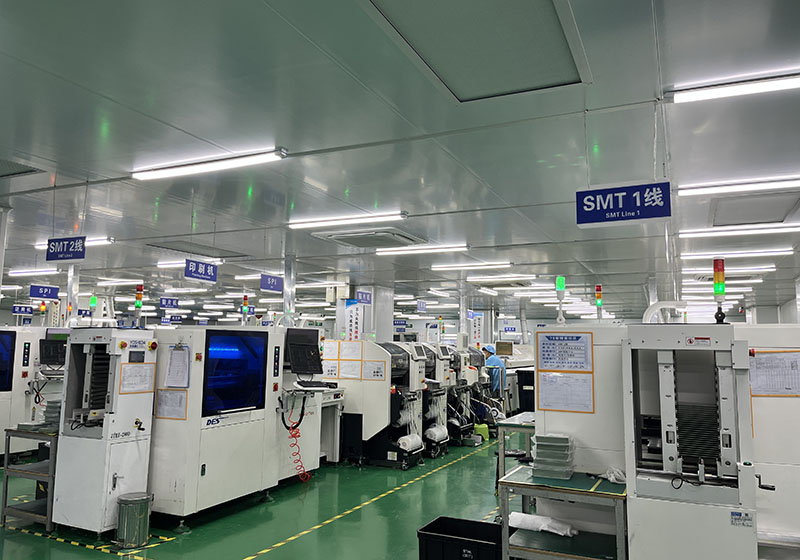
Rigid-flex assembly demands extreme precision during the surface mount technology (SMT) process due to the uneven topography and flexibility of the substrates. We utilize specialized carrier fixtures to maintain absolute flatness during solder paste printing and component placement.
We can handle a wide range of advanced components, including:
But our commitment to quality goes beyond component expertise. We utilize advanced inspection techniques, including AOI and X-Ray inspection, to guarantee flawless assembly and detect any hidden solder voids or bridging under BGAs.
For heavy-duty industrial, power, and automotive applications, Through-Hole Technology (THT) remains indispensable for mechanical strength. STHL PCBA excels in THT assembly, ensuring robust mechanical connections on rigid-flex boards where transition zones experience mechanical stress.
Our THT services encompass:
The global market for rigid-flex PCBs is experiencing exponential growth, driven by the electrification of vehicles, the rise of wearable medical diagnostics, and the deployment of IoT sensors in harsh industrial environments. As global supply chains seek resilience, partnering with a certified China Rigid Flex PCB manufacturer offers a strategic balance of advanced technical capabilities, cost efficiency, and rapid scalability.
From wearable cardiac monitors to swallowable imaging capsules, medical electronics require biocompatible, ultra-miniaturized interconnects. Rigid-flex designs allow circuits to fold into compact cylindrical enclosures while maintaining ISO13485 medical compliance.
Modern Electric Vehicles (EVs) utilize rigid-flex PCBs inside Battery Management Systems (BMS) and Advanced Driver Assistance Systems (ADAS). These boards withstand extreme thermal cycling and intense vibrations, meeting IATF16949 automotive standards.
Multi-axis robotic arms require continuous dynamic flexing. Rigid-flex circuits act as the nervous system of these machines, routing high-speed control signals through moving joints without mechanical fatigue or signal degradation.
Successful rigid-flex PCB implementation relies heavily on early-stage engineering collaboration. Unlike standard rigid boards, rigid-flex design requires strict adherence to mechanical parameters, such as bend radius limits, coverlay transitions, and copper trace geometry in the flex zones. At STHL, we provide comprehensive Design for Manufacturing (DFM) and Design for Testing (DFT) support to optimize your layout before fabrication begins.
We guide you in choosing the right materials, such as adhesiveless polyimide copper clad laminates (CCL) for high thermal stability, and specialized coverlays to prevent trace cracking.
Our engineering team calculates and verifies controlled impedance across both rigid and flexible sections, ensuring seamless high-speed signal transmission.
We guarantee full compliance with IPC-A-600 and IPC-A-610 Class 2 and Class 3 standards, RoHS directives, and international shipping regulations for hassle-free integration.
As consumer and industrial electronics push toward higher frequencies and smaller footprints, the technology behind rigid-flex PCBs is evolving rapidly. STHL is committed to staying at the forefront of these technological shifts by continuously upgrading our manufacturing capabilities.
Combining High-Density Interconnect (HDI) technology with rigid-flex boards allows for microvias, stacked vias, and via-in-pad designs. This enables the routing of fine-pitch BGA components (down to 0.4mm pitch) on the rigid sections while maintaining a highly flexible interconnect zone.
Embedding passive and active components directly inside the inner layers of the rigid-flex stack-up further reduces surface space requirements. This technology is crucial for next-generation medical implants and aerospace avionics.
With the rollout of 5G and future 6G networks, we are integrating low-loss materials (such as Liquid Crystal Polymer - LCP) into our rigid-flex stack-ups to minimize signal attenuation at millimeter-wave frequencies.
STHL operates 7 automated PCB assembly lines for both prototype and mass production. Advanced SMT ensures precise component placement and quality. Skilled technicians provide efficient THT assembly and RoHS-compliant lead-free soldering.
STHL PCB fabrication service produces high-quality, reliable printed circuit boards from simple singles to complex multi-layers, from flex PCB to rigid-flex PCB. We use premium materials and controlled processes to meet precise specifications.
STHL offers global electronic component sourcing and supply chain solutions. Our vast supplier network and expertise ensure access to genuine, certified parts, mitigating risks of counterfeits, allocation, and long lead times to secure your production schedule.
With the precision manufacturing of cable assembly components including handles, retention systems, connectors, and shielding in a wide range of materials and finishes, we have performed many successful cable assemblies for many customers from various industrial applications.
Making your projects at STHL from SMT assembly to box build assembly is very cost-effective and fast to market. Covering everything from putting a PCBA into the enclosure with all functions testing to a complete product assembly packaged and ready for delivery to your customers, we can supply the full support.
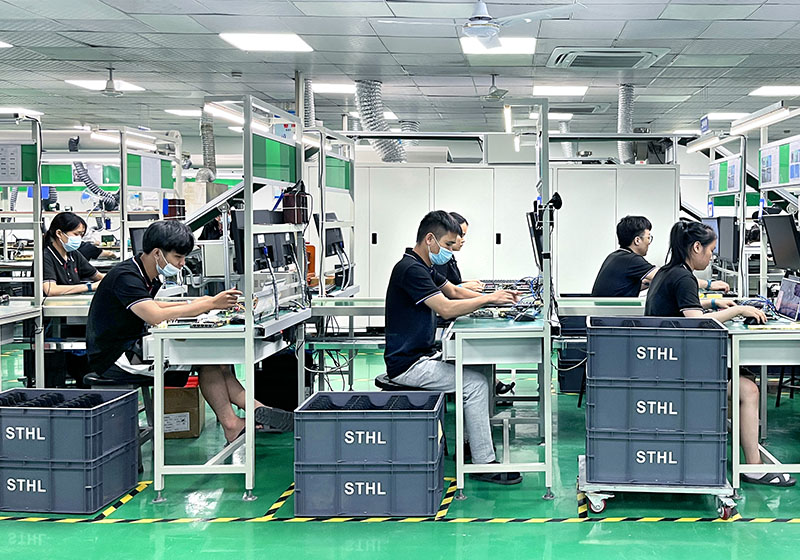
STHL conducts functional testing (FCT) to verify product performance, preventing defects such as circuit issues, missing or incorrect components. This ensures delivered products are stable and fully qualified.
 STHL PCBA