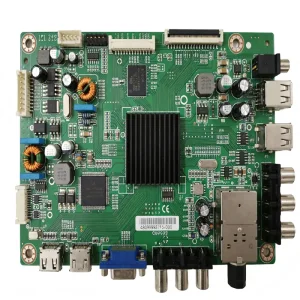
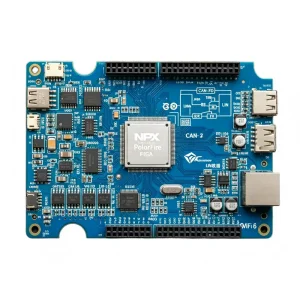
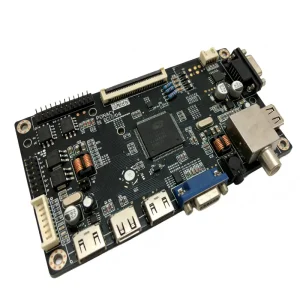
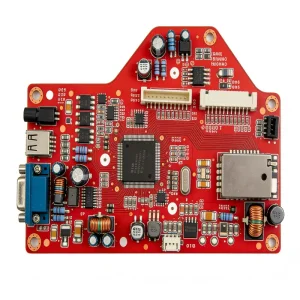
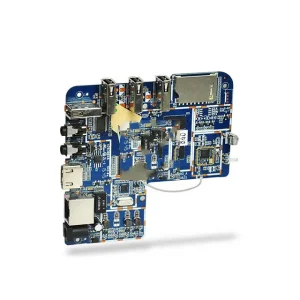
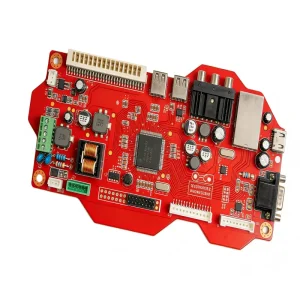
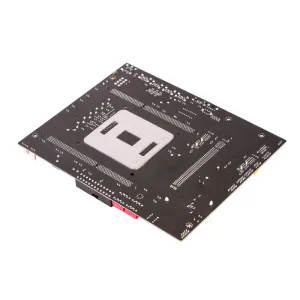
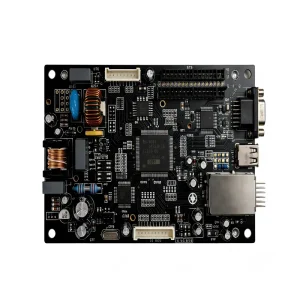
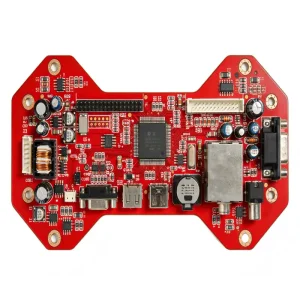
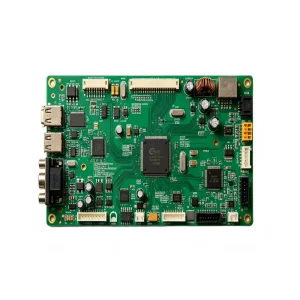
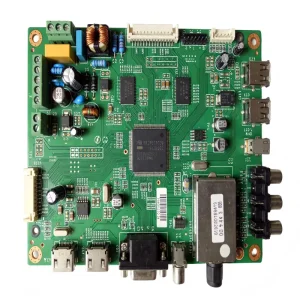
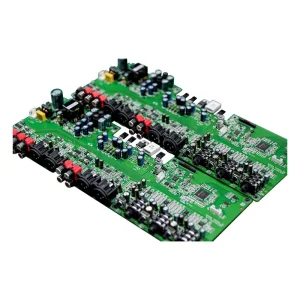
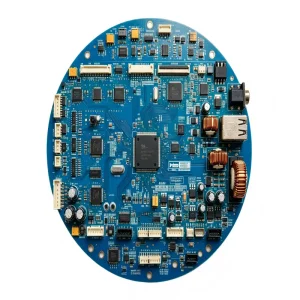
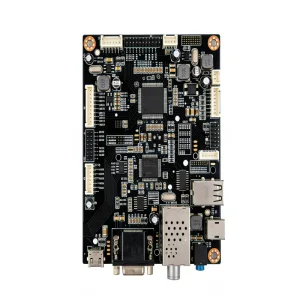
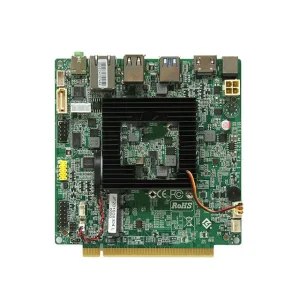
Explore our engineering capabilities across critical applications, ranging from medical devices to smart communication interfaces.
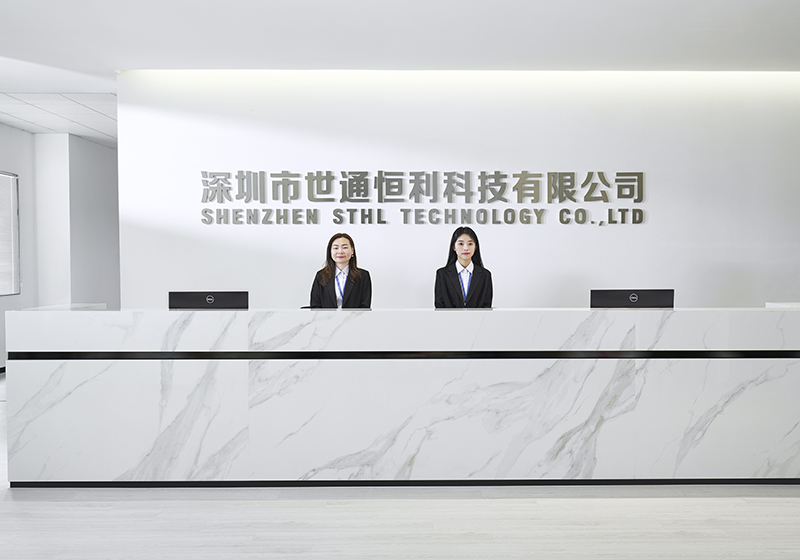
Shenzhen STHL is a high-quality provider of electronics manufacturing services (EMS) in China, we serve customers worldwide along the whole industry chain including PCB layout, components sourcing, PCB fabrication, PCBA assembly, cable assembly, box build assembly and comprehensive testing services.
It was established in 2006, with 20 years of experience in electronics contract assembly manufacturing. Currently, STHL has 220+ staff members. Our 10,000 sqm facilities include 7 SMT assembly lines, 2 DIP/THT lines, 2 function testing lines and 2 finished device assembly lines.
At STHL, we provide electronics assembly services for energy power, communications, automotive, medical, consumer electronics, computers & storage, safety & security, commercial and industrial products. Our customers mainly from USA, Germany, Italy, UK, Poland, New Zealand, Argentina, Brazil, Turkey, Korea, Thailand, and the other 90 regions of the world.
As an IATF16949, ISO9001, ISO14001, and ISO13485 certificated electronics assembly manufacturer, we produce products exactly comply with RoHS standard and quality guarantee. Based on our excellent engineering and production capacities in technical areas such as materials analysis & storage, advanced equipment, reliability testing (AOI, X-RAY, ICT test and function test), high effective SMT and THT assembly, we are recognized as a long-term reliable PCBA vendor by more and more customers worldwide. Welcome to visit STHL factory at any time.
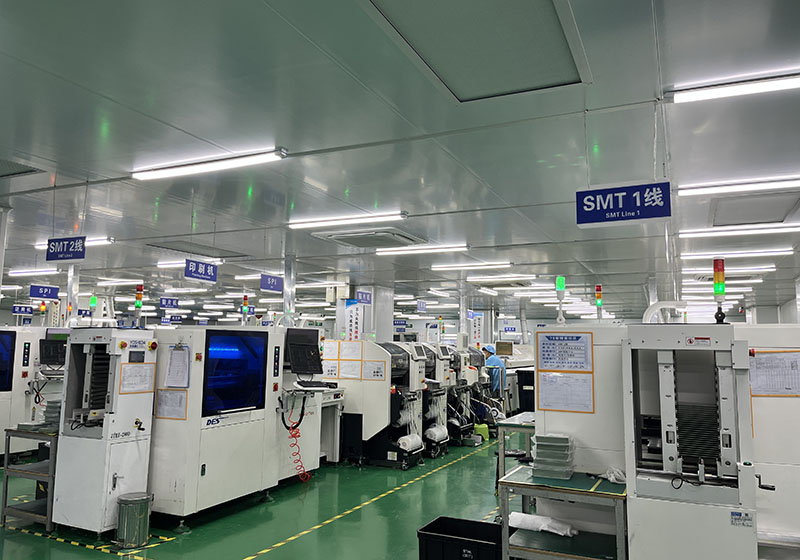
Our surface mount technology capacity is fine-tuned for high-density, complex component integration. We handle sub-millimeter component placements with extreme thermal profiling to eliminate common reflow defects.
We can handle a wide range of advanced components, including:
But our commitment to quality goes beyond component expertise. We utilize advanced inspection techniques, including AOI (Automated Optical Inspection) and X-Ray inspection, to guarantee flawless solder joints and inner layer connectivity.
Despite the proliferation of SMT, Through-Hole Technology remains a cornerstone for high-power electronics, mechanical strain relief, and heavy-duty interconnect systems. Our dual assembly strategy coordinates SMT accuracy with THT physical robustness.
STHL PCBA also excels in Through-Hole Technology (THT) assembly. Our services encompass:
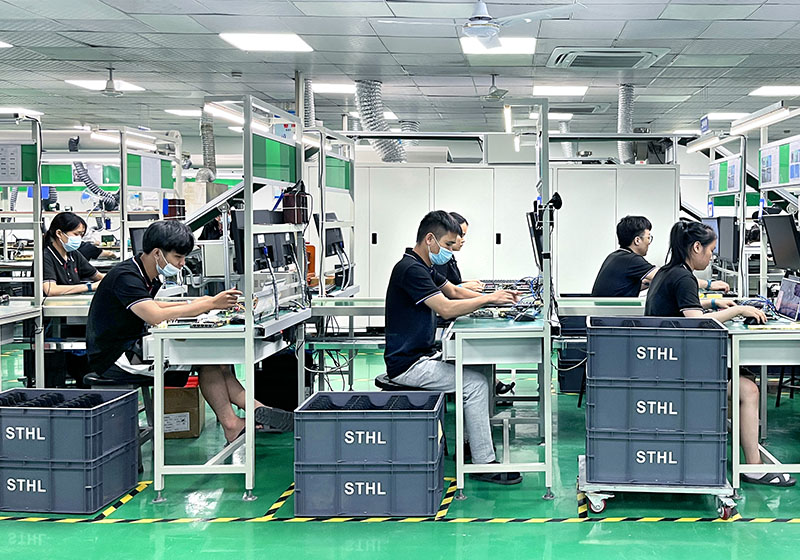
STHL operates 7 automated PCB assembly lines for both prototype and mass production. Advanced SMT ensures precise component placement and quality. Skilled technicians provide efficient THT assembly and RoHS-compliant lead-free soldering.
STHL PCB fabrication service produces high-quality, reliable printed circuit boards from simple singles to complex multi-layers, from flex PCB to rigid-flex PCB, we use premium materials and controlled processes to meet precise specifications.
STHL offers global electronic component sourcing and supply chain solutions. Our vast supplier network and expertise ensure access to genuine, certified parts, mitigating risks of counterfeits, allocation, and long lead times to secure your production schedule.
With the precision manufacturing of cable assembly components including handles, retention systems, connectors, and shielding in a wide range of materials and finishes, we have performed many successful cable assembly for many customers from various industrial applications.
Making your projects at STHL from SMT assembly to box build assembly is very cost-effective and fast to market. Covering everything from putting a PCBA into the enclosure with all functions testing to a complete product assembly packaged and ready for delivery to your customers, we can supply the full support.
STHL conducts functional testing (FCT) to verify product performance, preventing defects such as circuit issues, missing or incorrect components. This ensures delivered products are stable and fully qualified.
As microelectronics shift toward heterogeneous integration and ultra-miniaturized form factors, STHL is continuously updating its technical capabilities. Below is our roadmap designed to meet the demands of tomorrow’s mission-critical hardware:
| Capability Parameter | Current Production Capability | Roadmap Capability (2025-2026) | Target Applications |
|---|---|---|---|
| Min Component Pitch | 0.35 mm (BGA / QFN) | 0.25 mm (uBGA / Embedded Actives) | AI Edge Accelerators, Wearables |
| Passive Placement | 0201 Components | 01005 / 008004 Packages | 5G/6G Modules, Medical Implants |
| Solder Voiding Rate | <15% (Industry Avg: 20-25%) | <10% (Vacuum Reflow Technology) | Automotive Power Modules, Aerospace |
| Board Types | Multilayer Rigid, Flex, Rigid-Flex | Any-Layer HDI, ELIC (Every Layer Interconnect) | Smartphones, High-Speed Computing |
| Testing Depth | AOI, 3D X-Ray, ICT, Basic FCT | AI-driven Real-time SPI, Closed-loop FCT | Zero-defect Automotive & Medical Systems |
We are investing heavily in automated software integration, allowing feedback loop connection between 3D Solder Paste Inspection (SPI) systems and high-speed screen printers to automatically adjust offsets before components are ever placed.
Different fields demand tailored processes. We match specific engineering criteria with the ultimate application requirements to deliver target reliability.
Thermal management is the top concern in modern electric vehicle components. We use advanced high-Tg laminates, heavy copper tracks, and automated selective wave soldering to build systems like Electric Power Steering (EPS) and Autopilot modules that withstand cyclic vibration and wide temperature ranges.
For telemedicine and patient monitoring equipment, component traceability and failure mitigation are critical. We carry out complete trace logs for all active materials, cleanroom handling protocols, and 100% AOI & functional testing on every medical board batch.
Industrial components operate in corrosive, dusty, or electrically noisy environments. We support custom conformal coating systems, thick-film resistives, and strict EMI shielding techniques to protect data integrity and lengthen product operational life.
Manufacturing in Shenzhen allows STHL to access the world’s most dense ecosystem of passive components, connectors, and specialty substrate suppliers. Our modern factory leverages this physical location to execute robust supply-chain programs:
We connect directly to global distributor APIs, tracking component lead times and active-end-of-life (EOL) alerts. This database helps our engineers propose alternative component options during the design stage, saving weeks of delay.
All active components are stored under smart moisture-controlled conditions (MSD handling protocols) with digital barcode traceability. Reel storage systems prevent material degradation and speed up setup times on SMT pick-and-place lines.
By coupling localized high-speed logistics with automated assembly routines, we lower manufacturing costs without cutting corners. This cost performance extends from early-stage NPI prototypes to high-volume production runs.
Navigating global compliance protocols requires specialized knowledge. We work within various validation environments to verify compliance with safety and chemical standards.
We assemble products to IPC Class 2 standards default, with optional Class 3 protocols for medical and industrial applications where continuous operation is critical.
All our materials are screened to match eco-directives, ensuring lead-free, mercury-free, and halogen-free assemblies for the European and North American markets.
This automotive-grade standard underpins our design reviews, production part approval processes (PPAP), and failure modes effects analyses (FMEA).
We maintain full process documentation, cleanliness audits, and risk control measures required for medical electronic components.
When engineering teams select an offshore EMS partner, price per board is only one variable of the total cost. To maximize reliability and project margin, procurements departments should evaluate these three core areas:
Upfront engineering reviews save major costs later. Our team inspects your PCB copper clearances, pad size geometries, and component layouts to suggest tweaks that speed up pick-and-place times and avoid soldering shorts.
Supply chain gray markets introduce risk. Our standard procurement network buys directly from franchise distributors or component manufacturers. If components must be sourced from open markets, they undergo inspection to verify authenticity.
A low unit-cost board that fails in the field is a major expense. We recommend combining in-circuit testing (ICT) for solder defects with functional tests (FCT) that simulate real-world operations, catching issues before shipping.
Verify our high-quality build capabilities across our secondary line of specialized assemblies, modems, and power systems.
 STHL PCBA